List of chancellors of Austria
The chancellor of Austria is the head of government of the Austrian Republic, appointed by the president and regarded as the country's de facto chief executive. The chancellor chairs and leads the Cabinet, which also includes the vice chancellor and the ministers.[2]
- Renner was the first Chancellor of German-Austria, the First Republic and the Second Republic
- Dollfuss turned the First Republic into a dictatorship and is a key figure in fascism
- For most of his incumbency, Kurz was the world's youngest head of government.
- Kreisky is considered perhaps Austria's most successful Socialist leader[1]
Following World War I, the office was originally established by the Provisional National Assembly on 30 October 1918 as state chancellor of the Republic of German-Austria, and its first holder, Karl Renner, was appointed by the State Council. After the Allies declined a union between Austria and Germany,[3] German-Austria established the First Austrian Republic and soon afterwards renamed the office from state chancellor to federal chancellor – the first federal chancellor was Michael Mayr. Ten chancellors served under the First Republic until Chancellor Engelbert Dollfuss established the authoritarian and dictatorial Federal State of Austria.[4] Following Dollfuss's assassination by Austrian National Socialists,[5] Kurt Schuschnigg succeeded him as chancellor and upheld the dictatorship.[6] Schuschnigg in turn was replaced by Arthur Seyss-Inquart, a Nazi caretaker who held the office for two days, until Austria was annexed into Nazi Germany.[7]
Austria under National Socialism lost its original republican system of government and was administered by Reichsstatthalter Arthur Seyss-Inquart (1938–1939), Reich Commissioner Josef Bürckel[8] (1939–1940) and Reichsstatthalter Baldur von Schirach[9] (1940–1945). In 1940, the country was renamed Ostmark, completely lost its autonomy and became an administrative division of Nazi Germany.[10][11] After the liberation of Vienna and the dissolution of Nazi Germany, Austria reinstated its republican form of government.[12] However, the country remained under allied occupation until 1955[13] and thus the country's ultimate sovereignty was still held by the Allied Control Council.
Since the establishment of the republic, the People's Party and the Social Democratic Party have largely dominated Austrian politics. The People's Party/Christian Social Party led nineteen cabinets and was the second largest party in eight coalition cabinets; the Social Democratic Party/Social Democratic Workers' Party led eleven cabinets and was the second largest party in five coalition cabinets. Seven parties never held the chancellorship but participated in coalition cabinets: the Greater German People's Party in five, the Freedom Party and the Landbund in four, the Fatherland Front in two, and the Greens, the Alliance for the Future and the Communist Party in one.
If the chancellor dies, resigns or is otherwise incapable of exercising the powers and duties of the office, the vice chancellor automatically becomes acting chancellor; that is if the president has not already found a permanent replacement. If the vice chancellor is unavailable, the other members of the government take over in order of seniority.[14] The unavailability of an elected chancellor does not automatically call for a new election. If the president in turn dies, resigns or is otherwise incapacitated, the chancellor assumes all the powers and duties of the presidency, but only for twenty days.[15]
Bruno Kreisky was the longest serving chancellor with more than 13 years in office, Arthur Seyss-Inquart was the shortest serving non-acting chancellor with 3 days in office, and Walter Breisky was the shortest serving acting chancellor with only 2 days in office.
Chancellors
- Parties
- 2017–present: New People's Party / Neue Volkspartei
- 1889–1934: Social Democratic Workers' Party of Austria / Sozialdemokratische Arbeiterpartei Österreichs (SDAPÖ)
- Historical parties
| Party | Portrait | Name | Tenure | Election | Governing party or coalition | Ref. and notes | |
|---|---|---|---|---|---|---|---|
| SDAPÖ | 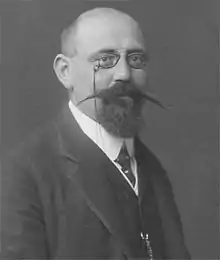 |
Karl Renner (1870–1950) |
30 October 1918 – 7 July 1920 |
1919 | • SDAPÖ • CS • GDVP | [16][17][18] [lower-alpha 1][lower-alpha 2] | |
| CS | 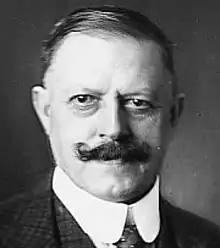 |
Michael Mayr (1864–1922) |
7 July 1920 – 21 June 1921 |
1920 | • CS • SDAPÖ | [19] [lower-alpha 3] | |
| IND | 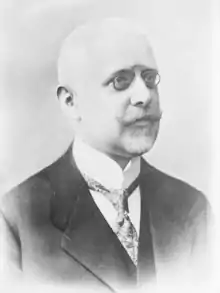 |
Johannes Schober (1874–1932) |
21 June 1921 – 26 January 1922 |
– | • CS • GDVP • Technocrats | [20] | |
| CS | _1927_%C2%A9_Georg_Fayer_(1892%E2%80%931950)_OeNB_10449491.jpg.webp) |
Walter Breisky (1871–1944) ‡ |
26 January 1922 – 27 January 1922 |
– | • CS • GDVP | [21] | |
| IND | |
Johannes Schober (1874–1932) |
27 January 1922 – 31 May 1922 |
– | • CS • GDVP • Technocrats | [22] | |
| CS | 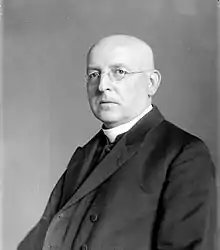 |
Ignaz Seipel (1876–1932) |
31 May 1922 – 20 November 1924 |
1923 | • CS • GDVP • Technocrats | [23] | |
| CS | 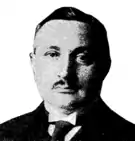 |
Rudolf Ramek (1881–1941) |
20 November 1924 – 20 October 1926 |
– | • CS • GDVP | [24] | |
| CS | |
Ignaz Seipel (1876–1932) |
20 October 1926 – 4 May 1929 |
1927 | • CS • GDVP • LBd | ||
| CS | .jpg.webp) |
Ernst Streeruwitz (1874–1952) |
4 May 1929 – 26 September 1929 |
– | • CS • LBd | [25] | |
| IND |  |
Johannes Schober (1874–1932) |
26 September 1929 – 30 September 1930 |
– | • CS | ||
| CS | 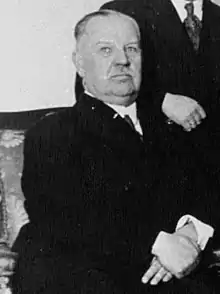 |
Carl Vaugoin (1873–1949) |
30 September 1930 – 4 December 1930 |
– | • CS | [26] | |
| CS | 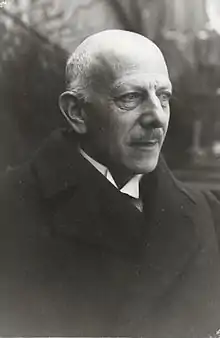 |
Otto Ender (1875–1960) |
4 December 1930 – 20 June 1931 |
1930 | • CS | [27] | |
| CS |  |
Karl Buresch (1878–1936) |
20 June 1931 – 20 May 1932 |
– | • CS • LBd | [28] | |
| CS | 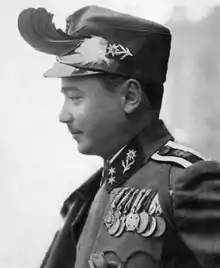 |
Engelbert Dollfuss (1892–1934) |
20 May 1932 – 25 July 1934 |
– | • CS • LBd • Heimwehr 20 May 1932 – 1 May 1934 • VF 1 May 1934 – 25 July 1934 |
[29] | |
| VF | |||||||
| VF | 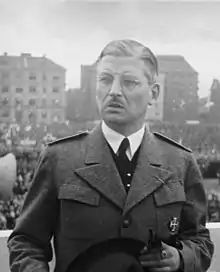 |
Kurt Schuschnigg (1897–1977) ‡ |
25 July 1934 – 29 July 1934 |
– | • VF | [30] | |
| VF | |
Kurt Schuschnigg (1897–1977) |
29 July 1934 – 11 March 1938 |
– | • VF | [31] | |
| NSDAP | .jpg.webp) |
Arthur Seyss-Inquart (1892–1946) |
11 March 1938 – 13 March 1938 |
– | • NSDAP | [32][33] | |
|
Austria was part of Nazi Germany from 12 March 1938 to 13 April 1945 | |||||||
| SPÖ | |
Karl Renner (1870–1950) |
27 April 1945 – 20 December 1945 |
– | • SPÖ • ÖVP • KPÖ | [34][35][36] [lower-alpha 4] | |
| ÖVP | 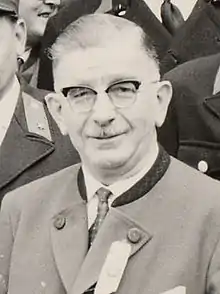 |
Leopold Figl (1902–1965) |
20 December 1945 – 2 April 1953 |
1945 | • ÖVP • SPÖ | [37] | |
| 1949 | |||||||
| ÖVP | 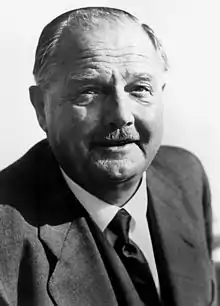 |
Julius Raab (1891–1964) |
2 April 1953 – 11 April 1961 |
1953 | • ÖVP • SPÖ | [38] | |
| 1956 | |||||||
| 1959 | |||||||
| ÖVP | 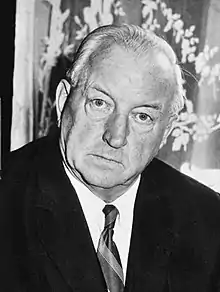 |
Alfons Gorbach (1898–1972) |
11 April 1961 – 2 April 1964 |
1962 | • ÖVP • SPÖ | [39] | |
| ÖVP | 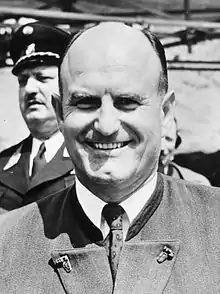 |
Josef Klaus (1910–2001) |
2 April 1964 – 21 April 1970 |
– | • ÖVP • SPÖ | [40] | |
| 1966 | • ÖVP | ||||||
| SPÖ | .jpg.webp) |
Bruno Kreisky (1911–1990) |
21 April 1970 – 24 May 1983 |
1970 | • SPÖ | [41] | |
| 1971 | |||||||
| 1975 | |||||||
| 1979 | |||||||
| SPÖ | 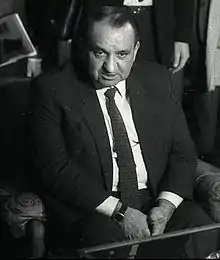 |
Fred Sinowatz (1929–2008) |
24 May 1983 – 16 June 1986 |
1983 | • SPÖ • FPÖ | [42] | |
| SPÖ | _(cropped).jpg.webp) |
Franz Vranitzky (born 1937) |
16 June 1986 – 28 January 1997 |
1986 | • SPÖ • FPÖ | [43] | |
| 1990 | • SPÖ • ÖVP | ||||||
| 1994 | |||||||
| 1995 | |||||||
| SPÖ | .JPG.webp) |
Viktor Klima (born 1947) |
28 January 1997 – 4 February 2000 |
– | • SPÖ • ÖVP | [44] | |
| ÖVP | 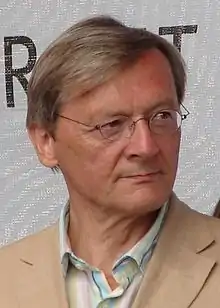 |
Wolfgang Schüssel (born 1945) |
4 February 2000 – 11 January 2007 |
1999 | • ÖVP • FPÖ 4 February 2000 – 3 April 2005 • ÖVP • BZÖ 3 April 2005 – 11 January 2007 |
[45] | |
| 2002 | |||||||
| SPÖ | .jpg.webp) |
Alfred Gusenbauer (born 1960) |
11 January 2007 – 2 December 2008 |
2006 | [[Gusenbauer government|• SPÖ • ÖVP | [46]]] | |
| SPÖ | .jpg.webp) |
Werner Faymann (born 1960) |
2 December 2008 – 9 May 2016 |
2008 | • SPÖ • ÖVP | [47] | |
| 2013 | |||||||
| ÖVP | .jpg.webp) |
Reinhold Mitterlehner (born 1955) ‡ |
9 May 2016 – 17 May 2016 |
– | • SPÖ • ÖVP | [48][49] | |
| SPÖ | .jpg.webp) |
Christian Kern (born 1966) |
17 May 2016 – 18 December 2017 |
– | • SPÖ • ÖVP | [50] | |
| ÖVP | _(cropped).jpg.webp) |
Sebastian Kurz (born 1986) |
18 December 2017 – 28 May 2019 |
2017 | • ÖVP • FPÖ 18 December 2017 – 22 May 2019 • ÖVP 22 May 2019 – 28 May 2019 |
[51] | |
| ÖVP | _(cropped).jpg.webp) |
Hartwig Löger (born 1965) ‡ |
28 May 2019 – 3 June 2019 |
– | • ÖVP | [52][53] | |
| IND | .jpg.webp) |
Brigitte Bierlein (born 1949) |
3 June 2019 – 7 January 2020 |
– | • Technocrats | [54][55] | |
| ÖVP | |
Sebastian Kurz (born 1986) |
7 January 2020 – 11 October 2021 |
2019 | • ÖVP • Greens | [56] | |
| ÖVP | .jpg.webp) |
Alexander Schallenberg (born 1969) |
11 October 2021 – 6 December 2021 |
– | • ÖVP • Greens | [57] | |
| ÖVP | _(cropped)_(cropped).jpg.webp) |
Karl Nehammer (born 1972) |
6 December 2021 – present |
– | • ÖVP • Greens | [58] | |
Statistics
The median age at which a chancellor first takes office is 50 years and 168 days (falling between Christian Kern and Walter Breisky). The youngest person to ever assume the office is Sebastian Kurz, who took office at the age of 31 years, 113 days. The oldest person to become chancellor for the first time is Brigitte Bierlein at the age of 69 years, 343 days. Karl Renner served two nonconsecutive terms; at the beginning of his second term he was 74 years, 134 days old.
The oldest living former chancellor is Franz Vranitzky, born 4 October 1937, (aged 84 years, 71 days). The youngest living former chancellor is Sebastian Kurz, born 27 August 1986, (aged 35 years, 109 days).
The longest living chancellor was Josef Klaus, who died on 26 July 2001 at the age of 90 years, 345 days. Franz Vranitzky, the oldest living former chancellor, will surpass Klaus if he lives beyond 14 September 2028. The shortest living chancellor was Engelbert Dollfuss, who was assassinated in office on 25 July 1934 at the age of 41 years, 294 days.
The chancellor with the longest retirement is Kurt Schuschnigg. He left office on 11 March 1938, and died 39 years, and 252 days later on 18 November 1977.
| Chancellor | Date of birth | Assumed office (first term) |
Age at ascension (first term) |
Time in office (total) |
Left office (last term) |
Age at retirement (last term) |
Length of retirement |
Date of death | Lifespan |
|---|---|---|---|---|---|---|---|---|---|
| Karl Renner | 14 December 1870 | 30 October 1918 | 47 years, 320 days | 865 days | 20 December 1945 | 75 years, 6 days | 5 years, 11 days | 31 December 1950 | 80 years, 17 days |
| Michael Mayr | 10 April 1864 | 7 July 1920 | 56 years, 88 days | 349 days | 21 June 1921 | 57 years, 72 days | 334 days | 21 May 1922 | 58 years, 41 days |
| Johannes Schober | 14 November 1874 | 21 June 1921 | 46 years, 219 days | 712 days | 30 September 1930 | 55 years, 320 days | 1 year, 324 days | 19 August 1932 | 57 years, 279 days |
| Walter Breisky | 8 July 1871 | 26 January 1922 | 50 years, 202 days | 1 day | 27 January 1922 | 50 years, 203 days | 22 years, 242 days | 25 September 1944 | 73 years, 79 days |
| Ignaz Seipel | 19 July 1876 | 31 May 1922 | 45 years, 316 days | 1,832 days | 27 January 1922 | 52 years, 289 days | 3 years, 90 days | 2 August 1932 | 56 years, 14 days |
| Rudolf Ramek | 12 April 1881 | 20 November 1924 | 43 years, 222 days | 699 days | 20 October 1926 | 45 years, 191 days | 14 years, 277 days | 24 July 1941 | 60 years, 103 days |
| Ernst Streeruwitz | 23 September 1874 | 4 May 1929 | 54 years, 223 days | 145 days | 26 September 1929 | 55 years, 3 days | 23 years, 23 days | 19 October 1952 | 78 years, 26 days |
| Carl Vaugoin | 8 July 1873 | 30 September 1930 | 57 years, 84 days | 65 days | 4 December 1930 | 57 years, 149 days | 18 years, 188 days | 10 June 1949 | 75 years, 337 days |
| Otto Ender | 24 December 1875 | 4 December 1930 | 54 years, 345 days | 199 days | 20 June 1931 | 55 years, 178 days | 29 years, 5 days | 25 June 1960 | 84 years, 184 days |
| Karl Buresch | 12 October 1878 | 20 June 1931 | 52 years, 251 days | 335 days | 20 May 1932 | 53 years, 221 days | 4 years, 119 days | 16 September 1936 | 57 years, 340 days |
| Engelbert Dollfuss | 4 October 1892 | 20 May 1932 | 39 years, 229 days | 795 days | 25 July 1934 | 41 years, 294 days | N/A | 25 July 1934 | 41 years, 294 days |
| Kurt Schuschnigg | 14 December 1897 | 25 July 1934 | 36 years, 223 days | 1,321 days | 11 March 1938 | 40 years, 87 days | 39 years, 252 days | 18 November 1977 | 79 years, 339 days |
| Arthur Seyss-Inquart | 22 July 1892 | 11 March 1938 | 45 years, 232 days | 2 days | 13 March 1938 | 45 years, 234 days | 8 years, 217 days | 16 October 1946 | 54 years, 86 days |
| Leopold Figl | 2 October 1902 | 20 December 1945 | 43 years, 79 days | 2,660 days | 2 April 1953 | 50 years, 182 days | 12 years, 37 days | 9 May 1965 | 62 years, 219 days |
| Julius Raab | 29 November 1891 | 2 April 1953 | 61 years, 124 days | 2,931 days | 11 April 1961 | 69 years, 133 days | 2 years, 272 days | 8 January 1964 | 72 years, 40 days |
| Alfons Gorbach | 2 September 1898 | 11 April 1961 | 62 years, 221 days | 1,087 days | 2 April 1964 | 65 years, 213 days | 8 years, 120 days | 31 July 1972 | 73 years, 333 days |
| Josef Klaus | 15 August 1910 | 2 April 1964 | 53 years, 231 days | 2,210 days | 21 April 1970 | 59 years, 249 days | 31 years, 95 days | 25 July 2001 | 90 years, 344 days |
| Bruno Kreisky | 22 January 1911 | 21 April 1970 | 59 years, 89 days | 4,781 days | 24 May 1983 | 72 years, 122 days | 7 years, 66 days | 29 July 1990 | 79 years, 188 days |
| Fred Sinowatz | 5 February 1929 | 24 May 1983 | 54 years, 108 days | 1,119 days | 16 June 1986 | 57 years, 131 days | 22 years, 56 days | 11 August 2008 | 79 years, 188 days |
| Franz Vranitzky | 4 October 1937 | 16 June 1986 | 48 years, 255 days | 3,878 days | 28 January 1997 | 59 years, 116 days | 24 years, 320 days | Living | 84 years, 71 days (Living) |
| Viktor Klima | 4 June 1947 | 28 January 1997 | 49 years, 238 days | 1,103 days | 4 February 2000 | 52 years, 245 days | 21 years, 313 days | Living | 74 years, 193 days (Living) |
| Wolfgang Schüssel | 7 June 1945 | 4 February 2000 | 54 years, 242 days | 2,532 days | 11 January 2007 | 61 years, 218 days | 14 years, 337 days | Living | 76 years, 190 days (Living) |
| Alfred Gusenbauer | 8 February 1960 | 11 January 2007 | 46 years, 337 days | 691 days | 2 December 2008 | 48 years, 298 days | 13 years, 12 days | Living | 61 years, 309 days (Living) |
| Werner Faymann | 4 May 1960 | 2 December 2008 | 48 years, 212 days | 2,716 days | 9 May 2016 | 56 years, 5 days | 5 years, 219 days | Living | 61 years, 224 days (Living) |
| Christian Kern | 4 January 1966 | 17 May 2016 | 50 years, 134 days | 580 days | 18 December 2017 | 51 years, 348 days | 3 years, 361 days | Living | 55 years, 344 days (Living) |
| Sebastian Kurz | 27 August 1986 | 18 December 2017 | 31 years, 113 days | 1,170 days | 11 October 2021 | 35 years, 45 days | 64 days | Living | 35 years, 109 days (Living) |
| Brigitte Bierlein | 25 June 1949 | 3 June 2019 | 69 years, 343 days | 218 days | 7 January 2020 | 70 years, 196 days | 1 year, 341 days | Living | 72 years, 172 days (Living) |
| Alexander Schallenberg | 20 June 1969 | 11 October 2021 | 52 years, 113 days | 57 days | 6 December 2021 | 52 years, 169 days | 8 days | Living | 52 years, 177 days (Living) |
| Karl Nehammer | 18 October 1972 | 6 December 2021 | 49 years, 49 days | 8 days | Incumbent | Incumbent | Living | 49 years, 57 days (Living) |
See also
Notes
- Renner initially served as State Chancellor of the Republic of German-Austria until 21 October 1919, and thereafter as State Chancellor of the Republic of Austria.
- The chancellor is appointed by the president of Austria. However, since the office of president was only established in 1920, Renner was instead appointed by the State Council.
- Office renamed from "State Chancellor" to "Federal Chancellor" on 10 November 1920.
- After the Red Army freed Vienna from the Nazi Regime, Renner formed a cabinet under Soviet rule. The cabinet was accepted by the Soviets on 27 April 1945 and recognized by all states of Austria as well as the Allied Control Council in September 1945.
References
- "Power limited for Austrian foreign minister, fan of Bruno Kreisky, critic of Juncker". www.euractiv.com. Retrieved 2021-10-30.
- "Bundeskanzler Sebastian Kurz". www.bundeskanzleramt.gv.at (in German). Archived from the original on 2017-12-22. Retrieved 2019-03-03.
- "Treaty of Saint-Germain". www.britannica.com. Retrieved 2019-03-11.
- "First Republic and the Anschluss". www.britannica.com. Retrieved 2019-03-08.
- "The assassination of Engelbert Dollfuss, July 25, 1934". www.eclecticatbest.com. Retrieved 2019-03-08.
- "Kurt von Schuschnigg". www.britannica.com. Retrieved 2019-03-08.
- "Arthur Seyss-Inquart". www.britannica.com. Retrieved 2019-03-08.
- "Josef Bürckel". www.geschichtewiki.wien.gv.at (in German). Retrieved 2019-03-08.
- "Baldur von Schirach". www.geschichtewiki.wien.gv.at (in German). Retrieved 2019-03-08.
- "Gesetz über Gebietsveränderungen in Österreich". alex.onb.ac.a (in German). Retrieved 2019-03-08.
- "Anschluss". www.britannica.com. Retrieved 2019-03-08.
- "The years of the Allied Forces in Vienna". www.wien.gv.at. Retrieved 2019-03-08.
- "Full text of the Austrian State Treaty" (PDF). treaties.un.org. Retrieved 2019-03-08.
- "Art. 69 B-VG". www.jusline.at (in German). Retrieved 2019-03-04.
- "Art. 64 B-VG". www.jusline.at (in German). Retrieved 2019-03-04.
- "Dr. Karl Renner" (in German). Republic of Austria Parliament. Retrieved 2019-03-05.
- "Bundesregierung (Österreich)". austria-forum.org (in German). Retrieved 2019-03-08.
- "Staatsregierung Renner I". anno.onb.ac.at (in German). Retrieved 2019-03-08.
- "Dr. Michael Mayr" (in German). Republic of Austria Parliament. Retrieved 2019-03-05.
- "abs. iur. DDDr. h.c Johannes Schober" (in German). Republic of Austria Parliament. Retrieved 2019-03-05.
- "abs. iur. DDDr. h.c Johannes Schober" (in German). Republic of Austria Parliament. Retrieved 2019-03-05.
- "abs. iur. DDDr. h.c Johannes Schober" (in German). Republic of Austria Parliament. Retrieved 2019-03-05.
- "Dr. Ignaz Seipel" (in German). Republic of Austria Parliament. Retrieved 2019-03-05.
- "Dr. Rudolf Ramek" (in German). Republic of Austria Parliament. Retrieved 2019-03-05.
- "Ernst Streeruwitz" (in German). Republic of Austria Parliament. Retrieved 2019-03-05.
- "Carl Vaugoin" (in German). Republic of Austria Parliament. Retrieved 2019-03-05.
- "Dr. Otto Ender" (in German). Republic of Austria Parliament. Retrieved 2019-03-05.
- "Dr. Karl Buresch" (in German). Republic of Austria Parliament. Retrieved 2019-03-05.
- "Dr. Karl Buresch" (in German). Republic of Austria Parliament. Retrieved 2019-03-05.
- "Dr. Kurt Schuschnigg" (in German). Republic of Austria Parliament. Retrieved 2019-03-05.
- "Dr. Kurt Schuschnigg" (in German). Republic of Austria Parliament. Retrieved 2019-03-05.
- "Arthur Seyss-Inquart". www.geschichtewiki.wien.gv.at (in German). Retrieved 2019-03-05.
- "Dr. Arthur Seyss-Inquart" (in German). Republic of Austria Parliament. Retrieved 2021-10-29.
- "Bundeskanzler seit 1945". www.bundeskanzleramt.gv.at (in German). Retrieved 2019-03-03.
- "Kanzler und Regierungen seit 1945". www.bundeskanzleramt.gv.at (in German). Retrieved 2019-03-08.
- "Karl Renner (Politiker)". www.geschichtewiki.wien.gv.at (in German). Retrieved 2019-03-08.
- "Dipl.-Ing. DDDr. h.c. Leopold Figl" (in German). Republic of Austria Parliament. Retrieved 2019-03-05.
- "Ing. DDDr. Julius Raab" (in German). Republic of Austria Parliament. Retrieved 2019-03-05.
- "Dr. Alfons Gorbach" (in German). Republic of Austria Parliament. Retrieved 2019-03-05.
- "Dr. Josef Klaus" (in German). Republic of Austria Parliament. Retrieved 2019-03-05.
- "Dr. Bruno Kreisky" (in German). Republic of Austria Parliament. Retrieved 2019-03-05.
- "Dr. Fred Sinowatz" (in German). Republic of Austria Parliament. Retrieved 2019-03-05.
- "Dipl.-Kfm. Dr. Franz Vranitzky" (in German). Republic of Austria Parliament. Retrieved 2019-03-05.
- "Mag. Viktor Klima" (in German). Republic of Austria Parliament. Retrieved 2019-03-05.
- "Dr. Wolfgang Schüssel" (in German). Republic of Austria Parliament. Retrieved 2019-03-05.
- "Dr. Alfred Gusenbauer" (in German). Republic of Austria Parliament. Retrieved 2019-03-05.
- "Werner Faymann" (in German). Republic of Austria Parliament. Retrieved 2019-03-05.
- "Dr. Reinhold Mitterlehner" (in German). Republic of Austria Parliament. Retrieved 2019-03-05.
- "ÖVP-Chef "überrascht"". orf.at (in German). Retrieved 2019-03-05.
- "Mag. Christian Kern" (in German). Republic of Austria Parliament. Retrieved 2019-03-05.
- "Sebastian Kurz" (in German). Republic of Austria Parliament. Retrieved 2019-03-05.
- "Bundespräsident Van der Bellen enthebt Regierung ihres Amtes" (in German). APA. 28 May 2019. Retrieved 28 May 2019.
- "Hartwig Löger" (in German). Republic of Austria Parliament. Retrieved 2019-03-05.
- "Kabinett Bierlein angelobt". orf.at (in German). Retrieved 2019-06-03.
- "Dr. Brigitte Bierlein" (in German). Republic of Austria Parliament. Retrieved 2019-03-05.
- "Sebastian Kurz" (in German). Republic of Austria Parliament. Retrieved 2019-03-05.
- "Schallenberg set to replace Kurz as Austria's chancellor". Euronews. 11 October 2021. Retrieved 11 October 2021.
- Welle (www.dw.com), Deutsche. "Austria: Karl Nehammer sworn in as new chancellor | DW | 06.12.2021". DW.COM. Retrieved 2021-12-06.
External links
- Official website of the Austrian Chancellery
- List of Chancellors since 1945 on the Chancellery website
| Leadership |  Österreichischer Bundesadler | ||||
|---|---|---|---|---|---|
| Ministries | |||||
| Ministers |
| ||||