List of wars involving Hungary
This is a list of military conflicts in which Hungarian armed forces participated in or took place on the historical territory of Hungary.
The list gives the name, the date, the Hungarian allies and enemies, and the result of these conflicts following this legend:
- Victory
- Defeat
- Another result (e.g. a treaty or peace without a clear result, status quo ante bellum, result of civil or internal conflict, result unknown or indecisive)
- Ongoing conflict
Middle Ages
Wars under the Árpád-Dynasty's rule
| Date | Conflict | Allies | Enemies | Result |
|---|---|---|---|---|
| 811 | Battle of Pliska | .svg.png.webp) First Bulgarian Empire First Bulgarian Empire Hungarian Tribes |
 Byzantine Empire Byzantine Empire |
Decisive Bulgarian victory
|
| around 830 | Hungarian–Khazar War | Hungarian Tribes | Khazars | Hungarian victory |
| ~800/839 – 970 | Hungarian invasions of Europe | .svg.png.webp) Hungarian Tribes Hungarian Tribes |
Kingdom of Italy East Francia West Francia Middle Francia Great Moravia Byzantine EmpireAl-Andalus First Bulgarian EmpirePrincipality of Serbia |
More than a century of raids and decisive wars
|
| 894 | Byzantine-Bulgarian War (894) | Hungarian Tribes Byzantine Empire |
First Bulgarian Empire |
|
| around 895 – 902 | Hungarian conquest of the Carpathian Basin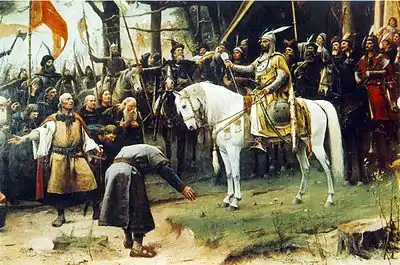 Hungarian conquest of the Carpathian Basin (painting by Mihály Munkácsy, 1893) |
Hungarian Tribes |
East Francia Great Moravia First Bulgarian Empire |
Hungarian conquest of the Carpathian Basin |
| 899 | Battle of Brenta | Principality of Hungary |
Kingdom of Italy | Hungarian victory
|
| 901 | Carinthian campaign
|
Principality of Hungary |
East Francia | Hungarian victory |
| 907 | Battle of Pressburg / Pozsony
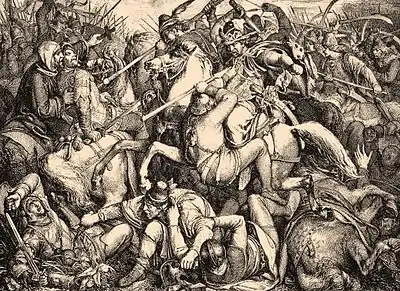 Battle of Pressburg (painting by Peter Johann Nepomuk Geiger, 1850) |
Principality of Hungary |
East Francia Duchy of Bavaria |
Decisive Hungarian victory
|
| 908 | Battle of Eisenach | Principality of Hungary |
East Francia | Hungarian victory
|
| 910 | Battle of Lechfeld | Principality of Hungary |
East Francia Swabia |
Hungarian victory |
| 910 | Battle of Rednitz | Principality of Hungary |
East Francia Duchy of Franconia Duchy of Lotharingia Duchy of Bavaria |
Hungarian victory |
| 917 | Battle of Achelous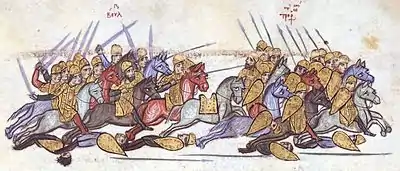 The Bulgarian victory at Achelous (13th century) |
First Bulgarian Empire Principality of Hungary Pechenegs |
Byzantine Empire |
Bulgarian victory
|
| 919 | Battle of Püchen | Principality of Hungary |
East Francia | Hungarian victory |
| 933 | Battle of Merseburg / Battle of Riade | Principality of Hungary |
East Francia | German victory |
| 934 | Battle of W.l.n.d.r | Principality of Hungary Pechenegs Muslim auxiliary troops |
Byzantine Empire First Bulgarian Empire Muslims converted to Christianity |
Decisive Hungarian-Pecheneg victory |
| 942 | Battle of Fraxinet | Principality of Hungary |
Muslims | Hungarian victory |
| 955 | Battle of Lechfeld / Battle of Augsburg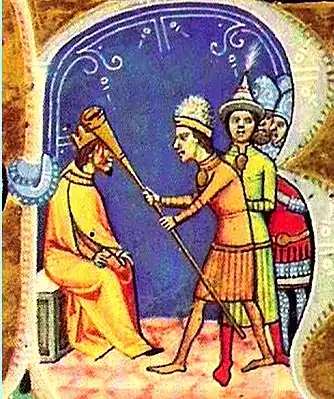 Miniature of the story of Lehel's Horn (Chronicon Pictum, 1358) |
Principality of Hungary |
Kingdom of Germany  Duchy of Saxony Duchy of Saxony Duchy of Thuringia  Duchy of Bavaria Duchy of Bavaria Duchy of Swabia  Duchy of Bohemia Duchy of Bohemia |
Hungarian defeat
|
| 960 | Battle of Drina | Principality of Hungary |
Principality of Serbia | Serbian victory
|
| 960 | Battle of Syrmia | Principality of Hungary |
Principality of Serbia | Hungarian victory
|
| 970 | Battle of Arcadiopolis | Principality of Hungary
|
Byzantine Empire |
Byzantine victory
|
| 997 | Koppány's revolt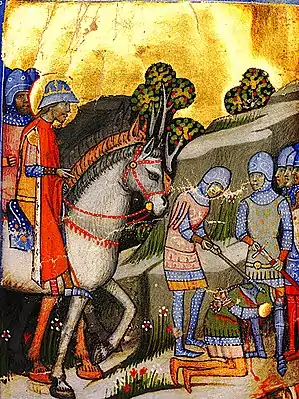 The execution of Koppány (Chronicon Pictum, 1358) |
Principality of Hungary .svg.png.webp) Holy Roman Empire Holy Roman Empire |
Koppány's Army | Koppány's defeat |
| 1003 | King Stephen I's military campaign against Gyula of Transylvania | Hungarian Royal Army |
Gyula of Transylvania | Successful campaign |
| 1008 (?), 1029 (?) | King Stephen I's military campaign against Ajtony, a tribal leader in the Banat | Hungarian Royal Army |
Ajtony's Army | Successful campaign, Ajtony's defeat |
| 1017–1018 | Hungarian – Polish war | .svg.png.webp) Kingdom of Hungary Kingdom of Hungary |
 Duchy of Poland Duchy of Poland |
Stalemate |
| around 1018 | Pecheneg attack against Hungary | Kingdom of Hungary |
Pecheneg tribes | Hungarian victory |
| 1018 | Hungarian – Bulgarian War | Kingdom of Hungary Byzantine Empire |
First Bulgarian Empire |
Hungarian-Byzantine victory |
| 1018 | The intervention of Boleslaw the Brave, Duke of Poland in the Kievan succession crisis | Kingdom of Hungary Duchy of Poland Holy Roman Empire Pechenegs |
Kievan Rus' | Temporary victory for Sviatopolk and Bolesław, Polish sack of Kiev |
| 1030–1031 | Emperor Conrad II's military campaign against Hungary | Kingdom of Hungary |
Holy Roman Empire |
Hungarian victory |
| 1041 | Uprising against King Peter Orseolo | Hungarian Army |
Hungarian nobles | Suppression of King Peter |
| 1042–1043 | German – Hungarian wars | Kingdom of Hungary |
Holy Roman Empire |
Hungarian defeat |
| 1044 | Henry III's military campaign against Hungary | The army of King Samuel Aba |
Holy Roman Empire Peter Orseolo and his allies |
Defeat of Samuel Aba, restoration of Peter |
| 1046 | War between King Peter and Prince Andrew | King Peter's army Holy Roman Empire |
Prince Andrew's army Kievan Rus' |
Hungarian victory |
| 1046 | Vata pagan uprising | King Peter, later King Andrew I |
Paganic rebels | Andrew's victory |
1051–1052
|
Emperor Henry III's military campaigns against Hungary
|
Kingdom of Hungary |
Holy Roman Empire Duchy of Bohemia |
Hungarian victory |
| 1056–1058 | German – Hungarian border war | Kingdom of Hungary |
Holy Roman Empire |
Stalemate, treaty of Marchfeld |
| 1060 | Civil war between King Andrew I and his brother, Prince Béla
|
King Andrew I's army Holy Roman Empire |
Prince Béla's army Kingdom of Poland |
Prince Béla's victory |
| 1061 | Second paganic uprising | Hungarian army |
Paganic rebels | Uprising suppressed |
| 1068 | Pecheneg attack against Hungary
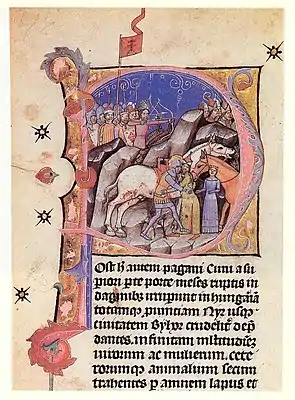 Saint Ladislaus is fighting a duel with a Cuman warrior (Chronicon Pictum, 1358) |
Kingdom of Hungary |
Pechenegs Ouzes |
Hungarian victory |
| 1068 | Hungarian – Bohemian war | Kingdom of Hungary |
Holy Roman Empire Duchy of Bohemia |
King Solomon of Hungary occupies Bohemia[9][10] |
| 1071–1072 | Hungarian – Byzantine war | Kingdom of Hungary |
Byzantine Empire |
Hungarian victory |
| 1074 | Civil war between King Solomon and his cousins Géza and Ladislaus | Solomon's army Holy Roman Empire Duchy of Bohemia |
Prince Géza's army Kingdom of Poland |
Prince Géza and Ladislaus defeat the armies of King Solomon and Emperor Henry IV. King Solomon was dethroned. |
| 1075 | Henry IV's military campaign against Hungary | Kingdom of Hungary |
Holy Roman Empire Solomon's army |
Hungarian victory |
| 1085 | Pecheneg invasion of Hungary | Kingdom of Hungary |
Pecheneg tribes Solomon's army |
Hungarian victory |
| 1091 | Pecheneg attack against Hungary | Kingdom of Hungary |
Pecheneg tribes | Hungarian victory |
| 1091 | Hungarian occupation of Croatia | Kingdom of Hungary |
 Kingdom of Croatia Kingdom of Croatia |
Hungarian victory |
1093–1097
|
Petar Svačić's Croatian uprising against the Hungarian rule | Kingdom of Hungary |
Kingdom of Croatia |
Decisive Hungarian victory.
|
| 1094–1095 | King Ladislaus I's intervention in the polish and bohemish internal conflicts | |||
| 1096 | King Coloman's defensive operations against the different armies of the crusaders | Kingdom of Hungary |
French crusaders | Hungarian victories |
| 1098–1099 | King Coloman's war against the Kievan Rus' | Kingdom of Hungary Davyd Ihorevych's army |
Mstyslav Sviatopolkovych's army Pecheneg tribes |
Hungarian defeat |
| 1105 | Siege of Zara and occupation of Dalmatia | Kingdom of Hungary |
Dalmatian cities  Republic of Venice Republic of Venice |
Hungarian victory |
| 1108 | Hungarian war with the Holy Roman Empire | Kingdom of Hungary |
Holy Roman Empire Duchy of Bohemia |
Hungarian victory |
| 1115–1119 | Hungarian – Venetian wars | Kingdom of Hungary |
Republic of Venice |
Hungarian defeat |
| 1123 | Stephen II's intervention in the Kievan Rus' internal conflict | Kingdom of Hungary
Iaroslav from Vladimir |
Kievan Rus' | Hungarian retreat |
| 1124–1125 | Hungarian – Venetian war | Kingdom of Hungary |
Republic of Venice |
Hungarian defeat |
| 1127–1129 | Byzantine-Hungarian War (1127–29) | Kingdom of Hungary Grand Principality of Serbia |
Byzantine Empire |
Stalemate, peace agreement |
| 1132 | Hungarian – Polish war[11] | Kingdom of Hungary Duchy of Austria Duchy of Austria |
Kingdom of Poland |
Hungarian victory |
| 1136–1137 | Béla II's balcanic campaigns (against Venice and the Byzantine Empire) | Kingdom of Hungary |
Byzantine Empire Republic of Venice |
Hungarian victory |
| 1146 | Battle of the Fischa | Kingdom of Hungary |
Duchy of Bavaria Duchy of Austria |
Hungarian victory |
| 1149–1152 | Géza II's intervention in the conflict between the Principality of Halych and Kievan Rus' | Kingdom of Hungary Kievan Rus' |
Principality of Halych | Peace agreement |
| 1148–1155 | Hungarian – Byzantine wars | Kingdom of Hungary Grand Principality of Serbia |
Byzantine Empire |
Ceasefire |
| 1162–1165 | Hungarian civil war between Stephen III and his uncles Ladislaus and Stephen | Kingdom of Hungary Holy Roman Empire |
Ladislaus and Stephen's army | Stephen III's victory |
| 1167 | Battle of Sirmium | Kingdom of Hungary Banate of Bosnia |
Byzantine Empire Serbian Grand Principality |
Decisive Byzantine victory, Hungary lost Dalmatia |
| 1168 | Hungarian – Bohemian war | Kingdom of Hungary |
Holy Roman Empire Duchy of Bohemia |
Hungarian victory |
| 1176 | Battle of Myriokephalon | Byzantine Empire.svg.png.webp) Kingdom of Hungary Kingdom of Hungary Principality of Antioch Principality of AntiochGrand Principality of Serbia |
Sultanate of Rum | Seljuk victory
|
| 1180–1184 | Hungarian – Byzantine war | Kingdom of Hungary |
Byzantine Empire |
Hungarian victory, Hungary reoccupied Dalmatia |
| 1188–1189 | King Béla III's military campaign against Halych | Kingdom of Hungary |
Principality of Halych | Hungarian victory, occupation of Halych |
| 1190 | Battle of Iconium | Holy Roman Empire Kingdom of Hungary |
Sultanate of Rum | Crusader victory
|
| 1197–1199 | Civil war between King Emeric and his brother Andrew | .svg.png.webp) Emeric's army Emeric's army |
.svg.png.webp) Andrew's army Andrew's army |
Emeric's victory |
| 1201–1205 | Emeric's balcanic wars | Kingdom of Hungary |
 Second Bulgarian Empire Second Bulgarian Empire Grand Principality of Serbia Bosnia |
Hungarian victories |
| 1202 | Siege of Zara | Kingdom of Hungary Kingdom of Croatia |
 Soldiers of the Fourth Crusade Republic of Venice Soldiers of the Fourth Crusade Republic of Venice |
Hungarian defeat |
| 1213–1214, 1219, 1233–1234 | King Andrew II's military campaigns against Halych | Kingdom of Hungary |
Principality of Halych | Hungarian retreat |
| 1217–1218 | King Andrew II's participation in the Fifth crusade
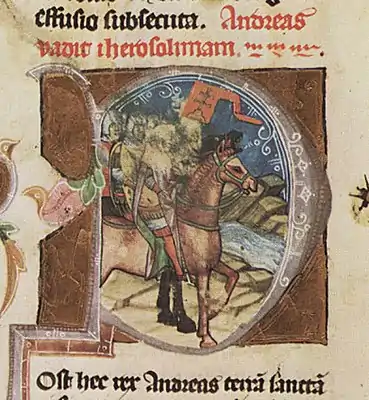 King Andrew II at the head of his crusader army (Chronicon Pictum, 1358) |
Kingdom of Hungary Duchy of Austria Latin Empire of Constantinople Latin Empire of Constantinople |
 Ayyubids Ayyubids |
Hungarian victories on the battlefields. Muslim forces retreated to their fortresses and towns. |
| 1225 | King Andrew II expels the Teutonic Knights from Transylvania, the order had to move to Poland | Kingdom of Hungary |
 Teutonic Knights Teutonic Knights |
Hungarian victory |
| 1237–1241 | Bosnian Crusade The Hungarian successes were followed by quick Hungarian retreat because of the Mongol invasion of Hungary | Coloman of Galicia-Lodomeria |
"Heretics" within the Banate of Bosnia | Stalemate after the quick Hungarian retreat due to the Mongol attacks |
| 1241 | Battle of Mohi | .svg.png.webp) Kingdom of Hungary Kingdom of Hungary |
Mongols | Hungarian defeat |
| 1241–1242 | First Mongol invasion of Hungary | Kingdom of Hungary |
Mongols | Mongol victory at the Battle of Mohi. Mongols retreated within a year from Hungary due to the local Hungarian withstand. Both sides suffered a heavy casualties.[12] |
| 1242 | Battle of Grobnik Field | Kingdom of Hungary Kingdom of Croatia |
Mongols | Hungarian-Croatian victory[12] |
| 1242 | King Béla IV's punishing campaign against Frederick II, Duke of Austria | Kingdom of Hungary |
Duchy of Austria |
Hungarian victory[13] |
| 1243 | Siege of Zara | Kingdom of Hungary |
Republic of Venice |
Hungarian defeat |
| 1246 | Battle of the Leitha River | Kingdom of Hungary |
Duchy of Austria |
Hungarian victory |
| 1250–1278 | Hungarian – Bohemian wars | Kingdom of Hungary Holy Roman Empire |
 Kingdom of Bohemia Duchy of Austria Kingdom of Bohemia Duchy of Austria |
Bohemian defeat |
| 1259 | Battle of Pelagonia | Empire of Nicaea Cuman cavalry Hungarian mounted archers Turkish cavalry Serbian horsemen German knights |
 Despotate of Epirus Despotate of Epirus Principality of Achaea Principality of Achaea.svg.png.webp) Duchy of Athens Duchy of Athens Duchy of the Archipelago Duchy of the ArchipelagoTriarchy of Negroponte .svg.png.webp) Kingdom of Sicily Kingdom of Sicily |
Decisive Nicaean victory |
| 1264–1265 | Internal conflict between King Béla IV and his son, Stephen | King Béla IV's army |
Duke Stephen's army |
Stephen's victory, he got eastern Hungary as a duchy |
| 1268 | Mačva War Béla IV 's army captures Stefan Uroš I. Their conflict was solved with dynastic marriage. | Béla IV of Hungary | .svg.png.webp) Kingdom of Serbia (medieval), Stefan Uroš I Kingdom of Serbia (medieval), Stefan Uroš I |
Hungarian victory |
| 1272–1279 | Feudal anarchy | King Ladislaus IV Csák noble family |
Kőszegi noble family Gutkeled noble family |
Royal victory |
| 1277 | Stefan Dragutin-Stefan Uroš I conflict | Stefan Dragutin Kingdom of Hungary |
Kingdom of Serbia (medieval) Stefan Uroš I |
Stefan Dragutin |
| 1277 | Hungary's war with the vlach ruler, Litovoi | Kingdom of Hungary |
Litovoi's army | Hungarian victory |
| 1278 | Battle on the Marchfeld, at Dürnkrut and Jedenspeigen took place on 26 August 1278 and was a decisive event for the history of Central Europe for the following centuries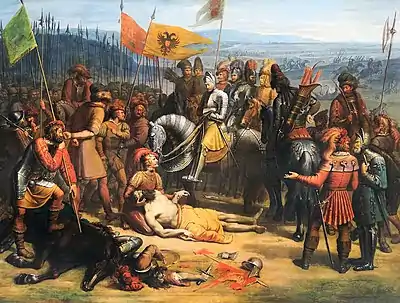 Battle on the Marchfeld (painting by Anton Petter, 1858) |
Kingdom of Hungary Duchy of Austria Kingdom of Germany Burgraviate of Nuremberg |
 Czech lands Czech lands Duchy of Głogów Duchy of Lower Bavaria Duchy of Silesia |
German-Hungarian victory
|
| 1282 | Cumanic uprising | Kingdom of Hungary |
Cumanic tribes | Hungarian victory |
| 1285–1286 | Second Mongol invasion of Hungary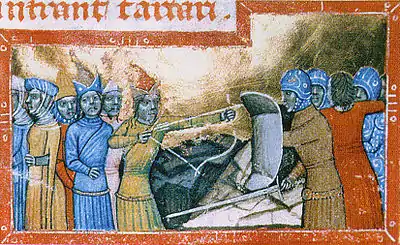 Mongols in Hungary in 1285 (Chronicon Pictum, 1358) |
Kingdom of Hungary |
 Golden Horde Golden Horde |
Decisive Hungarian victory |
| 1291 | German – Hungarian war | Kingdom of Hungary |
Holy Roman Empire |
Hungarian victory |
| 1292–1300 | King Andrew III's war with the Kőszegi Hungarian noble family | Kingdom of Hungary |
Kőszegi family | Andrew III's victory |
| 1298 | Battle of Göllheim | Duchy of Austria Kingdom of Bohemia Kingdom of Hungary |
County of Nassau Electoral Palatinate |
Habsburg victory |
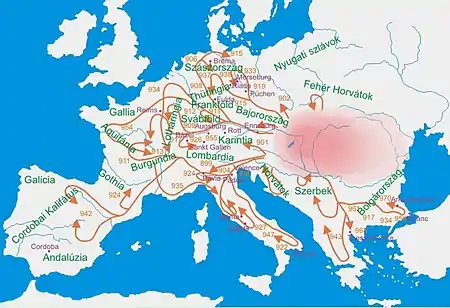
Wars between 1301 and 1526
| Date | Conflict | Allies | Enemies | Result |
|---|---|---|---|---|
| 1301–1308 | Hungarian interregnum, fightings for the country's throne | .svg.png.webp) Charles of Anjou Duchy of Austria Charles of Anjou Duchy of Austria Matthew III Csák's army László Kán's army |
Kingdom of Bohemia Duchy of Bavaria Kőszegi Hungarian noble family |
Charles became Hungarian king |
| 1310–1321 | King Charles I's wars for the centralized power against the Hungarian aristocracy | Kingdom of Hungary |
Matthew III Csák Aba dynasty Borsa family Apor family Kőszegi family |
Royal victory, centralization of the Hungarian Kingdom |
| 1312 | Battle of Rozgony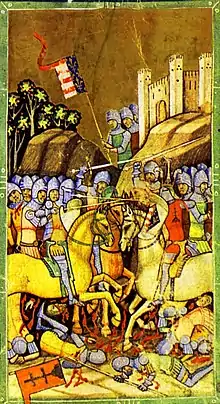 Battle of Rozgony (Chronicon Pictum, 1358) |
Kingdom of Hungary .svg.png.webp) Order of Saint John Order of Saint JohnZipser Saxons |
Aba dynasty Matthew III Csák |
Decisive victory of King Charles I, weakening of the magnates |
| 1319 | Belgrade and Banate of Mačva | Charles I of Hungary |
Kingdom of Serbia (medieval), Stefan Milutin |
Charles I |
| 1322–1337 | Hungarian–Austrian War, restoration of the western borders, defeat of Austria, Kőszegi and Babonić families | Kingdom of Hungary |
Duchy of Austria Holy Roman Empire Kőszegi family Babonić Croatian noble family |
Hungarian victory |
| 1321–1324 | Hungarian–Serbian War | Kingdom of Hungary Bosnia Stephen Vladislav II of Syrmia |
Kingdom of Serbia (medieval) |
Hungarian defeat |
| 1330 | Battle of Posada | Kingdom of Hungary |
.svg.png.webp) Wallachia Wallachia |
Hungarian defeat |
| 1344 | King Louis the Great's invasion and occupation of Wallachia and Moldavia[14] | .svg.png.webp) Kingdom of Hungary Kingdom of Hungary |
Wallachia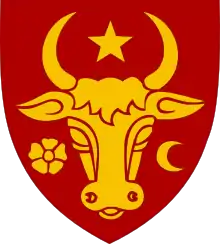 Moldavia Moldavia |
Hungarian victory, Wallachia and Moldavia became vassal states of King Louis the Great[15] |
| 1345–1358 | Hungarian–Venetian War, Venice had to pay annual tribute to Louis. Venetians also had to raise the Angevin flag on Piazza San Marco. | Kingdom of Hungary |
Republic of Venice |
Decisive Hungarian victory Treaty of Zadar |
| 1345 | Hungary's war with the Golden Horde | Kingdom of Hungary |
Golden Horde |
Hungarian victory |
| 1347–1349, 1350–1352 | Hungarian-Naples Wars | Kingdom of Hungary |
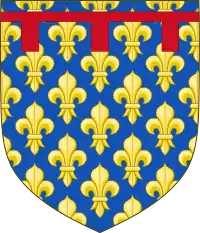 Kingdom of Naples Kingdom of Naples |
First campaign: temporary Hungarian victory Second campaign: status quo ante bellum |
| 1348 | Battle of Capua | Kingdom of Hungary |
Kingdom of Naples |
Hungarian victory, occupation of the kingdom |
| 1360–1369 | Louis I's balcanic wars (against Serbia, Bulgaria, Wallachia and Bosnia) | Kingdom of Hungary |
 Serbian Empire Second Bulgarian Empire Serbian Empire Second Bulgarian Empire Bosnia  Wallachia Wallachia |
Temporary Hungarian victories |
| 1366–1367 | Hungarian–Ottoman War | Kingdom of Hungary Duchy of Savoya Duchy of Savoya Padova Republic of Venice Padova Republic of Venice.svg.png.webp) Kingdom of France Byzantine Empire Kingdom of France Byzantine Empire |
 Ottoman Empire Ottoman Empire Second Bulgarian Empire Second Bulgarian Empire |
Christian victory |
| 1369 | Wallachian campaign | Kingdom of Hungary |
Wallachia |
Hungarian victory |
| 1372–1381 | War of Chioggia, Hungary defeated the Venetians in several times, and finally expelled Venetians from Dalmatia, however Genoa, Padoa and Austria lost the War. The war resulted in the Treaty of Turin (1381) | Kingdom of Hungary
|
Republic of Venice Milan Ottoman Empire Milan Ottoman Empire Kingdom of Cyprus Kingdom of Cyprus |
Hungarian victory, Venice had to pay annual tribute to King of Hungary |
| 1375–1377 | Hungarian–Ottoman War | Kingdom of Hungary |
Ottoman Empire Second Bulgarian Empire |
Hungarian victory |
| 1377 | Hungarian – Lithuanian war | Kingdom of Hungary |
 Grand Duchy of Lithuania Grand Duchy of Lithuania |
Hungarian victory, Louis I enters Vilnius[16] |
| 1384–1394 | Civil war between a part of the Hungarian nobility and Mary, Queen of Hungary and Sigismund king | Kingdom of Hungary |
Horváti family Kingdom of Naples |
Sigismund's victory |
| 1394–1395 | Wallachian campaign |  Kingdom of Hungary Kingdom of Hungary |
Wallachia |
Wallachia became a Hungarian vassal, Mircea I the Great accepted the lordship of King Sigismund without any fight. |
| 1394–1395 | Moldavian campaign | Kingdom of Hungary |
Moldavia |
Hungarian victory |
| 1396 | Battle of Nicopolis_1.jpg.webp) Battle of Nicopolis (painting by Sébastien Mamerot, 1472-1475) |
Kingdom of Hungary Holy Roman Empire.svg.png.webp) Kingdom of France Knights Hospitaller Kingdom of France Knights Hospitaller Duchy of Burgundy Duchy of Burgundy Duchy of Savoy Wallachia Duchy of Savoy Wallachia Lands of the Bohemian Crown Lands of the Bohemian Crown Kingdom of Poland Kingdom of Croatia Kingdom of Poland Kingdom of Croatia Swiss Confederacy Swiss Confederacy Kingdom of England Republic of Venice Kingdom of England Republic of Venice Republic of Genoa Republic of Genoa.svg.png.webp) Crown of Castile Crown of Castile Crown of Aragon Crown of Aragon Kingdom of Navarre Kingdom of Navarre.png.webp) Second Bulgarian Empire Second Bulgarian Empire Teutonic Order Byzantine Empire Teutonic Order Byzantine Empire |
 Ottoman Empire Ottoman Empire Moravian Serbia Moravian Serbia |
Crusader defeat
|
| 1407–1408 | Bosnian campaign
|
Kingdom of Hungary |
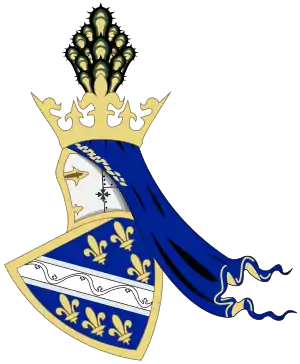 Kingdom of Bosnia Kingdom of Bosnia |
Hungarian victory
|
| 1411–1433 | Hungarian–Venetian War | Kingdom of Hungary Milan |
Republic of Venice |
Dalmatia became part of Venice |
| 1415–1419 | Hungarian–Ottoman War | Kingdom of Hungary |
Ottoman Empire |
Stalemate |
| 1419–1434 | Hussite Wars | Holy Roman Empire Kingdom of Hungary |
Hussites | Eventual defeat for Radical Hussites, victory for Moderate Hussites |
| 1428–1432 | War of the South Danube | Kingdom of Hungary Wallachia Wallachia Grand Duchy of Lithuania Grand Duchy of Lithuania |
Ottoman Empire |
Armistice |
| 1437 | Transylvanian peasant revolt of Budai Nagy Antal | Kingdom of Hungary |
Transilvanian peasants | Defeat of the rebels |
| 1437–1442 | Hungarian–Ottoman border conflicts, Ottoman raids in South-Hungary and Transylvania |  Kingdom of Hungary Kingdom of Hungary |
Ottoman Empire |
Hungarian victory |
| 1440 | Siege of Belgrade | .svg.png.webp) Kingdom of Hungary Kingdom of Hungary |
Ottoman Empire |
Hungarian victory |
| 1440–1442 | Civil war between Wladyslaw I and Ladislaus | Kingdom of Hungary Hungarian nobles |
Cillei family and other Hungarian nobles | Peace agreement, Wladyslaw is accepted as Hungarian king |
| 1442 | Battle of Hermannstadt / Szeben | Kingdom of Hungary |
Ottoman Empire |
Hungarian victory |
| 1442 | Battle near the Iron Gate / Vaskapu | Kingdom of Hungary |
Ottoman Empire |
Hungarian victory
|
| 1443–1444 | Long campaign | Kingdom of Hungary |
Ottoman Empire |
Temporary Hungarian victories. |
| 1443 | Battle of Nish | Kingdom of Hungary Kingdom of Poland Serbian Despotate Wallachia Moldavia Serbian Despotate Wallachia Moldavia |
Ottoman Empire |
Crusader Victory |
| 1443 | Battle of Zlatitsa | Kingdom of Hungary Kingdom of Poland Serbian Despotate.png.webp) Papal States Papal States |
Ottoman Empire |
Ottoman victory, halting of the advance of the crusaders |
| 1444 | Battle of Kunovica | Kingdom of Hungary Kingdom of Poland Serbian Despotate |
Ottoman Empire |
Crusader Victory |
| 1444 | Battle of Varna
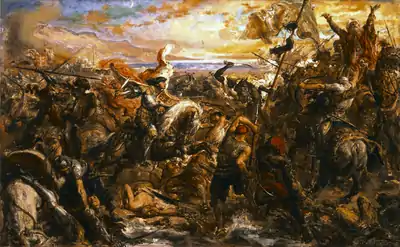 King Władysław III of Poland / Vladislaus I of Hungary in the Battle of Varna (painting by Jan Matejko, 1879) |
Kingdom of Hungary Kingdom of Poland Kingdom of Croatia Grand Duchy of Lithuania Crown of Bohemia WallachiaBulgarian rebelsKingdom of BosniaPapal StatesTeutonic Knights Grand Duchy of Lithuania Crown of Bohemia WallachiaBulgarian rebelsKingdom of BosniaPapal StatesTeutonic Knights |
Ottoman Empire |
Crusader defeat
|
| 1447 | Wallachian campaign | Kingdom of Hungary |
Wallachia Ottoman Empire |
Hungarian victory
|
| 1448 | Second Battle of Kosovo / Rigómező | Kingdom of Hungary Wallachia |
Ottoman Empire |
Ottoman victory |
| 1456 | Siege of Belgrade / Nándorfehérvár
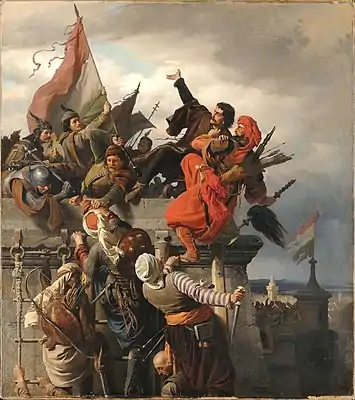 The self-sacrifice of Titusz Dugovics (painting by Sándor Wagner, 1853) |
Kingdom of Hungary |
Ottoman Empire |
Hungarian victory
|
| 1458–1459 | Matthias I's war with Ján Jiskra | .svg.png.webp) Kingdom of Hungary Kingdom of Hungary |
Jiskra's soldiers | Royal victory |
| 1458–1465 | War in Bosnia | 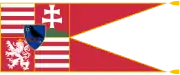 Kingdom of Hungary Kingdom of Hungary |
Ottoman Empire |
A part of Bosnia is occupied by the Ottoman Empire |
| 1460 | Battle at Pojejena / Alsópozsgás | 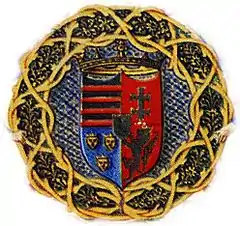 Troops of Michael Szilágyi Troops of Michael Szilágyi |
Ottoman raiding army of Ali Bey Mihaloğlu |
Ottoman victory
|
| 1465–1471 | Hussite uprising in North-Hungary | Kingdom of Hungary |
Czech hussite rebels | Hungarian victory |
| 1467 | Hungarian - Moldavian war | Kingdom of Hungary |
Moldavia |
Moldavian victory [17][18] |
| 1468–1478 | Bohemian War (1468-1478) | Kingdom of Hungary |
Kingdom of Bohemia |
Treaty of Olmütz, Matthias became king of Bohemia |
| 1471 | Hungarian – Polish war. King Matthias I forced King Casimir IV to withdraw from Hungary | Kingdom of Hungary |
Kingdom of Poland |
Hungarian victory |
| 1471–1476 | Matthias's intervention in the Moldovian – Ottoman War | Kingdom of Hungary Moldavia |
Ottoman Empire |
After initial Hungarian-moldavian victories Hungary stopped the advocating of Moldavia, so Stephen III moldavian ruler became vasal of the Ottoman Empire. |
| 1474 | Siege of Wrocław / Breslau / Boroszló | Kingdom of Hungary |
Kingdom of Poland Kingdom of Bohemia |
Between 1469 and 1490, Wrocław was part of the Kingdom of Hungary. In 1474, the city was besieged by combined Polish-Czech forces. Kings Casimir IV of Poland, his son Vladislaus II of Bohemia, and Matthias Corvinus of Hungary met in the nearby village, and a ceasefire was signed according to which the city remained under Hungarian rule. |
| 1475 | Battle of Vaslui | Moldavia Kingdom of Hungary Kingdom of Poland |
Ottoman Empire Wallachia |
Moldavian-Hungarian-Polish victory |
| 1476 | Siege of Šabac / Szabács | Kingdom of Hungary |
Ottoman Empire |
King Matthias besieged and seized Šabac, an important Ottoman border fort |
| 1479 | Battle of Breadfield / Kenyérmező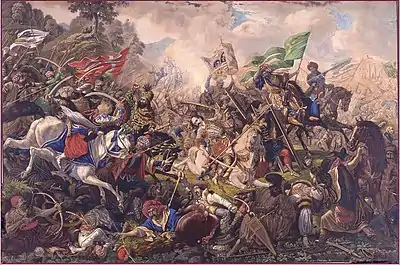 Battle of Breadfield (Colorized lithography from Eduard Gurk after Ion Osolsobie) |
Kingdom of Hungary |
Ottoman Empire Wallachia |
Hungarian victory over a highly outnumbered Ottoman army in Transylvania. Ottoman casualties were extremely high. The battle was the most significant victory for the Hungarians against the raiding Ottomans, and as a result, the Ottoman Turks did not attack southern Hungary and Transylvania for many years thereafter. |
| 1480–1481 | Battle of Otranto | Kingdom of Hungary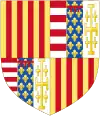 Kingdom of Naples Crown of Aragon Kingdom of SicilyPapal States Kingdom of Naples Crown of Aragon Kingdom of SicilyPapal States |
Ottoman Empire |
Christian victory |
| 1482–1488 | Austrian-Hungarian War (1477-1488) | Kingdom of Hungary |
Holy Roman Empire |
Decisive Hungarian victory
|
| 1485 | Siege of Vienna / Bécs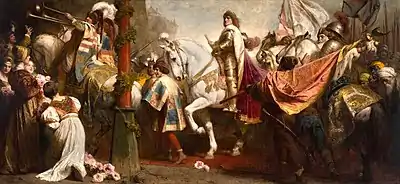 The triumphant Matthias (painting by Gyula Benczúr, 1919) |
Kingdom of Hungary |
Holy Roman Empire |
Hungarian victory
|
| 1486 | Siege of Retz | Kingdom of Hungary |
Holy Roman Empire |
Hungarian victory |
| 1486–1487 | Siege of Wiener Neustadt / Bécsújhely | Kingdom of Hungary |
Holy Roman Empire |
Hungarian victory
|
| 1490–1491 | War of the Hungarian Succession | .svg.png.webp) Kingdom of Hungary Kingdom of Bohemia Kingdom of Hungary Kingdom of Bohemia |
Kingdom of Poland |
Treaty |
| 1490 | Battle of Csontmező | The supporters of John Corvinus | The supporters of Beatrice of Naples | The supporters of Beatrice of Naples, Stephen Báthory and Paul Kinizsi defeated John Corvinus. |
| 1491–1495 | Hungarian – Ottoman war | Kingdom of Hungary |
Ottoman Empire |
Stalemate |
| 1492–1493 | The Black Army's uprising | Kingdom of Hungary |
Black Army | Destruction of the Black Army |
| 1499–1504 | Hungarian – Ottoman war | Kingdom of Hungary |
Ottoman Empire |
Stalemate |
| 1512–1520 | Hungarian – Ottoman war | Kingdom of Hungary |
Ottoman Empire |
Successful defensive operations against the Ottomans |
| 1514 | Peasants revolt, led by György Dózsa | Kingdom of Hungary |
Peasants | Revolt suppressed |
| 1521 | Siege of Belgrade | Kingdom of Hungary |
Ottoman Empire |
Hungarian defeat |
| 1526 | Battle of Mohács Discovering the Body of King Louis II of Hungary (painting by Bertalan Székely, 1860) |
Kingdom of Hungary |
Ottoman Empire |
Hungarian defeat
|
Wars between 1526 and 1699
| Date | Conflict | Allies | Enemies | Result |
|---|---|---|---|---|
| 1532 | Siege of Kőszeg / Güns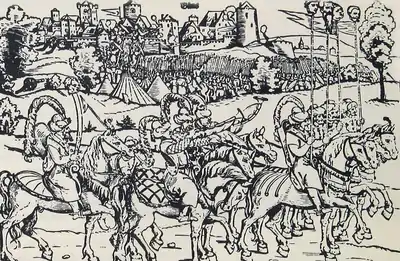 Siege of Güns (Edward Schön) |
Kingdom of Hungary.svg.png.webp) Kingdom of Croatia Kingdom of Croatia |
Ottoman Empire |
Hungarian victory
|
| 1543 | Siege of Esztergom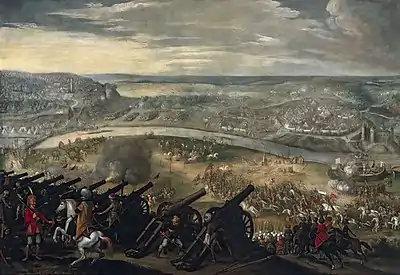 Siege of Esztergom, (painting by Sebastian Vrancks) |
Kingdom of Hungary.svg.png.webp) Habsburg Monarchy Habsburg Monarchy |
Ottoman Empire Kingdom of France |
Ottoman victory |
| 1552 | Siege of Eger
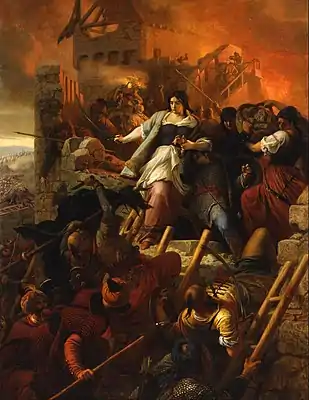 The Women of Eger (painting by Bertalan Székely, 1867) |
Kingdom of Hungary |
Ottoman Empire |
Hungarian victory |
| 1566 | Siege of Szigetvár
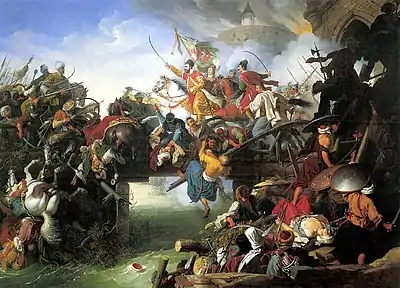 |
Kingdom of Hungary Kingdom of Croatia |
Ottoman Empire |
Ottoman victory
|
| 1595 | Battle of Călugăreni | Wallachia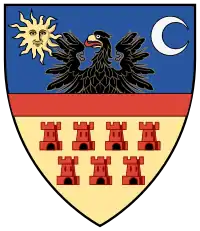 Principality of Transylvania Principality of Transylvania |
Ottoman Empire |
Wallachian victory |
| 1595 | Battle of Giurgiu / Gyurgyevó | Principality of Transylvania Wallachia |
Ottoman Empire |
Hungarian victory |
| 1596 | Siege of Eger | Kingdom of Hungary Habsburg Monarchy |
Ottoman Empire |
Ottoman victory, Ottomans capture Eger |
| 1652 | Battle of Vezekény | Kingdom of Hungary |
Ottoman Empire |
Hungarian victory |
| 1686 | Siege of Buda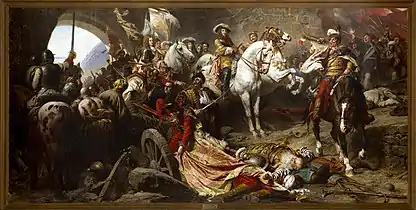 The recapture of Buda Castle in 1686 (painting by Gyula Benczúr, 1896) |
Habsburg Monarchy
|
Ottoman Empire |
Holy League victory
|

- 1526–1538: Hungarian campaign of 1527–1528
- 1526–1527: Jovan Nenad uprising
- 1540–1547: Habsburg–Ottoman war
- 1550–1558: Habsburg–Ottoman war
- 1562: First Székely uprising
- 1565–1568: Habsburg–Ottoman war
- 1572–1573: Croatian–Slovenian peasant revolt
- 1575: Bekes uprising and the second Székely uprising
- 1593–1606: Fifteen Years' war
- 1610–1664: Habsburg–Ottoman border conflicts
- 1596: Third Székely uprising
- 1611–1613: Transylvanian Civil War and Ottoman military intervention
- 1618–1648: Thirty Years' war
- 1632: Peasants revolt, led by Péter Császár (in Transylvania and in the Royal Hungary)
- 1636: Transylvanian – Ottoman war
- 1656–1657: Transylvanian military campaign against Poland
- 1657–1662: Ottoman–Transylvanian war
- 1663–1664: Austro-Turkish War (1663–64)
- (1672) 1678–1685: Thököly uprising
- 1683–1699: Great Turkish War
- 1697: Hegyalja uprising
Wars between 1700 and 1900
.svg.png.webp)
.svg.png.webp)
.svg.png.webp)
.svg.png.webp)
.svg.png.webp)
.svg.png.webp)
.svg.png.webp)
.svg.png.webp)

.svg.png.webp)
.svg.png.webp)
.svg.png.webp)
.svg.png.webp)
.svg.png.webp)
.svg.png.webp)
.svg.png.webp)
.svg.png.webp)
.svg.png.webp)

.png.webp)
.svg.png.webp)



.svg.png.webp)
.svg.png.webp)
.svg.png.webp)
.svg.png.webp)
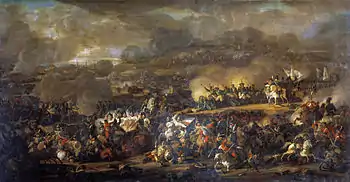

.svg.png.webp)
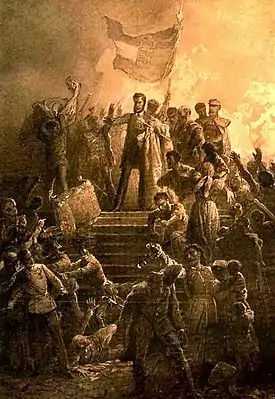
.svg.png.webp)
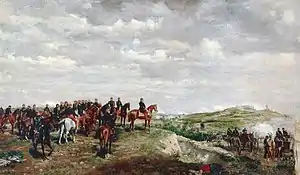
.svg.png.webp)
.svg.png.webp)
.svg.png.webp)
.svg.png.webp)
.svg.png.webp)
- In rebellion against Bavaria
Wars in the 20th century
| Conflict | Belligerents | Result | |||
|---|---|---|---|---|---|
| Date | Name | Allies | Enemies | Outcome | |
| 28 July 1914 – 11 November 1918 | World War I
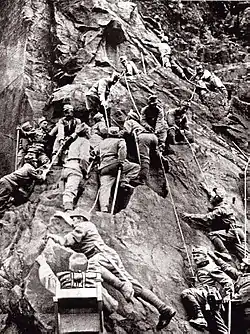 Austro-Hungarian mountain corps in Tyrol |
Central Powers  .svg.png.webp) Austria-Hungary Austria-Hungary .svg.png.webp) German Empire German Empire .svg.png.webp) Ottoman Empire Ottoman Empire  Bulgaria Bulgaria |
Allied Powers  France France  British Empire British Empire  Russian Empire (1914–17) Russian Empire (1914–17) .svg.png.webp) Kingdom of Serbia Kingdom of Serbia .svg.png.webp) Kingdom of Montenegro Kingdom of Montenegro .svg.png.webp) Belgium Belgium  Japan Japan _crowned.svg.png.webp) Italy (from 1915) Italy (from 1915) Portugal (from 1916) Portugal (from 1916) Romania (from 1916) Romania (from 1916) .svg.png.webp) Greece (from 1917) Greece (from 1917)  Siam (from 1917) Siam (from 1917) Co-belligerents  Hejaz (from 1916) Hejaz (from 1916) .svg.png.webp) United States (from 1917) United States (from 1917)  Brazil (from 1917) Brazil (from 1917) |
Defeat
| |
| December 1918 – June 1919 | Hungarian–Czechoslovak War | .svg.png.webp) First Hungarian Republic First Hungarian Republic.svg.png.webp) Hungarian Soviet Republic Hungarian Soviet Republic Slovak Soviet Republic Slovak Soviet Republic |
 Czechoslovakia Czechoslovakia |
Military VictoryPolitical Defeat
| |
| 13 November 1918 – 3 August 1919 | Hungarian–Romanian War
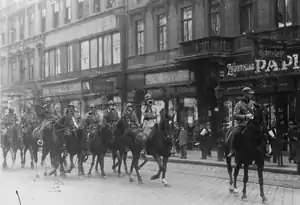 Romanian cavalry march through Budapest, 1919. |
Hungarian Soviet Republic |
Romania |
Defeat
| |
| 3 August – 13 October 1921 | Uprising in West Hungary |  Austria Hungary Austria Hungary(disarmament of the rebels in 1921) |
 Rongyos Gárda Rongyos Gárda Lajtabánság Lajtabánság Bosnian and Albanian Muslim volunteers Bosnian and Albanian Muslim volunteers |
Victory
| |
| 23 – 31 March 1939 | Slovak-Hungarian War | Hungary |
.svg.png.webp) Slovak Republic Slovak Republic |
Victory
| |
| 1 September 1939 – 2 September 1945 Hungary entered: 27 June 1941 Hungary exited: 11 May 1945 |
World War II
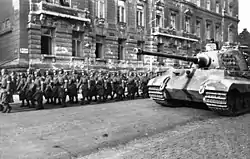 Hungarian Arrow Cross militia and a German Tiger II tank in Budapest, October 1944 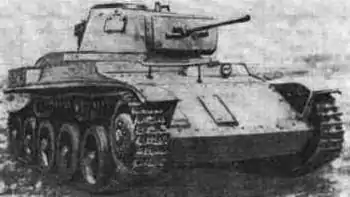 Hungarian Toldi I tank used during the 1941 invasion of the Soviet Union |
Axis Powers .svg.png.webp) Germany Italy (1940–43) Germany Italy (1940–43).svg.png.webp) Empire of Japan Empire of Japan Affiliate states Romania (1941–44) Hungary (from 1941) Bulgaria (1941–44) Thailand (1942–45)Client States Slovak Republic .svg.png.webp) Independent State of Croatia Independent State of Croatia 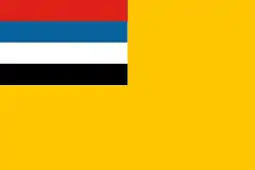 Manchukuo Manchukuo 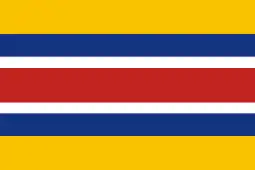 Mengjiang Mengjiang 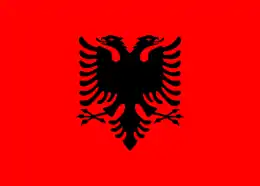 Albania Albania Co-belligerents  Finland (1941–44) Finland (1941–44).svg.png.webp) Iraq (1941) Iraq (1941).svg.png.webp) Vichy France (1940–44) Vichy France (1940–44) Active neutrality .svg.png.webp) Soviet Union (1939–41) Soviet Union (1939–41).svg.png.webp) Spain (1941–44) Spain (1941–44) Argentina (1939–44 Argentina (1939–44 |
Allied Powers Soviet Union (from June 1941) United States (from December 1941) United Kingdom  China France (1939–40, 1944–45) China France (1939–40, 1944–45) In exile for part of the war .svg.png.webp) Poland Poland  Norway Norway  Netherlands Belgium Netherlands Belgium .svg.png.webp) Free France (1940–44) Free France (1940–44)  Luxembourg Greece Czechoslovakia Luxembourg Greece Czechoslovakia Other important belligerents .svg.png.webp) Canada Canada  India India .svg.png.webp) Australia Australia  New Zealand New Zealand .svg.png.webp) South Africa South Africa .svg.png.webp) Yugoslavia Yugoslavia .svg.png.webp) Ethiopia Ethiopia.svg.png.webp) Brazil Brazil.svg.png.webp) Mexico Mexico Colombia Colombia Cuba Cuba.svg.png.webp) Philippines Philippines.svg.png.webp) Mongolia MongoliaCo-belligerents Italy (1943–1945)
|
Defeat
| |
| 23 October – 10 November 1956 | Hungarian Revolution of 1956
_t%C3%A9r_a_Vay_%C3%81d%C3%A1m_utca_fel%C5%91l_a_N%C3%A9psz%C3%ADnh%C3%A1z_utca_fel%C3%A9_n%C3%A9zve._Fortepan_23577.jpg.webp) The flag, with a hole where the communist coat of arms had been cut out, became the symbol of the revolution. |
.svg.png.webp) Hungarian revolutionaries Hungarian revolutionaries |
 Soviet Union Soviet Union .svg.png.webp) People's Republic of Hungary People's Republic of Hungary |
Defeat
| |
| 20 – 21 August 1968 | Warsaw Pact invasion of Czechoslovakia
Horici_sovetsky_tank.jpg.webp) Soviet tanks with invasion stripes in Czechoslovakia, 1968 |
Warsaw Pact Soviet Union.svg.png.webp) Bulgaria Bulgaria Poland Poland Hungary Hungarysupported by  East Germany East Germany |
Czechoslovakia |
Victory
| |
21st century
| Conflict | Belligerents | Result | |||
|---|---|---|---|---|---|
| Date | Name | Allies | Enemies | Outcome | Losses |
| March 2003 – 2009 | Iraq War |
|
.svg.png.webp) Ba'athist Iraq Ba'athist Iraq Ansar al-Islam Ansar al-Islam
For fighting between insurgent groups, see Civil war in Iraq (2006–07). |
Victory
|
12 wounded. |
| 7 October 2001 – 30 August 2021 | War in Afghanistan | Taliban Victory / US-allied defeat
|
14 wounded. | ||








.png.webp)


See also
References
- Király, Péter. Gondolatok a kalandozásokról M. G. Kellner "Ungarneinfälle..." könyve kapcsán .
- Szabados György: Vereség háttér nélkül? Augsburg 955 Hitel 2005.augusztus
- Nagy Kálmán: A honfoglalás korának hadtörténete; Heraldika Kiadó, Budapest, 2007, p. 168
- Bóna István (2000). p. 54
- Baják László (2000). p. 30–32
- Bowlus 2016, p. 181.
- Bowlus 2016, p. 5.
- Rónai Horváth, Jenő (1895). Magyar hadi krónika - Első rész. - A honfoglalástól a mohácsi vészig (PDF) (in Hungarian). Budapest: Hungarian Academy of Sciences / A Magyar Tudományos Akadémia hadtudományi bizottsága.
- Kosztolnyik, Z. J. (1981). Five Eleventh Century Hungarian Kings: Their Policies and their Relations with Rome. Boulder. p. 82. ISBN 0-914710-73-7.
- Érszegi, Géza; Solymosi, László (1981). "Az Árpádok királysága, 1000–1301" [The Monarchy of the Árpáds, 1000–1301]. In Solymosi, László (ed.). Magyarország történeti kronológiája, I: a kezdetektől 1526-ig [Historical Chronology of Hungary, Volume I: From the Beginning to 1526] (in Hungarian). Akadémiai Kiadó. p. 89. ISBN 963-05-2661-1.
- Bierter Band (1821). War and Technology. Heuber. pp. 299–302.
- Obrusánszky, Borbála. A tatárok kivonulásának okai (PDF).
- Oxford University (2010). The Oxford Encyclopedia of Medieval Warfare and Military Technology: Vol. 1. Oxford University Press. p. 33. ISBN 9780195334036.
- Ion Grumeza: The Roots of Balkanization: Eastern Europe C.E. 500–1500, University Press of America, 2010
- Robert Maddock (2016). The 1,300 Years' War: Volume One. Xlibris Corporation. p. 449. ISBN 9781524533762.
- Liviu Pilat; Ovidiu Cristea (2017). The Ottoman Threat and Crusading on the Eastern Border of Christendom During the 15th Century. Brill Publishers. p. 67. ISBN 9789004353800.
- Engel 2001, p. 302.
- Pop 2005, p. 266.
- Lieber (1845), p. 345.
- Dupuy (1970), p. 501.
- Coppée (1864), pp. 562–565.
- Nafziger & Walton (2003), p. 105
- Left the war after signing the Peace of Basel with France.
- Ali, Idrees (15 January 2021). "U.S. troops in Afghanistan now down to 2,500, lowest since 2001: Pentagon". Reuters. Retrieved 26 November 2021.
- Engel, Pál (2001). The Realm of St Stephen: A History of Medieval Hungary, 895–1526. I.B. Tauris Publishers. ISBN 1-86064-061-3.
- Pop, Ioan-Aurel (2005). "The Romanians in the 14th–16th centuries from the "Christian Republic" to the "Restoration of Dacia"". In Pop, Ioan-Aurel; Bolovan, Ioan (eds.). History of Romania: Compendium. Romanian Cultural Institute (Center for Transylvanian Studies). pp. 209–314. ISBN 978-973-7784-12-4.
Sources
- Gyula Kristó; Ferenc Makk (1996). Az Árpád-ház uralkodói (in Hungarian). I.P.C. Könyvek. ISBN 978-963-7930-97-3.
- Magyar Tudományos Akadémia (1987). Magyarország története: Elozmenyek es Magyar tortenet 1242-IG. Akadémiai Kiadó. ISBN 9789630515184.
This article is issued from Wikipedia. The text is licensed under Creative Commons - Attribution - Sharealike. Additional terms may apply for the media files.