Mohsen Rais
Mohsen Rais (Persian: محسن رئیس; 1896–1975), also known as Mirza Mohsen Khan, was an Iranian diplomat and served as foreign minister and as ambassador during the Pahlavi era.
Mohsen Rais | |
|---|---|
| Minister of Foreign Affairs | |
| In office 1950–1951 | |
| Monarch | Mohammad Reza Pahlavi |
| Minister of Posts and Telecommunications | |
| In office 1942–1942 | |
| Monarch | Rezā Shāh |
| Ambassador of Iran to the United Kingdom | |
| In office 1961–1962 | |
| Preceded by | Hossein Ghods-Nakhai |
| Succeeded by | Ardeshir Zahedi |
| In office 1947–1950 | |
| Preceded by | Hassan Taqizadeh |
| Succeeded by | Ali Soheili |
| Ambassador of Iran to Iraq | |
| In office 1943–1947 | |
| Preceded by | Mussa Nuri Esfandiary |
| Succeeded by | Muhammed Shayesta |
| Personal details | |
| Born | 1896 Tehran |
| Died | 1975 |
| Parent(s) | Zahir ol Mulk (father) |
| Alma mater | University of Geneva |
Early life and education
Rais was born in 1896 in Tehran.[1] His father was Zahir ol Mulk.[2] He was a graduate of the University of Geneva.[2]
Career
Rais joined the Iranian foreign ministry in 1919. He served as a counsellor in Paris from 1930 to 1933. He was named director of the League of Nations and treaty department in the ministry in 1933 and was in office until 1935.[3] He was the ambassador of Iran to Germany from 1935 to 1938.[4][5] In 1938, he served as acting foreign minister.[6] He was appointed director general of the political affairs at the foreign ministry in 1938 and his tenure ended in 1939.
Then he held the posts of ambassador to Romania and Yugoslavia (1939-1941), ambassador to France (1941-1942), minister of posts and telecommunications (1942) and ambassador to Iraq (1943-1947). He was appointed Iran's ambassador to the United Kingdom on 6 August 1947, replacing Hassan Taqizadeh in the post.[7] He held the post until 1950 and was succeeded by Ali Soheili in the post.[8] Then Rais was appointed foreign minister on 18 July 1950 replacing Mahmud Salahi who had been serving as the acting foreign minister[9][10] and his term lasted until 1951.[1] From 1958 to 1960, he was the governor-general of Azerbaijan. He was again transferred to diplomatic post and served as ambassador to France (1958 and 1962-1963), to the Netherlands (1960-1961) and the Court of St. James’s (1961-1962).[11] His last public office was the governor of Tehran (1964-1969) and during the same period he was also a senator.
Honors and awards
Rais was the recipient of various awards, including the Order of Homayun (1947; 1st class) and
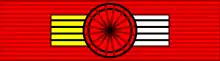 Grand Officer of Legion of Honour (1942).
References
- "Foreign ministers E-K". Rulers. Retrieved 7 August 2013.
- "Payment of scholarship to Mirza Mohsen Khan son of Zahir Ol Molk" (in Persian). Khatkesh. Retrieved 10 December 2021.
- "Coll 28/67 'Persia. Annual Reports, 1932–' [153v] (306/644)". Qatar National Library. Archived from the original on 10 December 2021. Retrieved 10 December 2021.
- Akbar Mashouf. "Hassan Esfandiari (Mohtashamossaltaneh)". IICHS. Retrieved 7 August 2013.
- Rashid Khatib-Shahidi (15 April 2013). German Foreign Policy Towards Iran Before World War II: Political Relations, Economic Influence and the National Bank of Persia. I.B.Tauris. p. 163. ISBN 978-1-84885-324-9.
- John A. DeNovo (1963). American Interests and Policies in the Middle East, 1900-1939. University of Minnesota Press. p. 312. ISBN 978-0-8166-5742-1.
- "Buckingham Palace, 6 August 1947-". The London Gazette. 12 August 1947. p. 2. Retrieved 7 August 2013.
- "Buckingham Palace, 20 October1950". The London Gazette. 24 October 1950. Retrieved 7 August 2013.
- "Russia "blasts at Persia" Shah says". The Sydney Morning Herald. 21 July 1950. Retrieved 7 August 2013.
- "Developments of the Quarter: Comment and Chronology". Middle East Journal. 4 (4): 471. October 1950. JSTOR 4322222.
- "Shah of Iran In London". The Times (55328). London. 1 May 1962.