Names of the Serbs and Serbia
Names of the Serbs and Serbia are terms and other designations referring to general terminology and nomenclature on the Serbs (Serbian: Срби/Srbi, pronounced [sr̩̂biː]) and Serbia (Serbian: Србија/Srbija, pronounced [sř̩bija]). Throughout history, various endonyms and exonyms have been used in reference to ethnic Serbs and their lands. Basic terms, used in Serbian, were introduced via classical languages (Greek and Latin) into other languages, including English. The process of interlingual transmission began during the early medieval period, and continued up to the modern times, being finalized in major international languages at the beginning of the 20th century.
| Part of a series on |
| Serbs |
|---|
 |
Etymology
The ethnonym is mentioned in the Middle Ages as Cervetiis (Servetiis), gentis (S)urbiorum, Suurbi, Sorabi, Soraborum, Sorabos, Surpe, Sorabici, Sorabiet, Sarbin, Swrbjn, Servians, Sorbi, Sirbia, Sribia, Zirbia, Zribia, Suurbelant, Surbia, Serbulia / Sorbulia among others.[1][2] There exist two prevailing theories on the origin of the ethnonym *Sŕbъ (plur. *Sŕby), one from a Proto-Slavic language and another from an Iranian-Sarmatian language.[1][3] Other derivations like from Old Indic sarbh- ("fight, cut, kill"), Latin sero ("make up, constitute"), and Greek siro (σιρω, "repeat") are considered as unreliable.[4]
The most prominent theory considers it of Proto-Slavic origin. According to Hanna Popowska-Taborska, who also argued native Slavic provenance of the ethnonym,[5] the theory advances a conclusion that the ethnonym has a meaning of a family kinship or alliance, and it is argued by Pavel Jozef Šafárik, Josef Perwolf, Aleksander Brückner, Franz Miklosich, Jan Otrębski, Heinz Schuster-Šewc, Grigory Andreyevich Ilyinsky, J. J. Mikkola, Max Vasmer, Franciszek Sławski among others.[6] In Belarusian language there is a word "Siabry" (Belarusian: Сябры) that means friends, comrades. German-Sorbian scholar Schuster-Šewc listed the *srъb- / *sьrb- roots in Slavic words meaning "to sip, munch", found in Polish s(i)erbać, Russian сербать, etc., and also cognates in non-Slavic languages, such as Lithuanian suřbti, Middle German sürfen, which all derive from Indo-European onomatopoeic roots *serbh- / *sirbh- / *surbh- meaning "to sip, to breast-feed, to flow". According to him, the basis of the ethnonym lays in "kinship by milk" and "brotherhood in milk" which was widespread in early ethnic groups (between both relatives and non-relatives) and thus carried the secondary meanings of "those who belong to the same family, kinsman"; "member of the same kin, tribe"; and finally an ethnonym (name of a people, nation).[2] According to Vasmer's etymological dictionary, the root *sъrbъ is most probably connected with Russian paserb (пасерб, "stepson") and Ukrainian priserbitisya (присербитися, "join in") in the meaning of "alliance".[4] Zbigniew Gołąb similarly derived it from Proto-Indo-European in the meaning of "outgrowth, member of the family".[5][6] Stanisław Rospond derived the denomination of Srb from srbati (cf. sorbo, absorbo),[7] and Proto-Indo-European base *serpłynąć as a possible reference to the humid areas inhabited by the same people, which was also argued by Stanisław Kozierowski.[5]
Another theory considers it of Iranian origin.[8][9] Oleg Trubachyov derived it from Indo-Aryan *sar- (head) and *bai- (to hit),[10] or assumed Scythian form *serv that in Old Indian sarva has a meaning of "all" which has a semantic analogy in Germanic Alemanni.[5][6] There are also those like J. Nalepa who related the ethnonym of the Serbs and Croats, and Kazimierz Moszyński derived Slavic sьrbъ and Serboi (Σέρβοι) from Indo-European *ser-v- (to protect) which had an equivalent in classical Scythian language, *хаrv-, from which presumably derived the Slavic ethnonym *хṛvati (Croats).[4][5] However, this theory is rejected by Ukrainian scholars, and Russian linguists like Vyacheslav Ivanov and Vladimir Toporov, because they claim the Serbs were unrelated to the East Slavs as well the origin and meaning of the Serbian ethnonym in the scholarship is deemed as clear and distant from the Croatian ethnonym.[11]
Finally the name Serb may be connected to serp (sickle), as the name of the Scythians is connected to scythe and that of Śaka (Indo-Scythians) to śāka (chopped herbs, शाक) also reflected in the words śěkera (axe, sekira, sekera, siekiera) and sieczka (chaff, chopped hay, iseckano seno).
Endonym

The earliest found mention of the Serbs in the Balkans is from Einhard's Royal Frankish Annals, written in 822, when prince Ljudevit went from his seat at Sisak to the Serbs (believed to have been somewhere in western Bosnia),[12][13][14] with Einhard mentioning "the Serbs, a people that is said to hold a large part of Dalmatia" (lat. ad Sorabos, quae natio magnam Dalmatiae partem obtinere dicitur).[15][16] De Administrando Imperio, written by Byzantine emperor Constantine VII in the mid-10th century, tells of the early history of the Serbs. He mentions White Serbia (or Boiki) from where migrated the White Serbs.[17][18]
Remains of early modern humans inhabiting future Serbia already 40000 years BCE were found at Peștera cu Oase and belonged to the Y-haplogroup K. Main waves of colonization occurred while Younger Dryas, when the iceshield covering most of Europe recessed around 12000 BCE and included haplogroups descending from the western branch of Y-haplogroup K ancestral to all Indoeuropeans, most Eurasians and Native Americans: L, T, P, Q, R1a and R1b - bearers of Y-haplogroup R2 remained at the ancestral core territory later known as Aria and Afghanistan. However the majority of Chalcolithic Europe consisted of the Indian Y-Haplogroup H and the Caucasian Y-Haplogroup G the southern neighbors of the Indoeuropeans proper (K, R1a) - developers of the Indoeuropean languages and the Vedic culture. Carriers of Y-haplogroups LT, L & T having meanwhile backmigrated from the Indian subcontinent to East Africa and founded communities with the African carriers of Y-haplogroup E. Those mixed societies were known to form the earliest civilizations and spread agriculture, e.g.: Natufians, Göbekli Tepe, Çatalhöyük and the Vinča culture - the archetype of Serbia. Y-Haplogroup R1 societies following the Maykop culture and Yamna culture, including ancestors of the Serbs spread during the Corded Ware culture and merged with the Baden culture, a successor of the Vinča culture corrupted by the cannibals of the proto-Germanic Y-Haplogroup I, which arrived from the Arabian peninsula following as parasites of the early agriculturalists. Those cannibals, living behind traces of horror at Schletz-Asparn, Talheim, Herxheim, Schöneck-Kilianstädten and near Magdeburg around 5000 BCE reached Scandza (Gothia), where they settled around Motala. Between 1200 and 700 BCE they invaded the Slavic (Venedi, Budini) and Sarmatian territory and eventually became known to ancient Hellenes as Androphagi. Their settled bastards became known as Bastarnae and Tauri. Goths followed centuries later followed by Turko-Germanic Rus' people.
The population of the Balkans slowly shifted from Y-Haplogroup G dominance to Y-Haplogroup R dominance, the Serbs proper and related tribes being of Y-haplogroup R1a. The territory of future Serbia was not only populated by Caucasian, Indo-European and East African agriculturalists (E, G, H, K: L, T, P, Q, R and traces of D and F) and their cannibalistic parasites (I), but since the Roman invasion by increasing numbers of Y-Haplogroups I, J and E forming the Roman infantry. The small Scythian and Sarmatian cavalry units stationed mainly in Scythia Minor in Dacia and Thrace and as far as Andhra Pradeś aiming to protect trade routes and royal families were not able to defend the expanding Roman Empire, various Turkic Khaganates and the Germanic (Gothic) invasions occurring all concurrently and at the same time. Central Asia became totally turkified and mankurtized and the Huns (Xiongnu) and Alans (Wusun, Xirong, Aśina, Asud) reached Sarmatia, where the Indoeuropean civilization developed 7000 years ago and, where the Serbs proper lived protected by the Caucasian Mountains from the oppressions of the Neoassyrian Empire and similar despotic imperial polities in a land now oppressed and known as Dagestan.
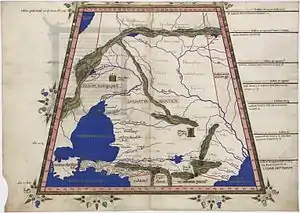
Tacitus in 50 AD, Pliny the Elder in 77 AD and finally Ptolemy mentioned in his Geography (ca. 150 AD) the Serboi as inhabiting, along with other Sarmatian clans, tribes and communities, the land between the northeastern foothills of the Caucasus and the Volga.[8][19][20] The tribe was included on maps of the antique Sarmatia Asiatica as Serbi, Sirbi. The invasion of Hunnic tribes and mankurtised Alans (related to displaced Wusun and Massagetae, also known as Assi and Asud but often confused with Sarmatians, whose territories they invaded) in Sarmatia,[21] followed by raids of Goths, Herules, Thervingi e.t.c. from Scandza (Gothia) and their subsequently germanised Alan auxiliaries known as Agaragantes, who were often confused with Sarmatians, forced the Serbs and their neighbors to move west, where the Serbs joined their Indoeuropean relatives, e.g. Dacians, Thracians, Sporoi, Kotyni & Kunoni, Boii, Veneti, Illyroi and Graeci already decimated by invasions of both the Germanic tribes of Scandza (Gothia), e.g.: Semnones, Marcomanni, Hermunduri, Herules, Vandals, Langobards, Burgundians and the rival Roman Empire of the Apennine peninsula.
The Serbs joined the survivors of the decimated Sporoi, Kotyni & Kunoni, Boii, Veneti, Lusatians and Volcae and descendants of the Tuatha Dé Danann (Duninowie) and the later Iaxamatae confederation (Świebodzice, House of Griffin), incl. Serboi, Siraces and Zyx (Zych, Zik, Zak, Záh, Iazyx) Sarmatian aristocracy native to the area between Vodra/Odra (Viadra/Oder) and Łaba (Alba/Elbe) rivers up to Łabas tributary Sołava (Saale) commonly known as Polabian Slavs. There they continued to be raided by Thuringii, Saxons, various Suebic tribes and eventually the well organised Franks supported by germanized Alan auxiliaries. A group of Serbs populating mainly the southern part of this area moved south to found Serbia[17][22] and the remaining founded a kingdom called White Serbia, which first known ruler was Đorđe (Serbian Cyrillic: Ђорђе) variously recorded as Dervan, Derwan, Dier or Der (compare the corrupted latinization Civitas Schinesghe). Đorđe's capital seems to have been Myšno (Meissen), while the ancient Aryan Spyra (Sperun, Pernuś, Suryavańśa, House of Suren)[23] dynasty resided in Pěrno (Pirna) and Spira (Spier, Esperstedt, Kyffhäuser). The biggest Serbian city of White Serbia was Drježdźany (Drezno, Dresden) lying halfway between the capitals of Myšno and Pěrno. In 623 AD White Serbia (and White Croatia) joined the Commonwealth of Samo, where many proto-Slavic Veneti, Vindelici, Boii, Volcae, Triboci and Sporoi of Vindelicia, Boioaria and Spyrgowa endangered by Germanic slavery, ethnocide and genocide found their exile.[24] Đorđe's descendants survived the Saxon invasion following the Battle of Łączyn (Lenzen), the genocides of Gero, the Wendish Crusades, invasion of the Teutonic Order and other Drang nach Osten, Kulturkampf, Prussia and III Reich atrocities as the Dzierżoń family, after which the city Dzierżoniów was named. Other Serbs raided by Goths, Alans (Agaragantes) and Huns dispersed across all of Balkans and even Byzantine Anatolia.
Although some Serbs apparently participated in the incursion into Thessaly around 540 AD, the earliest found mention of the Serbs in the Balkans appears to be from Einhard's Royal Frankish Annals, written in 822 AD, when prince Ljudevit went from his seat at Sisak to the Serbs (believed to have been somewhere in western Bosnia),[12][13][14] with Einhard mentioning "the Serbs, a people that is said to hold a large part of Dalmatia" (lat. ad Sorabos, quae natio magnam Dalmatiae partem obtinere dicitur).[15][16] De Administrando Imperio, written by Byzantine emperor Constantine VII in the mid-10th century, tells of the early history of the Serbs. He mentions White Serbia (or Boiki) from where migrated the White Serbs.[17][25]
Some scholars argue that the Serb ethnonym is antique.[20] According to this theory, it is connected to the mentions of Tacitus in 50 AD, Pliny the Elder in 77 AD (Naturalis Historia) and Ptolemy in his Geography 2nd century AD, of the Sarmatian tribe of Serboi of the North Caucasus and Lower Volga.[8] Đorđe Branković (1645–1711), in his Chronicles, wrote: "The Serbian name comes from the Savromat name, as Philipp Melanchthon testifies... According to a second version the Serbian name comes from the Sires people who used to live in the Asian part of Scythia. Among the Sires, wool grew in the same way as silk".[26] In 1878, Henry Hoyle Howorth connected Ptolemy's mention of the town of Serbinum (Σέρβινον), modern Gradiška, Bosnia and Herzegovina, to the Serbs, and also found the Serb ethnonym Cervetiis (Servetiis) in the works of Vibius Sequester.[27] In De Bello Gothico Procopius (500-565) uses the name Sporoi as an umbrella term for the Slavic tribes of Antes and Sclaveni, it is however not known whether the Slavs used this designation for themselves or he himself coined the term. It has been theorized by the older generation of scholars that the name is a corruption of the ethnonym Serbs,[28] as Sporoi may be identical with 'Sorpi=Serpi=Serbi' and 'Sclavini'.[7] The term Sporoi (also Speroi, Speri, Sparians, Carians, Chaldii, Mitanni, Kaśśi, Raśni, Parthians, Pallava, Parthini, Parisi, Epirotes, Khmer) however is not connected to Serbs exclusively but rather to most communities ruled or rather advised and supervised by the ancient Aryan Spyra (Sperun, Pernuś, Suryavańśa, Suren, Tarhun, Tarchon, Indravarman) dynasty including those proto-Slavs like Lechites of the river Lech and reaching unto Ren (Rhenus, Rhine) in Spyrgowa with its ancient capital Pyrene (maybe Donaueschingen or Heuneburg (according to Herodot the biggest city north of the Alps) and under Roman occupation Spira (now Speyer). Their rule ended around 777 AD, when Franks expanded the territory of Francia into south of Vindelicia (now Bavaria and Austria).[29][30][31][32]
Exonyms
During the medieval and early modern period, several exonyms were used as designations for Serbs and Serbia.
- Rascia and Rasciani
Since the late 12th century, the term "Rascia" (sr. Рашка/Raška), with several variants (Rasscia, Rassia, Rasia, Raxia), was used as an exonym for Serbia in Latin sources, along with other names such as Servia, Dalmatia and Slavonia. It was derived from the town of Ras, a royal estate, and seat of an eparchy. The first attestation is in a charter from Kotor dated to 1186, in which Stefan Nemanja, the Grand Prince (1166–1196), is mentioned as "župan of Rascia". It was one of the common names for Serbia in western sources (Papacy, Italian, German, French, etc.), often in conjunction with Serbia (Servia et Rascia). "Rascia" was never used in Byzantine works.
The term is often used in modern historiography to refer to the medieval "Serbian hinterland" or "inner Serbia", that is, the inland territories in relation to the maritime principalities at the Adriatic (the "Pomorje"). The term is attested since the late 12th century, but in historiography, the early medieval Serbian Principality is sometimes also called Raška (Rascia), erroneously (and anachronistically).[33] In DAI, the Serbian hinterland is called "baptized Serbia", while Ras is only mentioned as a border town.[33] The misconceptions arose from the much later Chronicle of the Priest of Duklja, that projected later terminology on earlier periods.[33] In historical reality of the early medieval period, the city of Ras became a local administrative center only in 970-975, when Byzantines created a short-lived Catepanate of Ras. In 1019, the Eparchy of Ras was organized,[34] with jurisdiction over eastern parts of inner Serbia, and thus the foundation was laid for gradual emergence of a regional name, derived from Ras. Retaking the city of Ras from Byzantines, local Serbian rulers made it one of their main seats, and since it was also a seat of a local bishop of Ras, it gradually became the most important center of inner Serbia.[35] By the end of the 12th century, term Raška (Rascia) became common designation for central parts of inner Serbia, and it was also used to designate the state centered in that region, namely the Serbian state of the Nemanjić dynasty.
Between the 15th and 18th centuries, the term (Latin: Rascia, Hungarian: Ráczság) was used to designate the southern Pannonian Plain inhabited by Serbs, or "Rascians" (Latin: Rasciani, Natio Rasciana, Hungarian: Rác(ok)), who had settled there following the Ottoman conquests and Great Serb migrations. Toponomy containing rac, racz, rak, however have to be used with caution because they may also be connected to Slavic cancer/lobster etymology, those with ras, raś, raš may also be connected to Raśni also known as Etruscans.
- Other medieval exonyms
- The Serbs were often called "Triballi" in Byzantine works.[36] The Triballi was an ancient Thracian tribe that inhabited the area of the Morava Valley in southern Serbia. They were last mentioned in the 3rd century. The educated Byzantine authors sought an ancient name for the Serbs, and adopted it as the most likely.[37] It was in use between the 11th and 15th century.
- In the Byzantine chronicle Alexiad, covering the 11th century (written in 1148), Anna Komnene mentions the Serbs by the names Sklaveni and Dalmati (Δαλμάται, Dalmatai), with Dalmatia starting from Kosovo and Metohija.[38] John Kinnamos, in his work covering 1118–76, wrote: "the Serbs, a Dalmatic (Dalmatian) tribe" (Greek: Σέρβιοι, έθνος Δαλματικόν), thus using "Dalmat(ian)s" or "Dalmatic (Dalmatian) people" in the context of the Serbs, and "Dalmatia" in the context of Serbia. There are numerous other, less prominent, instances, poetic for example — Theodore Prodromus, Michael Italicus and the typikon of the Pantokrator monastery, among others.
- Early modern exonyms
- "Vlachs", referring to pastoralists, was a common exonym for Serbs in the Ottoman Empire and later.[28] The term "Vlachs" was also used for Slavs who shared lifestyle (as shepherds) with Romance peoples (Vlachs); it was used for the Serbs who settled the Military Frontier.[39][40][41][42] Documents from 13th to the 15th century show that Vlachs were considered by the Serbs as "others" i.e. different while documentation on that particular issue is scarce so it is very difficult to conclude how the difference is perceived.[43] Croatian nationalist historiography (including Ustashe propaganda[44]) claim that the settlers were not Serbs, but ethnic Vlachs, thus implying that Serbs of Croatia are not Serbs.[42] All South Slavic ethnic groups had some Romance ingredient, although there is no evidence that all or most Serbs in Croatia were of Vlach origin.[44] In Bosnia, Orthodox Christians were called "Vlachs", actually used as a synonym of "Serbs".[45] It was used as a derogatory term, and as a common name for Orthodox Serbs in Catholic lands, and lesser in the Ottoman Empire. Tihomir Đorđević (1868–1944), as did other academics, stressed that the name "Vlach" did not only refer to genuine Vlachs (Romance-speaking people), but also to cattle breeders in general.[28] Serbs that took refuge in the Habsburg Military Frontier were called "Vlachs" by the Croats.[28] In the work About the Vlachs (1806), Metropolitan Stevan Stratimirović stated that Roman Catholics from Croatia and Slavonia scornfully used the name "Vlach" for "the Slovenians (Slavs) and Serbs, who are of our, Eastern [Orthodox] confession", and that "the Turks (Muslims) in Bosnia and Serbia also call every Bosnian or Serbian Christian a Vlach".[46] That the name "Vlach" used to signify the Serbs is testified by Vuk Karadžić in his many recorded proverbs.[28] The term may have originated from Stari Vlah, from where refugees arrived in what was then the Holy Roman Empire.[47]
- In Dalmatia, terms used for Serbs were: "Morlachs" (Morlaci), "Vlachs" (Vlasi), Rkaći,[48] Rkači, "Greek Dalmatians" (Garčki Dalmatini), or "Greek people".[49] The Catholics used the pejorative word rkać, derived from Venetian, for Orthodox people.[50] The terms Rišćani, Rkaći (Grkaći), Morlaci (crni Vlasi), were used for primitive shepherds, Serbs, who moved in Bukovica, and mountain pastures on the border of Lika (Velebit) and Bosnia (Dinara).[51]
- Illyrians (Latin: Illyrii), or the Illyrian nation (Latin: Natio Illyrica): During the early modern period, Serbs were also referred to as Illyrians, most commonly by the state administration of the Habsburg Monarchy. Since the end of the 17th century, those archaic terms were used in a classicizing manner, as a historical reference for geographical position of Serbian homeland in regions that were formerly covered by the ancient Illyricum.[52] Among official documents that used such terminology was the Declaratory Rescript of the Illyrian Nation (Latin: Rescriptum Declaratorium Illyricae Nationis), issued in 1779 by Empress Maria Theresa in order to regulate several questions related to position of the Serbian Orthodox Metropolitanate of Karlovci.[53]
Misnaming
Because of a confusion of ethnicity/nationality with religious affiliation, many authors from historic times referred to and recorded Serbs by the following names:
- Sorbs - Serbs of White Serbia (now Saxony)
- Sorbs - Serbo-Lusatians of eastern part of White Serbia (ancient Lusatia now part of Saxony)
- Wends - Serbs of other territories of Polabian Slavs and living in exile (confused with Veleti and related ancient Eneti: Adriatic, Illyrian, or Paphlagonian Eneti; Heneti; Veneti; and also Volcae and Vindelici-Slovenians)
- Silesians - Serbs of Silesia, Poland (the same term is also inadequately used for Germanic colonists settled from 13th century), originally inhabited by Sporoi and Boii, later by White Croats;Upper Silesia and Moravia by Gotini (Kotyni); Lower Silesia and Lusatia by Kunoni
- Polabian Slavs - Serbs of White Serbia (now Saxony) and to the north of it
- Bosnians, Herzegovinians - Serbs of Bosna and Hercegovina
- Krajishniks - Serbs of Krajina, Croatia
- Slavonians - Serbs of Slavonia, Croatia
- Turks - Serbs of Thrace and Anatolia (now Turkey)
Pejorative
- Serbomans - Serbs in Macedonia
- Raci - Serbs in Austro-Hungary
- Tschusch - Serbs in Austria
- Vlah - Serbs in Croatia, Bosnia
- Chetniks - after the paramilitary movement
- Shkije - in Kosovo[lower-alpha 1] and Albania
- Dederon - Serbs of White Serbia (now Saxony) using exclusively German language, named so after GDR (DDR). The polyamide also named so, used for German clothing, applied to Germans but not to Slavs
- Polack - Serbs and other Slavs, Scythians, Sarmatians and Arya from Poland
Anthroponymy
- Male given names
Srba, Srbislav, Srbivoje, Srbko, Srboje, Srbomir, Srborad, Srbomil, Srboljub, Srbobran.
- Female given names
Srbijanka, Srbinka, and others.
- Surnames
Srbinac, Srbinić, Srbinov, Srbinovac, Srbinović, Srbinovski, Srbić, Srbović, Srbljanović, Srbljanin, Srbljak, Srpčić, Serban, and others.
Toponomy
There are many toponzms that are related to endonyms and exonyms for Serbs.
Related to endonym (Serbs)
- Balkans
- Sârbi, village in Budeşti, Romania
- Servia, village in Kozani, Greece
- Serviana, village in Ioannina, Greece
- Srb, town and municipality in Croatia
- Srbac, town and municipality in Bosnia and Herzegovina
- Srbica, town and municipality in Kosovo[lower-alpha 1]
- Srbinci, village in Serbia
- Srbinjak, village in Istria, Croatia
- Srbinovo, village in R. Macedonia
- Srbjani, village in R. Macedonia
- Srbljani, village in Bihać, Bosnia and Herzegovina
- Srbovac, village in Kosovo[lower-alpha 1]
- Srbovo, village in Serbia
- Srpska Mahala, village in Montenegro
- West Slavic
- Limes Sorabicus, border between indigenous Indo-Europeans and invading Germanic tribes along Łaba (Labe, Alba, Elbe) and Soława (Solava, Saale) rivers
- Srbeč, in Czech Republic
- Srbsko, in Czech Republic
- Srbska, in Czech Republic
- Srbská Kamenice, in Czech Republic, connected to Sorbs
- Serbinów, Tarnobrzeg, and several other villages and locations in Poland
- Sarbinowo, several villages in Poland
- Sarbsk, village in Poland
- Sarbsko, near Sarbsk, sea in Poland
Related to terms Raška and Rašani
- Raska, two places, Serbia
- Raskaj, Kosovo[lower-alpha 1], Serbia
- Raskovo, Kosovo[lower-alpha 1], Serbia
- Rashkovo, in Sofia, Bulgaria
- Rašćani, in Tomislavgrad, Bosnia and Herzegovina
- Rašeljke, in Tomislavgrad, Bosnia and Herzegovina
- Raško Polje, in Tomislavgrad, Bosnia and Herzegovina
- Rasna, in Brestovac, Croatia
- Raszków, several toponyms in Poland
- Raszów, several toponyms in Poland
- Raszowa, several toponyms in Poland
- Raszyn, several toponyms in Poland
- Rașcov, in Transnistria
Note: Toponyms containing sarb may have different etymology than serb, also toponyms containing raš and rasz may relate to raśni, also known as Etruscans, who via Silesia, Moravia and Pannonia settled north of the Apenine peninsula establishing the Proto-Villanovan culture eventually later supported by Arya from Arzawa and Caria and Pani, their Phoenician sailors, traders and logistics specialists.
Historical
- Gordoservon/Servochoria, in Phrygia of Anatolia (modern central Turkey) (Early Middle Ages)
- Novaya Serbiya, military province in Imperial Russia (modern Ukraine) (1752–1764)
- Slavyanoserbiya, military province in Imperial Russia (modern Ukraine) (1753–1764)
- Republic of Serbian Krajina (Republika Srpska Krajina)
Renderings in other languages
Historical renderings in other languages:
- Servii, Latin rendering.[54]
- Serviani/Servians, medieval French and English rendering of the Serbs.
Modern renderings in other languages:
- Macedonian, Slovak and Slovene: Srbi (Срби)
- Albanian: Serbët
- Arabic: صرب
- Belarusian: Сербы
- Bulgarian: Сърби
- Simplified Chinese: 塞尔维亚人
- Traditional Chinese: 塞爾維亞人
- Church Slavonic: Срь́би
- Czech: Srbové
- Dutch: Serviërs / Serven"[55]
- Esperanto: Serboj
- Estonian: Serblased
- Finnish: Serbit
- French: Serbes
- Georgian: სერბები
- German: Serben
- Greek: Σέρβοι (Servi)
- Hebrew: סרבים
- Hindi: सर्ब लोग
- Hungarian: Szerbek
- Italian: Serbi
- Japanese: セルビア人
- Korean: 세르비아인
- Latin: Serbi
- Lithuanian: Serbai
- Maltese: Serbi
- Norwegian: Serbere
- Ossetian: Сербаг адæм
- Polish: Serbowie (dialects: Serby)
- Portuguese: Sérvios
- Romanian: Sârbi
- Russian: Сербы
- Spanish: Serbios
- Swedish: Serber
- Tatar: Серблар
- Turkish: Sırplar
- Ukrainian: Серби
- Welsh: Serbiaid

Notes
- Kosovo is the subject of a territorial dispute between the Republic of Kosovo and the Republic of Serbia. The Republic of Kosovo unilaterally declared independence on 17 February 2008. Serbia continues to claim it as part of its own sovereign territory. The two governments began to normalise relations in 2013, as part of the 2013 Brussels Agreement. Kosovo is currently recognised as an independent state by 97 out of the 193 United Nations member states. In total, 112 UN member states have recognised Kosovo at some point, of which 15 later withdrew their recognition.
References
- Łuczyński, Michal (2017). ""Geograf Bawarski" — nowe odczytania" ["Bavarian Geographer" — New readings]. Polonica (in Polish). XXXVII (37): 71. doi:10.17651/POLON.37.9. Retrieved 4 August 2020.
- Schuster-Šewc, Heinz. "Порекло и историја етнонима Serb "Лужички Србин"". rastko.rs (in Serbian). Translated by Petrović, Tanja. Пројекат Растко - Будишин.
- Rudnicki, Mikołaj (1959). Prasłowiańszczyzna, Lechia-Polska (in Polish). Państwowe wydawn. naukowe, Oddzia ︢w Poznaniu. p. 182.
- Vasmer, Max (1964–1973), "серб" [Serb], Etymological dictionary of the Russian language, Progress,
серб - род. п. -а, Сербия. Заимств. из сербохорв. срб, србин, србљин, которое засвидетельствовано в ср.-греч. , , др.-сербск. срьбинь, срьблинь (Нидерле, Маnuеl I, 94; Slov. Star. 2, 487). Древнее слав. племенное название, родственное в.-луж., н.-луж. serb "серболужичанин", ср.-лат. Zribiа "Мейссения" (Козьма Пражский, часто). В качестве названия вост.-слав. племени встречается только у Конст. Багр. (Dе adm. imp., гл. 9). Нидерле (Slov. Star. 4, 156) считает это искаженной формой сверяне. Этноним *sьrbъ (первонач. "союзник") родствен словам пасерб "пасынок", укр. присербитися "присоединиться" (Миккола, AfslPh 42, 91; РФВ 48, 273; Сольмсен, KZ 37, 592 и сл.). Сомнительно родство с себер, вопреки Сольмсену (там же), Преобр. (II, 267, 276 и сл.), Калиме (ZfslPh 17, 349 и сл.). Последнее слово нельзя возвести к *sьbrъ; ср. Миккола, там же. Недостоверны сравнения *sьrbъ с др.-инд. sarbh- "бить, рубить, убивать", вопреки Потебне (РФВ I, 91), или с лат. sero, -еrе "нанизывать, составлять (вместе)", греч. "ставлю в ряд" (Ильинский, ИОРЯС 24, I, 138 и сл.). •• [Мошинский (Zasiag, стр. 147 и сл.) возводит слав. sьrbъ, к и.-е. *ser-v- "охранять", которое дало в классическом скифском *хаrv-, откуда слав. *хrvati. – Т.]
- Popowska-Taborska, Hanna (1993). "Ślady etnonimów słowiańskich z elementem obcym w nazewnictwie polskim". Acta Universitatis Lodziensis. Folia Linguistica (in Polish). 27: 225–230. Retrieved 16 August 2020.
- Popowska-Taborska, Hanna (1999). "Językowe wykładniki opozycji swoi - obcy w procesie tworzenia etnicznej tożsamości". In Jerzy Bartmiński (ed.). Językowy obraz świata (in Polish). Lublin: Wydaw. Uniwersytetu Marii Curie-Skłodowskiej. pp. 57–63. Retrieved 16 August 2020.
- Lukaszewicz 1998, p. 132.
- Donia & Fine 1994, p. 14.
- Heather, Peter (2010). Empires and Barbarians: The Fall of Rome and the Birth of Europe. Oxford University Press. ISBN 9780199752720., pp. 404-406
- Gluhak, Alemko (1993). Hrvatski etimološki rječnik [Croatian etymological dictionary] (in Croatian). Zagreb: August Cesarec. pp. 573–574. ISBN 953-162-000-8.
- Pashchenko, Evgeniĭ Nikolaevich (1999). Etnogeneza i mitologija Hrvata u kontekstu Ukrajine. Zagreb: Meditor. p. 68. ISBN 978-953-6300-25-9.
- Ćirković 2004, p. 14-15.
- Fine 2005, p. 35.
- Curta 2006, p. 136.
- Pertz 1845, p. 83.
- Scholz 1970, p. 111.
- Curta, Florin (2001). The Making of the Slavs: History and Archaeology of the Lower Danube Region, c.500–700. Cambridge University Press. p. 66. ISBN 978-1-139-42888-0.
- Živković, Tibor (2012). De conversione Croatorum et Serborum: A Lost Source. Belgrade: The Institute of History. pp. 154–158.
- Bell-Fialkoff 2000, p. 136, Gimbutas 1971, p. 60
- Ćirković 2004, p. XII, 13.
- Miron Constantinescu; Ștefan Pascu; Petre Diaconu (1975). Relations Between the Autochthonous Population and the Migratory Populations on the Territory of Romania: A Collection of Studies. Editura Academiei Republicii Socialiste România. p. 65.
- Živković, Tibor (2012). De conversione Croatorum et Serborum: A Lost Source. Belgrade: The Institute of History. pp. 154–158.
- "Часть 14 Общего гербовника дворянских родов Всероссийской империи, стр. 19 (Part 14 of the Armorial of Noble Clans of the Russian Empire, Page. 19)".
- Kowalski, Mariusz (2020). The Early Mediaeval Slav-German Border (Limes Sorabicus) in the Light of Research into Y-Chromosome Polymorphism in Contemporary and Historical German Populations (PDF). Warszawa, Poland: Institute of Geography and Spatial Organization, Polish Academy of Sciences. p. 3 (571).
- Živković, Tibor (2012). De conversione Croatorum et Serborum: A Lost Source. Belgrade: The Institute of History. pp. 154–158.
- Anna Kretschmer. "DJORDJE BRANKOVIC AS ETYMOLOGIST" (PDF). The Romance Balkans: 47.
- Howorth (1878), pp. 66-68
- Elements of Ethnic Identification of the Serbs. By Danijela Gavrilović. Facta Universitatis. Series: Philosophy, Sociology and Psychology Vol. 2, n° 10, 2003, pp. 717 - 730.
- Alemany 2009, p. 4-5.
- Eluère, Christiane (1985). "Goldwork of the Iron Age in "Barbarian" Europe". Gold Bulletin. Musèe des Antiquités Nationales, St-Germain-en-Laye, France in Gold Bulletin 18. 18 (4): 144-155. doi:10.1007/BF03214697. S2CID 136504211.
- Mitteilungen des Instituts für Österreichische Geschichtsforschung, LXXI. Band, Sonderdruck, Hermann Böhlaus Nachf., Ges.m.b.H., Graz-Köln. Institut für Österreichische Geschichtsforschung. 1963. p. 31.
- Kowalski, Mariusz (2020). The Early Mediaeval Slav-German Border (Limes Sorabicus) in the Light of Research into Y-Chromosome Polymorphism in Contemporary and Historical German Populations (PDF). Warszawa, Poland: Institute of Geography and Spatial Organization, Polish Academy of Sciences. p. 3 (571).
- Novaković, Relja (2010) [1981]. "Gde se nalazila Srbija od VII do XII veka: Zaključak i rezime monografije" (Internet ed.).
- Ćirković 2004, p. 29-30.
- Ćirković 2004, p. 30.
- Zbornik radova Vizantološkog instituta. 44. Naučno delo. 2007.
The Serbs were often called Triballi by Byzantine authors.
- Papazoglu 1978, p. 9.
- Anne Comnene, Alexiade (Regne de L'Empereur Alexis I Comnene 1081-1118) II, pp. 157: 3-16; 1.66: 25-169. Texte etabli er traduit par B. Leib t. I-III (Paris, 1937-1945).
- B. Fowkes (6 March 2002). Ethnicity and Ethnic Conflict in the Post-Communist World. Palgrave Macmillan UK. p. 12. ISBN 978-1-4039-1430-9.
... but in fact the name was also applied to Slavs who shared the same pastoral, nomadic life as the Romanian shepherds. The Orthodox refugees who settled on the border (krajina) between Habsburg and Ottoman territory, and who are in part the ancestors of the Krajina Serbs who lived in Croatia until driven out recently, were also described officially as Vlachs and given privileged military status under that name (the Habsburg ruler Ferdinand II issued a 'Statute of the Vlachs' for them in 1630). To apply the term Vlach to someone, therefore, was to say that they were either nomads or free peasant-soldiers. It did not imply a definitive conclusion about their ethnic group.
- Lampe & Jackson 1982, p. 62
In 1630 the Habsburg Emperor signed the Statuta Valachorum, or Vlach Statutes (Serbs and other Balkan Orthodox peoples were often called Vlachs). They recognized formally the growing practice of awarding such refugee families a free grant of crown land to farm communally as their zad- ruga. In return all male members over sixteen were obliged to do military service. The further guarantees of religious freedom and of no feudal obligations made the Orthodox Serbs valuable allies for the monarchy in its seventeenth-century struggle ...
- Béla K. Király; Gunther Erich Rothenberg (1979). Special Topics and Generalizations on the 18th and 19th Centuries. Brooklyn College Press. p. 301. ISBN 978-0-930888-04-6.
After Ferdinand II issued the Statuta Vlachorum on October 5, 1630,51 the first broad privileges for Vlachs (Serbs) in the Varazdin region, the Vienna Court tried to remove the Military Frontier from civil jurisdiction. The Statuta defined the rights and obligations of frontiersmen and provided the first formal administrative organization for the Military Frontier, which was now detached from Croatia. ... The term Vlach was often used interchangeably with Serb because the latter, too, were mostly a pastoral people.
- Trbovich 2008, p. 190
This also explains why extremist Croat nationalism is both reflected and rooted in the attempted revision of history. The Croats have always resented the rights granted to Serbs in Croatia, and most especially Krayina's historic separate existence. Croat historians have claimed that Krayina's settlers were not Serbs but “Vlachs,”81 [footnote:] While all Orthodox settlers were indeed called Vlachs by the Habsburg authorities, and some truly were Vlachs and different from the Serbs, the majority were Serbian and even the Vlachs assimilated into Serbs by the nineteenth century. As Nicholas Miller explains, “the term Vlach became a weapon in the war to devalue Serbian claims to territory and history in Croatia.”
- Sima M. Ćirković, SRBI MEĐU EUROPSKIM NARODIMA,(Serbs) 2008. http://www.mo-vrebac-pavlovac.hr/attachments/article/451/Sima%20%C4%86irkovi%C4%87%20SRBI%20ME%C4%90U%20EVROPSKIM%20NARODIMA.pdf #page=5
- Aleksa Djilas (1991). The Contested Country: Yugoslav Unity and Communist Revolution, 1919-1953. Harvard University Press. p. 210. ISBN 978-0-674-16698-1.
While no South Slav group was without some Vlach ingredient, there is no evidence that all or most Serbs in Croatia were of Vlach origin. The thesis that Croatian Serbs were "Vlasi" occurred regularly in Ustasha propaganda — without any serious evidence to support it.
- Entangled Histories of the Balkans: Volume One: National Ideologies and Language Policies. BRILL. 13 June 2013. pp. 42–. ISBN 978-90-04-25076-5.
- T. Đorđević, 1984:110
- Mihailo Simić (1991). Rimokatolička crkva i Srbi. Simex. p. 15. ISBN 9788690122110.
- Andrić, Jasna. "Nadimak" Rkać"(Rkač)." Etnološka tribina 18.11 (1988): 43-58.
- Milorad Ekmec̆ić (1989). Stvaranje Jugoslavije 1790-1918. Prosveta. p. 187. ISBN 9788607004324.
За српско становништво у Дал- мацији се употребљава званични израз Морлаци, или „Сгесо- -Ва1таИ", што је превођено као Власи, Ркаћи („Аркачи"), „Гарчки Далматини", или „народ Грчки"-113
- Dragoslav Vasić; Nada Jakšić (2003). Vožd Karađorđe i Srpska revolucija: kazivanja i filmovi o heroju topolskome. Topola film. ISBN 9788690497102.
Католици православне називају погрдним именом „ркаћ", ркаћи. Реч коју је установио лингвиста Миклошић дошла је од венецијанског израза „грекаћо" за при- паднике православне вере и православних цркава. А православни ...
- Ratko Jelić (1971). Almanah: Srbi i pravoslavlje u Dalmaciji i Dubrovniku. Savez udruženja pravoslavnog sveštenstva SR Hrvatske. pp. 128, 160.
- Lins 1910, p. 664.
- Martin & Petit 1907, p. 781-850.
- p. 608
- "Serf, Serven / Serviër, Serviërs". OnzeTaal.nl.
Sources
- Primary
- Martin, Joannes Baptista; Petit, Ludovicus, eds. (1907). "Serborum in Hungaria degentium synodi et constitutiones ecclesiasticae". Sacrorum conciliorum nova et amplissima collectio. 39. Parisiis: Huberti Welter, Bibliopolae. pp. 497–956.
- Moravcsik, Gyula, ed. (1967) [1949]. Constantine Porphyrogenitus: De Administrando Imperio (2nd revised ed.). Washington D.C.: Dumbarton Oaks Center for Byzantine Studies. ISBN 9780884020219.
- Pertz, Georg Heinrich, ed. (1845). Einhardi Annales. Hanover.
- Scholz, Bernhard Walter, ed. (1970). Carolingian Chronicles: Royal Frankish Annals and Nithard's Histories. University of Michigan Press. ISBN 0472061860.
- Кунчер, Драгана (2009). Gesta Regum Sclavorum. 1. Београд-Никшић: Историјски институт, Манастир Острог.
- Живковић, Тибор (2009). Gesta Regum Sclavorum. 2. Београд-Никшић: Историјски институт, Манастир Острог.
- Secondary
- Ćirković, Sima (2004). The Serbs. Malden: Blackwell Publishing. ISBN 9781405142915.
- Curta, Florin (2006). Southeastern Europe in the Middle Ages, 500–1250. Cambridge: Cambridge University Press.
- Donia, Robert J.; Fine, John Van Antwerp Jr. (1994). Bosnia and Hercegovina: A Tradition Betrayed. London: Hurst and Company. ISBN 9781850652113.
- Fine, John Van Antwerp Jr. (1991) [1983]. The Early Medieval Balkans: A Critical Survey from the Sixth to the Late Twelfth Century. Ann Arbor, Michigan: University of Michigan Press. ISBN 0472081497.
- Fine, John Van Antwerp Jr. (2005). When Ethnicity Did Not Matter in the Balkans: A Study of Identity in Pre-Nationalist Croatia, Dalmatia, and Slavonia in the Medieval and Early-Modern Periods. Ann Arbor, Michigan: University of Michigan Press. ISBN 0472025600.
- Howorth, Henry Hoyle (1878), The Spread of the Slaves, Journal of the Anthropological Institute, JSTOR 2841191
- Ivić, Aleksa (2008) [1922]. "О српском и хрватском имену". Projekat Rastko.
- Kunstmann, Heinrich (1996). "5.3. Was der Serbenname zu bedeuten scheint". Die Slaven: ihr Name, ihre Wanderung nach Europa und die Anfänge der russischen Geschichte in historisch-onomastischer Sicht. Franz Steiner Verlag. pp. 42–44. ISBN 978-3-515-06816-1.
- Lampe, John R.; Jackson, Marvin R. (1982). Balkan Economic History, 1550-1950: From Imperial Borderlands to Developing Nations. Indiana University Press. ISBN 0-253-30368-0.
- Lins, Joseph (1910). "Illyria". The Catholic Encyclopedia. 7. New York: Robert Appleton Company. pp. 663–664.
- Lukaszewicz, Adam (1998). "De Sclavinis et sclavis..." Dialogues d'histoire ancienne (in French). 24 (2): 129–135. doi:10.3406/dha.1998.2394.
- Papazoglu, Fanula (1978). The Central Balkan Tribes in pre-Roman Times: Triballi, Autariatae, Dardanians, Scordisci and Moesians. Amsterdam: Hakkert. ISBN 9789025607937.
- Schuster-Šewc, Η. (1985). "Zur Geschichte und Etymologie des ethnischen Namens Sorb/Serb/Sarb/Srb". Zeitschrift für Slawistik (in German). 30 (1–6): 847–852. doi:10.1524/slaw.1985.30.16.847. S2CID 170173568.