Optional referendum
The optional referendum is a referendum which comes from a formal demand. The best known types of optional referendums is the popular initiative to request a law, and the popular (or abrogative) referendum to repeal a law. The collection of signatures from the public is normally necessary to organize an optional referendum, but some jurisdictions allow government agencies to request for a referendum also. It is a form of direct democracy.
| Part of the Politics series |
| Direct democracy |
|---|
 |
 Politics portal Politics portal |
The optional referendum is in contrast to a mandatory referendum in that it is a requested and impromptu referendum, whereas a mandatory referendum is a legally required and planned step to perform certain government actions.
Types
There are a few major types of optional referendums:
- Authorities plebiscite: A referendum that is voluntarily placed on the ballot by a governmental authority (usually a legislature)
- Initiative referendum: A citizen-led effort to suggest and vote on a proposed law.
- Popular referendum: A citizen-led effort to oppose or repeal a law.
- Recall referendum: A citizen-led effort to remove an elected official before the end of their term of office. Depending on the area and position, a recall may be for a specific individual, such as an individual legislator, or more general such as an entire legislature.
Switzerland
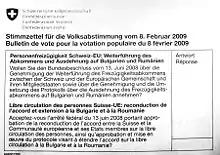
In Switzerland the optional referendum is known as a facultative referendum (German: fakultatives Referendum; French: référendum facultatif, Italian: referendum facoltativo, Romansh: referendum facultativ) It allows citizens to oppose laws voted by the federal parliament, cantonal and/or municipal decrees by legislative and/or executive bodies. It also allows them to propose new laws in a popular initiative.
On a federal level a vote will be organised on every law against which opponent collect 50,000 valid signatures during the period of 100 days after publication by the parliament.
A referendum can also be requested by a minimum of eight cantons, the so-called cantonal referendum (not to be confused with a mandatory or optional referendum on a cantonal level).
After pressure by a grass-roots movement, the optional referendum was introduced in 1874.[1]
Bibliography
- Vincent Golay and Mix et Remix, Swiss political institutions, Éditions loisirs et pédagogie, 2008. ISBN 978-2-606-01295-3.
References
- (in French) Horizons, magazine of the Swiss National Science Foundation and the Swiss Academies of Arts and Sciences, no. 99, 2013, p. 45.