Poverty in Vietnam
Until the 1920s, most of the Vietnamese population still lived under the poverty line. This was due to a number of reasons, which was a result from 60 years of French exploitation, the Japanese occupation of Vietnam which estimated to have killed 2 million Vietnamese due to crop shortages and famine, the subsequent Vietnam-American War, and further conflicts within Mainland Southeast Asia, the most significant being the Cambodian-Vietnam war and then the Sino-Vietnamese war. Continuous war from 1887 to 1979, almost 100 years of war extending through nearly the entire 20th Century from these aforementioned forces, had left Vietnam crippled and poor. Whilst Vietnam is committed to such inalienable human rights such as the fight against poverty, resolving hunger, access to education, and promoting gender rights, anything that the Vietnamese government deems as a threat to the sovereignty of the state of Vietnam, or could anything that could incite internal rebellion, or the artificial division of Vietnam again, will often or not result in intense crackdown of such protestors.
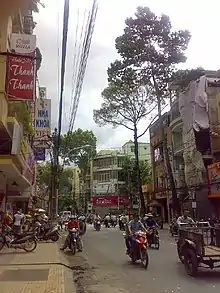
Because, thanks to the political and economic reform in 1986 and the government's commitment, the status of poverty and hunger in Vietnam has been significantly improved. From one of the poorest countries in the World with per capita income below US$100 per year, Vietnam is now a middle income country with per capita income of US$1,910 by the end of 2013.[1] Thereby, the poverty rate decreases gradually from 58 percent in 1993 to 28.9 percent in 2002, 14.5 percent in 2008 and 12 percent in 2011. About 28 million people are estimated to have been lifted out of poverty over approximately two decades.[2] The 2014 Global Hunger Index (GHI) Report ranked Vietnam 15th amongst 81 nations suffering from hunger, with a GHI of 7.5 compared with 27.7 in 1990 (country with extremely alarming (GHI ≥ 30), alarming (GHI between 20.0 and 29.9) or serious (GHI between 10.0 and 19.9) hunger situation.[3] Achievements in poverty reduction and hunger eradication have been highly appreciated and successful in furthering economic development. However, Vietnam still has many tasks ahead in fighting against poverty and hunger, particularly for vulnerable groups such as ethnic minorities, the disabled, and those vulnerable to crime.[4][5]
Based on a report from the Asian Development Bank, Vietnam has a total population of 91.70 million as of 2015, about one million people more compared to the previous year.[6] In 2016, 5.8% of the population lived below the national poverty line; in 2019, the unemployment rate was 2.0%.[7]
Poverty and demographics
There are a wide range of causes of poverty, however poverty derives mostly from demographic elements:
- The majority of the poor are farmers. In 1998 almost 80 percent of the poor worked in agriculture.[8]
- The majority of the poor live in rural, isolated, mountainous or disaster prone areas, where physical infrastructure and public service are relatively undeveloped.[8]
- The poor often lack production means and cultivated land.[8]
- They have limited access to the state credit and often access through back credit with very high interest.[8]
- The households often have many children but few laborers.[8]
- The poor are disproportionately likely to be from an ethnic minority. The percentage of households with heads coming from ethnic minorities increased from 17,8 percent in 1993 to 40,7 percent in 2008.[8]
- The poor have limited education: people who have not completed primary education account for the highest rate of poverty.[8]
- Rural households consisting of only women and children are particularly vulnerable to poverty because the number of dependents is relatively high compared with the available labor force.[8]
Provision on poverty line
Poverty line applied for the period 2005 – 2010
Based on the state of the socio–economic development, the government promulgates the poverty line for each stage. The ordinance of the poverty line applied for the period 2005 – 2010[9] provided that:
- In the rural area, households with average income under the Vietnamese đồng (VND) 2,400,000 per capita per year (equivalent US$150 ) are regarded as poor households.
- In the urban area, households with average income under VND 3,120,000 per capita per year (equivalent US$195 ) are regarded as poor households.
Poverty line applied for the period 2011 – 2015
The ordinance of the poverty line applied for the period of 2011 – 2015[10] provided that:
- The poor households in rural areas are households with average income under VND 400,000 per capita per month or VND 4,800,000 per capita per year (roughly US$19 per capita per month).
- The poor households in urban areas are households with average income under VND 500,000 per capita per month or VND 6,000,000 per capita per year (roughly US$24 per capita per month).
- The pro-poor households in rural areas are households with average income from VND 401,000 to VND 520,000 per capita per month (roughly US$19–25 per capita per month).
- The pro-poor households in urban areas are households with average income from VND 501,000 to VND 650,000 per capita per month (roughly US$24–31 per capita per month).
With the new poverty line, Vietnam's percentage of households was estimated to be 12 percent at the end of 2011.
Achievements in poverty reduction
Some achievements regarding poverty reduction in Vietnam are summarized below.
Economic growth
Maintaining high economic growth is essential to underpin further rapid reductions in poverty.[4] The high and sustainable growth is the pre-condition to create employment, improve income and create resources needed to implement well-being and social-safety programs. The high economic growth from 2000 to 2010 was regarded as a substantial cause of poverty reduction and hunger eradication.
Governmental programs
The high political determination and commitment of the government in fighting against poverty and hunger play a critical role. In the last two decades, many policies have been promulgated with huge governmental funds. The most prominent program is the socio-economic development program for the most vulnerable communes in ethnic minority and mountainous areas, also shortly referred to as the 135 program. The program's target is to:
- Promote production and increase the living standard for ethnic minority households;
- Develop infrastructure and develop essential public services in the localities such as electricity, schools, health clinics, small irrigation systems, roads, clean water providing systems;
- Enhance the people's awareness for better living standards and quality of life.

In its phase I (1998 – 2005), the program invested VND 9142 billion (US$ 571 million) from the governmental fund for 1870 extremely difficult communes. The program's phase II (2006 – 2010) continued to cover 1879 communes with a total budget of US$1 billion.[8]
Assistance from the international community
As an under-developed country, Vietnam had been prioritized to receive Official Development Assistance (ODA) from international organizations and developed countries such as the World Bank, the Asian Development Bank, the United Nations and the European Commission. Over the last decades, these organizations have provided millions of dollars to invest in infrastructure, human resource development, and public administration reform. For example, in the period of 1993–2001 a total of US$17.5 billion was pledged to the Government of Vietnam, with annual pledges remaining at a constant level in the order of US$2.2 billion each year. From this amount, the total value of signed ODA is around US$14 billion, with actual disbursements estimated to be US$9 billion.[8]
Collaboration between parties
Reduction in poverty is only successful if all parties from the government to civil society and donors, from central to local government and people themselves are involved in the process. However, it is essential that the roles and responsibilities of the various stakeholders are assigned clearly and specifically. Greater clarity of their roles will result in a more effective and greater coherence between them. The Vietnam Development Report (2001) suggests a way of addressing this by making a clear division of responsibility between central and local government, the role of poverty reduction staff at local levels, and of related stakeholders, for the management and delivery of poverty reduction activities.[8]
The social protection system
The social protection system plays an essential role for sustainable poverty reduction. In Vietnam, the current social protection system consist of three main components which are social security, social assistance and area-based programs. The social security includes social insurance, health insurance and unemployment insurance. The social assistance targets beneficiaries including the elderly aged 85 and over or living alone, the disabled, mentally-disabled patients, single parents, orphans and others, whereas the area-based program is to be spent on emergency relief to provide aid to natural disaster victims.[4]

References
- "Vietnam: Achieving Success as a Middle-income Country". The World Bank. Retrieved April 26, 2013. External link in
|publisher=(help) - "Programme 135 - Sharing lessons on poverty reduction and development schemes for ethnic minorities in Vietnam" (PDF). United Nations. Retrieved March 6, 2012. External link in
|publisher=(help) - "2014 Global Hunger Index Map". International Food Policy Research Institute. Retrieved March 20, 2015.
- "Poverty Reduction in Vietnam: Achievements and Challenges" (PDF). The World Bank. March 2011. Retrieved March 6, 2012. External link in
|publisher=(help) - "Bank loans help ethnic minority in Nghệ An escape poverty". vietnamnews.vn. Retrieved 2021-12-14.
- Asian Development Bank. (2016, April). Basic Statistics 2016. Retrieved 21, November 2016, from https://www.adb.org/publications/basic-statistics-2016
- "Poverty Data: Viet Nam". Asian Development Bank. April 2020. Retrieved July 12, 2020.
- "Vietnam Poverty Analysis" (PDF). Australian Government. May 9, 2002. Retrieved April 21, 2019. External link in
|publisher=(help) - "Decision of the Prime Minister 9/2011/QD-TTG: Promulgating standards of poor households, poor households to apply for stage from 2011 to 2015". ONLINE COMMUNICATIONS AGENCY OF THE SOCIALIST REPUBLIC OF VIỆT NAM GOVERNMENT. May 1, 2011. Retrieved March 6, 2012.
- "Decision of the Prime Minister 9/2011/QD-TTG: Promulgating standards of poor households, poor households to apply for stage from 2011 to 2015". Portal Electronic Government (Vietnam). Retrieved March 6, 2012. External link in
|publisher=(help)
Additional sources
- Vandemoortele, Milo; Bird, Kate (2010). "Viet Nam's Progress on Economic Growth and Poverty Reduction: Impressive improvements". London: Overseas Development Institute.
External links
Poverty in Asia | |
|---|---|
| Sovereign states |
|
| States with limited recognition |
|
| Dependencies and other territories |
|
| |


| History |
|   | |||||||||||||||
|---|---|---|---|---|---|---|---|---|---|---|---|---|---|---|---|---|---|
| Geography |
| ||||||||||||||||
| Politics |
| ||||||||||||||||
| Economy | |||||||||||||||||
| Society |
| ||||||||||||||||