Sonneberg
Sonneberg is a town in Thuringia, Germany, which is the seat of the Sonneberg district. The Toy Story Begins Historical accounts place the origins of Sonneberg’s toy-making industry in the late Middle Ages. Merchants from Nuremberg, a city in northern Bavaria, traveled a route near Sonneberg, over the crest of the Thuringian Forest, transporting “Nuremberg goods” (including toys), to fellow trade city Leipzig. Before making their trek over the mountain range, the merchants would change escorts and rest. Through this interchange, similar products began being produced in Sonneberg.
Sonneberg | |
|---|---|
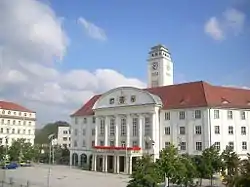 Town hall | |
 Coat of arms | |
Location of Sonneberg within Sonneberg district 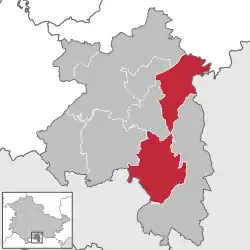 | |
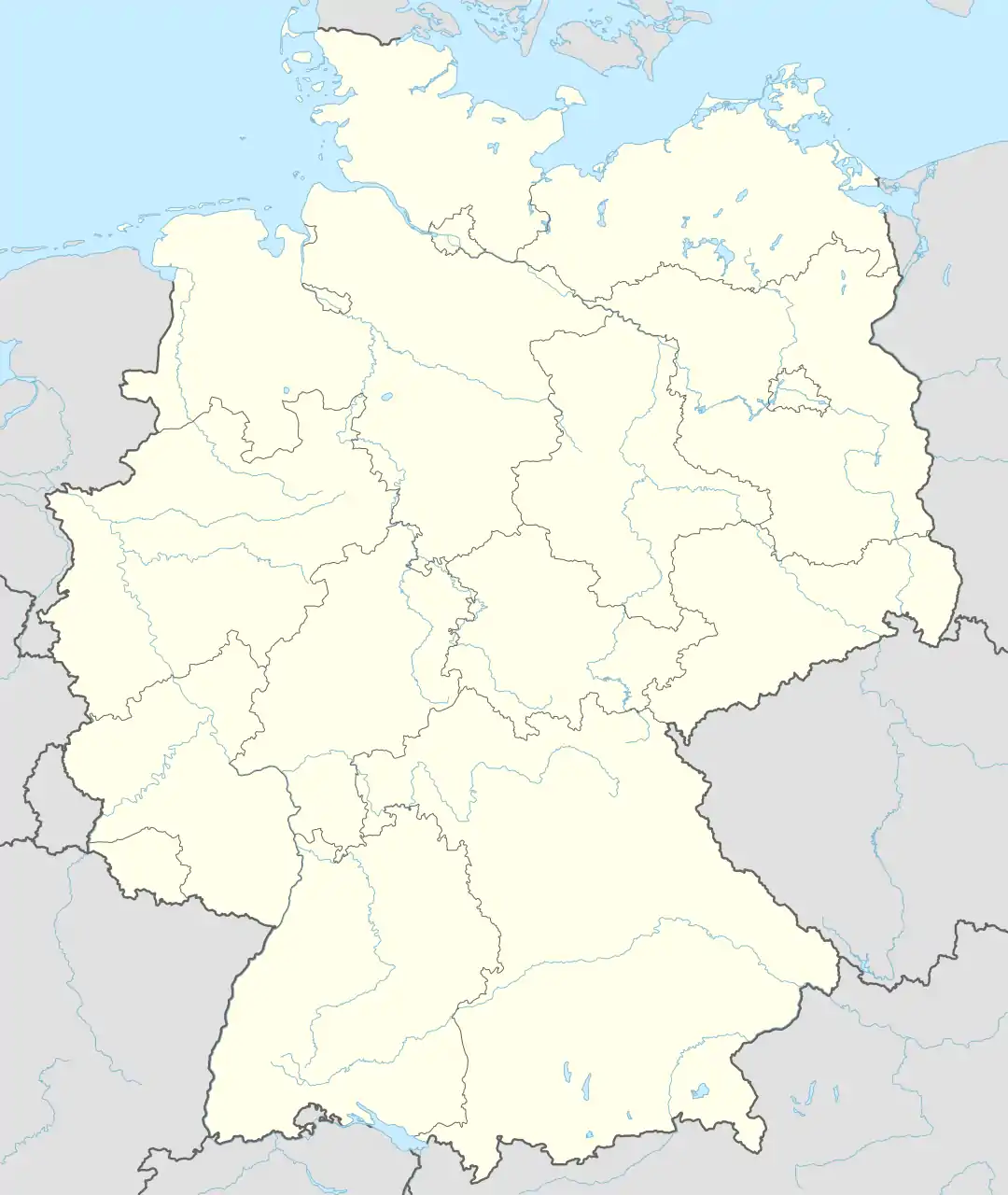  Sonneberg 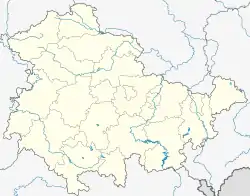 Sonneberg | |
| Coordinates: 50°21′N 11°10′E | |
| Country | Germany |
| State | Thuringia |
| District | Sonneberg |
| Government | |
| • Mayor (2016–22) | Dr. Heiko Voigt[1] (CDU) |
| Area | |
| • Total | 84.69 km2 (32.70 sq mi) |
| Elevation | 400 m (1,300 ft) |
| Population (2020-12-31)[2] | |
| • Total | 23,229 |
| • Density | 270/km2 (710/sq mi) |
| Time zone | UTC+01:00 (CET) |
| • Summer (DST) | UTC+02:00 (CEST) |
| Postal codes | 96515 |
| Dialling codes | 03675, 036762, 036703 |
| Vehicle registration | SON, NH |
| Website | www.sonneberg.de |
By 1735, for the first time, a description of the city noted “all kinds of children’s goods”— swords, pistols, shotguns, pipes, violins, bowling games, nutcrackers, rattles, cuckoos “and the like more”— next to commodities of wood. Around 1740, toymakers developed a more attractive material for their merchandise using black flour and glue water. This doughy substance allowed craftsmen to freely form figures or mold parts. Though this new method of toy production allowed for greater diversity, the delicate material had a limited shelf life and was often ingested by mice and mites during shipments overseas.[3]
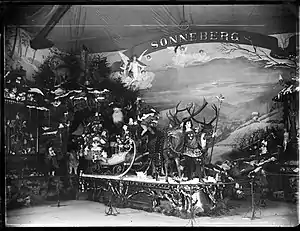
In 1789 the Sonneberg merchants were granted the right to sell toys and later glassware from the region exclusively. One hundred years later an incomparable German-American success story begins: Franklin Winfield Woolworth placed his first major order with the glassblowers from Lauscha and the surrounding area. From now on the USA is the largest sales market for „the Kugls“ from the southern Thuringian Forest. Traditionally, the Santa Claus known to us today originated from the legend of St. Nicholas, who fills the children‘s cleaned boots with nuts or fruit on December 6. At the Paris World Fair in 1900, Santa Claus was presented to the public for the first time, sitting on a gift sleigh and pulled by reindeer. Representatives of the city of Sonneberg used this idea to advertise their quality toys such as dolls or teddy bears.[4]
In its heyday at the turn of the 20th century, Sonneberg was the world's leading toy producer. Mothers and fathers, son and daughters, crammed into home workshops and, with their neighbours, made up production lines that churned out every fifth toy in the world. One house would make dolls' wigs, the next along stuffed the bodies and another would craft their faces.
It is renowned as a center of toy production and was dubbed the "toy capital of the world" or "workshop of Santa Claus" in the 1920s; during this time, US trade giants Kresge and Woolworth built large warehouses here for exportation. It is the home of the German Toy Museum and PIKO, a model railway manufacturer which became one of the few such enterprises in the Warsaw Pact countries and as such supplied model trains depicting railway stock of all the Soviet bloc countries.
When Sonneberg was swallowed up into the German Democratic Republic, the communist authorities merged its many toymakers into powerful co-operatives that made up 95% of the country's toy industry, exporting dolls, building blocks, trains and plastic trucks far and wide across the Soviet bloc and beyond. Little of that is left today. Rows of majestic villas and teddy-bear-shaped statues in the town square are testament to centuries of export might, but only a handful of toymakers remain.
In divided post-war Germany, Sonneberg found itself within the borders of East Germany, cut off from its large neighbouring town of Coburg, Bavaria in West Germany and could only face north economically. It was served by an unnaturally winding railway route and thus became somewhat isolated from the rest of East Germany. Sonneberg Hauptbahnhof is served by the Coburg–Sonneberg line.
After the reunification those giant toymakers were no longer sustainable and collapsed very quickly. If you look at the massive scale of production in the past and the renowned toymakers, what we see is a story of decline. But in the place of Sonneberg's toymakers are industrial estates almost full to capacity with car parts manufacturers, mechanical engineering plants and plastics specialists. At 4.2%, Sonneberg's unemployment rate is among the lowest in the country and has halved in the past five years.[5]
A Hydrogen Research Institute is 2021 established. The institute that opened in Sonneberg in February is dedicated to hydrogen research. The use of hydrogen as an engine in rail transport, where road electrification is expensive, has great potential, in buses, in the movement of heavy goods, in garbage trucks and road sweepers and in heat generation in industry. A new research facility is being constructed in the town of Sonnberg, south of Thuringia. It’s about developing standards, building supply chains and logistics and making technology suitable for everyday use.
Subdivisions
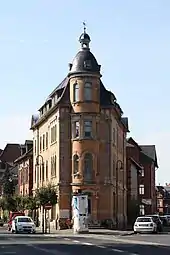
The town Sonneberg consists of the following subdivisions:
|
|
Since 31 December 2013, when the former municipality Oberland am Rennsteig was merged into Sonneberg, the following villages also form part of Sonneberg: Haselbach, Eschenthal, Hasenthal, Hüttengrund and Spechtsbrunn.
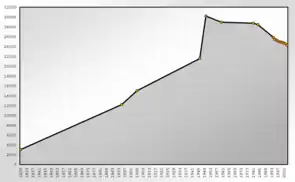
Number of inhabitants
|
1829-1981
|
1984-1999
|
2000-2006
|
2007-2013
|
2014-2020
|
- Data source since 1994: Thuringia statistical office
Notable people
- Crato Bütner (1616–1679), composer
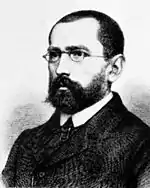
- August Schleicher, (1821–1868), linguist
- Wilhelm Sollmann (1881–1951), journalist and politician (SPD)
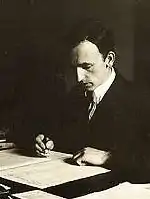
- Cuno Hoffmeister (1892–1968), astronomer
- Walter Franck (1896–1961), actor
- Fred Delmare (1922–2009), actor
- Tankred Dorst (1925–2017), writer
- Werner Stötzer (1931–2010), sculptor and draftsman
- Almuth Beck (born 1940) politician
- Werner Bernreuther (born 1941), actor and songwriter
- Freddy Breck (1942–2008), percussionist
- Monika Debertshäuser (born 1952), cross-country skier
- Reinhard Häfner (1952–2016), footballer
- Detlef Ultsch (born 1955), judoka, world champion
- Frank Dundr (born 1957), rower, Olympic winner
- Simone Opitz (born 1963), cross-country skier
- Silke Kraushaar-Pielach (born 1970), luger
- André Florschütz (born 1976), luger
- Thomas Florschütz (born 1978), bob pilot
- Sebastian Lang (born 1979), cyclist
- Jan-Armin Eichhorn, (born 1981), luger
- Felix Loch, (born 1989), 2010 and 2014 Olympic luge gold medalist
References
- Gewählte Bürgermeister - aktuelle Landesübersicht, Freistaat Thüringen, accessed 14 July 2021.
- "Bevölkerung der Gemeinden, erfüllenden Gemeinden und Verwaltungsgemeinschaften in Thüringen Gebietsstand: 31.12.2020". Thüringer Landesamt für Statistik (in German). June 2021.
- https://internationalopulence.com/toy-town/
- thueringen.tourismusnetzwerk.info
- https://www.theguardian.com/business/2013/sep/08/germany-little-growth-few-babies
 |
Wikimedia Commons has media related to Sonneberg. |
External links
- Official website
 (in German)
 - private website
Towns and municipalities in Sonneberg (district) | ||
|---|---|---|
 | ||
Authority control | |
|---|---|
| General | |
| National libraries | |
| Other | |