Speck
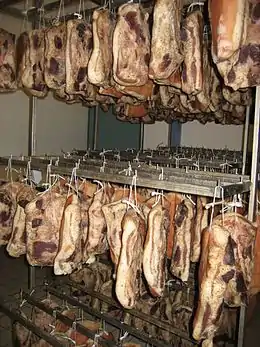
Speck is smoked or pickled pork belly. In Germany, speck is pork fat with or without some meat in it. In Italy, Turkey and parts of the English-speaking culinary world, "speck" refers to Italian speck, a type of prosciutto,[1] rather than German speck. The term "speck" became part of popular parlance only in the eighteenth century and replaced the older term "bachen", a cognate of "bacon".
Regional varieties
There are a number of regional varieties of speck, including:
- Bacon, e.g. Frühstücksspeck ("breakfast speck") in Germany
- Gailtaler speck from Austria, with PGI status, which has been made since the 15th century in the Gail Valley ("Gailtal") in Carinthia[2]
- Guanciale, from Italy
- Lardo, from Italy, with many sub-varieties
- Pancetta, from Italy
- Schinkenspeck, German "ham bacon", typically made from a flat cut of ham with fat along one side resembling bacon, and traditionally soaked for several days in brine with juniper berries and peppercorn,
- Speck Sauris PGI, from Sauris, near Friuli. Italy
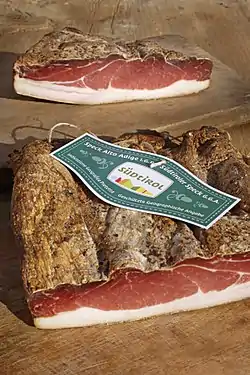
- Speck Alto Adige PGI, the Italian speck
- Tyrolean Speck from Austria's Tyrol region, which has PGI status, and has been made since at least the 15th century[3]
- Ukrainian salo
- Proshute, Albanian speck
Jewish deli speck
In Ashkenazi Jewish cuisine, in which bacon (like all pork) is forbidden as unkosher, "speck" commonly refers to the subcutaneous fat on a brisket of beef. It is a particular speciality of delis serving Montreal-style smoked meat, where slices of the fatty cut are served in sandwiches on rye bread with mustard, sometimes in combination with other, leaner cuts.[4]
See also
References
- Speck - Smoked Prosciutto
- Lebensmittelnet.at - Gailtaler Speck (accessed 9 January 2008)
- Austria Tourist Info - Tirol(German) (accessed 9 January 2008)
- A Mission To Save Real Jewish Delis, A Dying Breed: NPR
| Types of ham |
|  |
|---|---|---|
| Ham dishes | ||
| Ham producers | ||
| Related articles | ||
| ||


