Diocesan Shrine and Parish of St. Joseph - Baras, Rizal
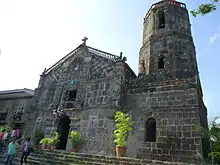
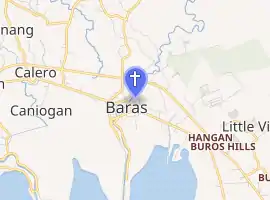
The Diocesan Shrine and Parish of St. Joseph (also known as Baras Church) is a Roman Catholic church located in Baras, Rizal, Philippines. The church enshrines the miraculous image of San José de Baras, and it is known to be the oldest parish dedicated to Saint Joseph in the Southern Tagalog mainland.[1]
| Diocesan Shrine and Parish of St. Joseph | |
|---|---|
| Baras Church | |
 | |
| |
| 14.5231°N 121.2673°E | |
| Location | Baras, Rizal |
| Country | Philippines |
| Denomination | Roman Catholic |
| History | |
| Status | Shrine and Parish |
| Founded | 1686 |
| Founder(s) | Franciscan Missionaries headed by Fray Pedro Bautista, Fray Juan De Placencia and Fray Diego de Oropesa |
| Dedication | Saint Joseph |
| Events | December 7, 2021 - Elevation as Diocesan Shrine |
| Architecture | |
| Functional status | Active |
| Architectural type | Church Building |
| Style | Baroque Architecture |
| Groundbreaking | 1682 |
| Completed | 1686 |
| Specifications | |
| Materials | Adobe Stones |
| Administration | |
| Archdiocese | Archdiocese of Manila |
| Diocese | Diocese of Antipolo |
| Province | Rizal |
| Clergy | |
| Bishop(s) | Most Rev. Francisco M. de Leon, DD. |
| Auxiliary Bishop(s) | Most Rev. Nolly C. Buco, JCD. DD. |
| Rector | Rev. Fr. Rodney B. Cruz |
| Priest(s) | Rev. Fr. Rodney B. Cruz |
History
The first church was built in 1595 by Franciscan missionaries who established a parish at the town's old site in what is now Boso-Boso in Antipolo, with St. James as its patron.[2] The town and its church was transferred in 1636 to a site called Ibayo to escape the hostilities of the Aeta inhabitants in the area who burned the town and the church in 1635. The second site was located one and one-half leagues (about 7.24 kilometers) southeast of the first site. The church was dedicated to Christ the Savior but it also was affected by hostilities, this time when Chinese rebels in 1639 burned the church as well as other churches in neighboring towns.
The town was moved to its present site in 1682. On the same year, construction began on the present church.[3] It was completed in 1686, with the church now dedicated to St. Joseph as its patron. Renovations to the structure have been done in the 1960s and 2000s.
Architecture
Built in a mixture of fortress-style and barn-style Baroque architecture, the church is notable for its dark, simple, and sparse qualities that are typical of Franciscan mission churches built during the 16th century. Its simple facade is given a decorative touch mainly through the stream of balustrade trimming its triangular pediment, as well as the chequerboard pattern of brick and stone on the pediment’s upper portion, which indicates an addition to the original and much lower stone pediment.[4]
The interiors revealed the exposed wooden trusses that support the church's roofing, lacking a ceiling that is usually seen in churches. The structure has not been plastered, exposing the adobe bricks on which the church was made.
Devotion to San Jose de Baras
Due to some circumstances, the parish have no longer documents that will testify the information about the image of San Jose de Baras, but the Barasenios still believe that the image was made after the completion of the Church in 1686. The parish is still making its efforts to provide accurate information for the Miraculous Image of San Jose de Baras. Meanwhile, there are miracles attributed to San Jose de Baras, one of it is the Separation from Tanay of the Town in the year 1920s. A Feast of Thanksgiving was initiated by the first elected ‘Alkalde’, Hon. Mariano Vallestero in honor of San Jose de Baras in January 1921.
Feast Day
March 19 | The Liturgical Feast of San Jose, the Spouse of the Mother of God. It is also the day when Barasenios traditionally offer loaves of bread during the Mass for the ‘Table of St. Joseph’. The Offered Bread on the said occasion is believed to be an instrument of healing, and it is being distributed in Prison, Hospitals, Orphanage and to the parishioners during the Caracol Procession.
Claims of miracles
There is an urban legend that is believed by the Barasenios up to this time. Every time his feast comes closer (Last Sunday of January, March 19, and May 1), there are sparsely reported sightings of a Father and Son wearing green and yellow cloth who makes a “Panuluyan” in every house asking for water. According to Folkmen, if you refuse to give them, bad luck will befall your household for the whole year. It is said that after they come into your house, the Father and Son will disappear in just a blink of an eye. Barasenios believe that it was ‘SangHusep’ and the ‘Niño’.
Church Dedication
The Solemn dedication and Consecration of the Altar was solemnly officiated by Most Rev. Nolly C. Buco, JCD. DD., Auxiliary Bishop of Antipolo on November 9, 2019 during the pontificate of Pope Francis, incumbency of Most Rev. Francisco M. de Leon, DD., Bishop of Antipolo and Rev. Fr. Rodney B. Cruz as Parish Priest.
Gallery
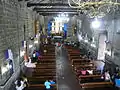 interior
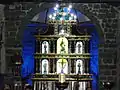 church altar
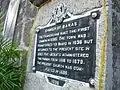 marker
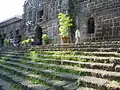 church steps
Upcoming
Baras Church is set to be elevated as a Diocesan Shrine on December 7, 2021.
References
- "Baras Church in Rizal declared diocesan shrine". CBCPNews. 2021-07-04. Retrieved 2021-08-01.
- "History". Official Website of the Municipal Government of Baras, Rizal.
- Javellana, Rene (2010). La Casa de Dios: the legacy of Filipino hispanic churches in the Philippines. Ortigas Foundation, Inc.
- Galende, Pedro (2007). Philippine Church Facades. San Agustin Museum.
External links
- St. Joseph Parish Church, Baras, Rizal on Facebook
- Official Website of the Municipal Government of Baras, Rizal
 |
Wikimedia Commons has media related to Saint Joseph Parish Church of Baras. |