Volvo B7TL
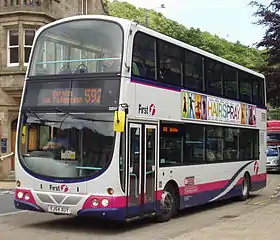
The Volvo B7TL is a low-floor double-decker bus chassis which was launched in 1999 and replaced the 2-axle version of the Volvo Olympian (its 3-axle version was replaced by the Volvo Super Olympian). It was built as the British bus operators seemed hesitant to purchase the B7L double decker with a long rear overhang (although some have since entered service in Glasgow, Scotland as 12 m long double deckers).
| Volvo B7TL | |
|---|---|
 | |
| Overview | |
| Manufacturer | Volvo |
| Production | 1999–2006 |
| Body and chassis | |
| Doors | 1 or 2 |
| Floor type | Low floor |
| Powertrain | |
| Engine | Volvo D7C (7.3 L) |
| Power output | 215 hp (160 kW) / 250 hp (186 kW) / 290 hp (216 kW) |
| Transmission | Voith DIWA/ZF Ecomat |
| Chronology | |
| Predecessor | Volvo Olympian |
| Successor | Volvo B9TL (2-Axle) |
The B7TL chassis was designed by the Leyland Product Developments consultancy based at the Leyland Technical Centre. It was initially built in Irvine, North Ayrshire, Scotland. In 2000, production was gradually transferred to Sweden. In mid-2004, production of the MkII version of the B7TL was started.
Like the Olympian, the B7TL features a transversely-mounted rear engine and a shorter rear overhang, but the radiator was mounted on the right side of the engine compartment. It was equipped with Volvo D7C engine and ZF or Voith gearbox. The B7TL was initially available with Alexander ALX400 and Plaxton President bodywork, later followed by East Lancs Vyking and Myllennium Vyking bodies, and also the Wright Eclipse Gemini.
Orders
United Kingdom
The Volvo B7TL was highly popular in the United Kingdom, with a large number being purchased by most of the major bus groups such as FirstGroup and Arriva. Travel West Midlands and Travel Coventry, both part of the National Express Group, purchased over 320 B7TLs with Plaxton President, Alexander ALX400 and Wright Eclipse Gemini bodies. Translink of Northern Ireland also purchased over 150 B7TLs.
The chassis was especially popular in London, with a number of operators including Metroline and London General having placed orders throughout the chassis' production run.
Outside London, Southern Vectis ordered seven Volvo B7TLs with Plaxton President bodywork at the end of 2001.
The last Volvo B7TLs entered service with First Glasgow with the Wright Eclipse Gemini bodywork in April 2007.
Ireland
Buses built on the B7TL chassis were also popular with Irish operators Dublin Bus purchasing 648 B7TLs built with Alexander ALX400 bodywork between 2000 and 2007, while Bus Éireann also purchased more than twenty B7TLs for services in Cork.
South Africa
150 B7TLs were delivered to Johannesburg, South Africa in 2002, alongside an order for 50 Volvo B7Rs. These were ordered by Metrobus and were fitted with Marcopolo Viale DD bodywork.[1][2]
Replacement
The Volvo B7TL was superseded by the 2-axle version of the Volvo B9TL in late 2006.
Gallery
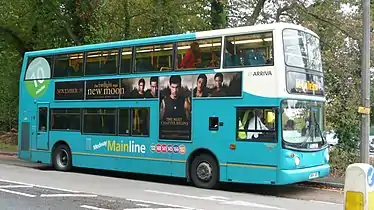 Alexander ALX400-bodied Volvo B7TL owned by Arriva Medway Towns.
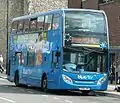 The unique Volvo B7TL/Alexander Dennis Enviro400 owned by Bluestar. All production Enviro / Volvo buses are on the new B9TL chassis.


References
- "Volvo Delivering 200 City Buses To Johannesburg". Volvo Bus (Press release). 21 January 2002. Retrieved 9 December 2021 – via Globe Newswire.
- "200 autobusów dla Johannesburga" [200 buses for Johannesburg]. Interia Motoryzacja (in Polish). Krakow. Retrieved 9 December 2021.