1991 Icelandic parliamentary election
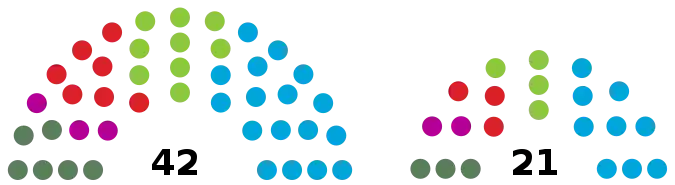
Parliamentary elections were held in Iceland on 20 April 1991.[1] The Independence Party remained the largest party in the Lower House of the Althing, winning 17 of the 42 seats.[2]
 | ||||||||||||||||||||||||||||||||||||||||||||||||||||||||||||||||||||||||||
All 42 seats in the Lower House and 21 seats in the Upper House of Althing 22 and 11 seats needed for a majority | ||||||||||||||||||||||||||||||||||||||||||||||||||||||||||||||||||||||||||
| Turnout | 157,769 (87.6%  2.5%) 2.5%) | |||||||||||||||||||||||||||||||||||||||||||||||||||||||||||||||||||||||||
|---|---|---|---|---|---|---|---|---|---|---|---|---|---|---|---|---|---|---|---|---|---|---|---|---|---|---|---|---|---|---|---|---|---|---|---|---|---|---|---|---|---|---|---|---|---|---|---|---|---|---|---|---|---|---|---|---|---|---|---|---|---|---|---|---|---|---|---|---|---|---|---|---|---|---|
This lists parties that won seats. See the complete results below.
| ||||||||||||||||||||||||||||||||||||||||||||||||||||||||||||||||||||||||||
.jpg.webp)

 |
|---|
|
Iceland portal |

Results
| 1987 ← Summary of the 20 April 1991 Icelandic parliamentary election results → 1995 | |||||||||
|---|---|---|---|---|---|---|---|---|---|
 | |||||||||
| Party | Chairperson | Votes | % | +/– | Lower House | Upper House | |||
| Seats | +/– | Seats | +/– | ||||||
| Independence Party (D) | Davíð Oddsson | 60,836 | 38.6 |  11.4 11.4 | 17 | 5 | 9 | 3 | |
| Progressive Party (B) | Steingrímur Hermannsson | 29,866 | 18.9 |  0.0 0.0 | 9 | 1 | 4 | 1 | |
| Social Democratic Party (A) | Jón Baldvin Hannibalsson | 24,459 | 15.5 | 0.3 | 7 | 0 | 3 | 0 | |
| People's Alliance (G) | Ólafur Ragnar Grímsson | 22,706 | 14.4 | 1.1 | 6 | 1 | 3 | 0 | |
| Women's List (V) | no designated chairperson | 13,069 | 8.3 | 1.8 | 3 | 1 | 2 | 0 | |
| Liberals | 1,927 | 1.2 | new | 0 | new | 0 | new | ||
| Home Rule Association | 2,871 | 1.8 | new | 0 | new | 0 | new | ||
| Green Candidature | 502 | 0.3 | new | 0 | new | 0 | new | ||
| Extreme Social Democrats | 459 | 0.3 | new | 0 | new | 0 | new | ||
| Labour Party of Iceland | 99 | 0.1 | new | 0 | new | 0 | new | ||
| Valid votes | 157,769 | 98.5 | 0.4 | ||||||
| Invalid/blank votes | 2,373 | 1.5 | 0.4 | ||||||
| Total | 160,142 | 100 | – | 42 | – | 21 | – | ||
| Registered voters/turnout | 182,768 | 87.6 | 2.5 | ||||||
| Source: Nohlen & Stöver | |||||||||
Aftermath
Following constitutional changes made in 1991, the Upper and Lower Houses of the Althing were abolished, and all members became part of a unicameral parliament.[2]
References
- Dieter Nohlen & Philip Stöver (2010) Elections in Europe: A data handbook, p962 ISBN 978-3-8329-5609-7
- Nohlen & Stöver, p977
| Parliamentary elections |
|
|---|---|
| Presidential elections | |
| Municipal elections | |
| Referendums | |
| Constitutional Assembly | |
This article is issued from Wikipedia. The text is licensed under Creative Commons - Attribution - Sharealike. Additional terms may apply for the media files.