Azykh
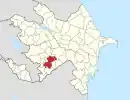
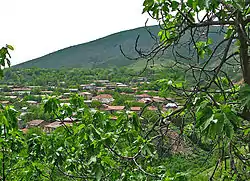
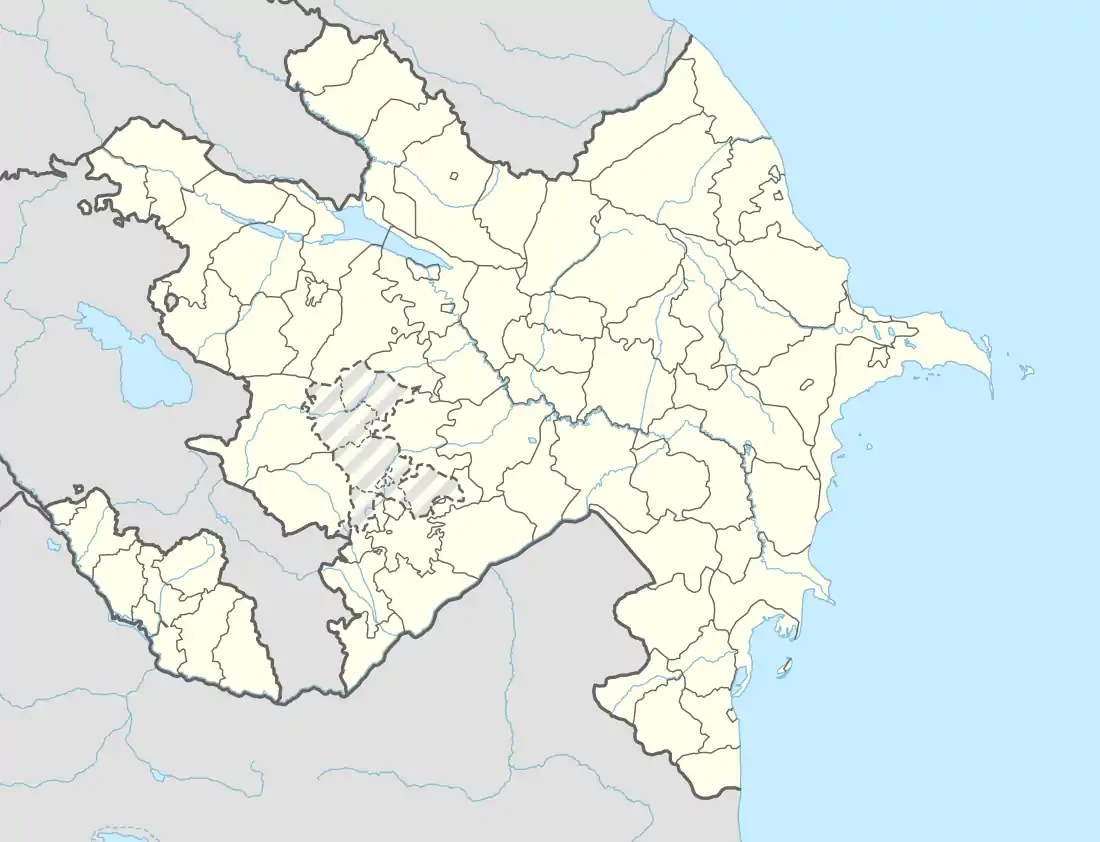
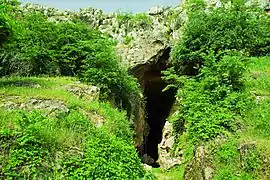
Azykh (Azerbaijani: Azıx) or Azokh (Armenian: Ազոխ)[3] is a village in the Khojavend District of Azerbaijan and is situated on the small river Ishkhanchay (Azerbaijani: İşxançay) or Ishkhanaget (Armenian: Իշխանագետ), near the Azykh Cave.
Azykh / Azokh
Azıx / Ազոխ | |
|---|---|
 A view of the village | |
  Azykh / Azokh 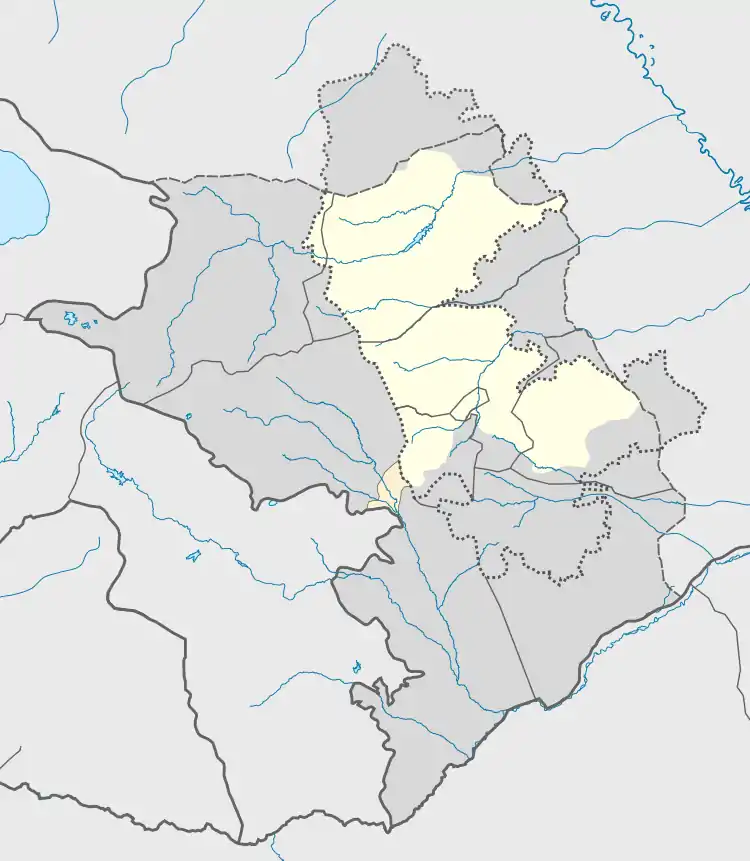 Azykh / Azokh | |
| Coordinates: 39°37′14″N 46°58′42″E | |
| Country |  Azerbaijan Azerbaijan
 Republic of Artsakh (claimed)[1] Republic of Artsakh (claimed)[1] |
| District | Khojavend |
| Elevation | 686 m (2,251 ft) |
| Population (2015)[2] | |
| • Total | 741 |
| Time zone | UTC+4 (AZT) |
From 1992 to 2020 the village was de facto in the Hadrut Province of the self-proclaimed Republic of Artsakh. The village had an ethnic Armenian-majority population prior to the 2020 Nagorno-Karabakh war, and also had an Armenian majority in 1989.[4]
Etymology
According to "Encyclopedic Dictionary of Azerbaijani Toponyms", the name Azykh originates from Old Turkic, meaning "bear den".[5]
According to "Historical-Architectural Monuments of Nagorno-Karabakh", the name Azokh comes from the Armenian word, azokh, meaning "unripe grapes".[6]
History
The Azykh Cave, located near the village of Azykh, is actually a six-cave complex, known as a habitation site of prehistoric humans.[7] The ancient layers of the Middle Paleolithic have yielded Neanderthal fossil remains that may date from around 300,000 years ago.[8]
During the Soviet period, the village was a part of the Hadrut District of the Nagorno-Karabakh Autonomous Oblast. In 1993, during the First Nagorno-Karabakh War, the village came under the control of ethnic Armenian forces.
On 9 November 2020, President of Azerbaijan Ilham Aliyev announced that the village was under Azerbaijani control.[9] Subsequently, The Guardian and Der Spiegel reported that Azerbaijani forces had committed a war crime by decapitating Yuri Asryan, an 82-year-old Armenian man who did not leave the village on 20 October despite the advance of Azerbaijani forces.[10][11]
References
- "Արցախի տարածքները համարվում են օկուպացված Ադրբեջանի կողմից. ԱՀ ԱԺ հայտարարությունը" [The territories of the Artsakh Republic, which are under the control of Azerbaijan so far, are considered to be occupied by the Republic of Azerbaijan]. armenpress.am (in Armenian). 1 March 2021. Archived from the original on 7 March 2021. Retrieved 7 September 2021.
- Hakob Ghahramanyan. "Directory of socio-economic characteristics of NKR administrative-territorial units (2015)".
- "Azix, Azerbaijan". Falling Rain.
- Андрей Зубов. "Андрей Зубов. Карабах: Мир и Война". drugoivzgliad.com.
- "Azərbaycan toponimlərinin ensiklopedik lüğəti" ("Энциклопедический словарь азербайджанских топонимов" в 2-х томах). — 2007. — Баку: "Şərq-Qərb" ("Восток-Запад"), 2007. — С. Том 1.
- Mkrtchyan, Shahen (1980). Historical-Architectural Monuments of Nagorno-Karabakh (PDF). Yerevan,Armenia. p. 91.
- Stepʻan Tigrani, Melikʻ-Bakhshyan (1979). Hayotsʻ patmutʻyan aghbyuragitutʻyun (hnaguyn zhamanakneritsʻ minchʻev XVIII dari verjě). Yerevan: University of Michigan; Yerevan University Publishing House. p. 323.
- Fernández-Jalvo, Y; King, T; Yepiskoposyan, L; Andrews, P (2016), "Introduction: Azokh Cave and the Transcaucasian Corridor", Azokh Cave and the Transcaucasian Corridor, Cham: Springer International Publishing, pp. 1–26, doi:10.1007/978-3-319-24924-7_1, ISBN 978-3-319-24922-3, retrieved 2021-05-16
- "Daha 23 kənd işğaldan azad edildi". report.az (in Azerbaijani). 9 November 2020.
- Two men beheaded in videos from Nagorno-Karabakh war identified. The Guardian. 15 December 2020
- Zwei Zivilisten in Bergkarabach enthauptet – mutmaßlich durch aserbaidschanische Soldaten. DER SPIEGEL. 15 December 2020
External links
 |
Wikimedia Commons has media related to Azıx. |