FAKHRAVAC
FAKHRAVAC (Persian: واکسن فخرا) is a COVID-19 vaccine developed in Iran by the Organization of Defensive Innovation and Research,[1] a subsidiary of Iran's Ministry of Defense. It's the third Iranian COVID-19 vaccine reaching clinical trials.[1][2][3] It's currently in phase III.[4][5] It has received emergency use authorization in Iran on 9 September 2021.[4]
.jpg.webp) A vial of FakhraVac | |
| Vaccine description | |
|---|---|
| Target | SARS-CoV-2 |
| Vaccine type | Inactivated |
| Clinical data | |
| Other names | Fakhra, MIVAC |
| Routes of administration | Intramuscular |
| Legal status | |
| Legal status |
|
| Part of a series on the |
| COVID-19 pandemic |
|---|
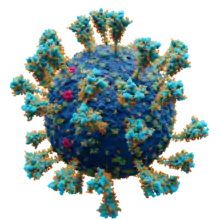 Scientifically accurate atomic model of the external structure of SARS-CoV-2. Each "ball" is an atom. |
|
.svg.png.webp) COVID-19 portal COVID-19 portal |
The vaccine is named after the Iranian nuclear scientist Mohsen Fakhrizadeh.[1] According to the Iranian authorities, he was working on a vaccine in response to the COVID-19 pandemic in Iran.[1][6] Fakhrizadeh was assassinated in November 2020 in an attack Iran and US intelligence attributed to Israel.[1][7]
Medical uses
It requiring two doses given by intramuscular injection 3 weeks apart.[5]
Pharmacology
FAKHRAVAC is an inactivated virus-based vaccine.[3]
Manufacturing
On August 2021, production capacity of the vaccine is reported to be 1 million dose per month and is planned to be "multiplied in a few months ".[4] In October 2021, the production has reported to be stopped amid Iran's growing vaccine imports.[8]
Clinical trials
| Phase | Registration number | Start | Number of participants | Age of participants | ||
|---|---|---|---|---|---|---|
| Total | Vaccine | Control | ||||
| I | IRCT20210206050259N1 | 8 March 2021 | 135 | 96? | 39? (placebo) | 18-55 years |
| II | IRCT20210206050259N2 | 8 June 2021 | 500 | 250 | 250 (placebo) | 18-70 years |
| III | IRCT20210206050259N3 | 29 August 2021 | 41,128 | 20,564 | 20,564 (Sinopharm BIBP vaccine) | >18 years |
Authorizations
FAKHRAVAC received emergency use authorization in Iran on 9 September 2021.[4] In October 2021, Iran's Food and Drug Administration was considering giving full authorization to the vaccine for third/booster dose.[8]
References
- Motamedi M (16 March 2021). "Iran starts human trials of its third domestic COVID vaccine". Al Jazeera.
- "Phase 1, safety, immunogenicity and dose finding for two strengths of 0.5 × 10^6 and 2.5 × 10^6 (TCID50) inactivated SARS-CoV-2 vaccine FAKHRAVAC (MIVAC) injected in two schedules of two doses, 2 and 3 weeks apart in healthy adults aged 18-55 years: a randomized, double blind, placebo controlled, clinical trial". en.irct.ir. Iran Registry of Clinical Trials. Retrieved 21 March 2021.
- "Phase 2 trial of safety and immunogenicity of 10 micro gram inactivated SARS-CoV-2 vaccine (FAKHRAVAC), two doses two weeks apart in adults aged 18-70 years: a randomized, double-blind, placebo-controlled, clinical trial". en.irct.ir. Iran Registry of Clinical Trials. Retrieved 15 June 2021.
- "Iran Authorizes Emergency Use of Third Homegrown Vaccine - Defense news". Tasnim News Agency. Retrieved 9 September 2021.
- "IRCT | Comparison of the safety, efficacy and immunogenicity of Fakhravac and Sinopharm SARS-CoV-2 vaccines, in adults aged 18 and over; a phase III randomised, non-inferiority clinical trial". en.irct.ir. Retrieved 7 September 2021.
- "Research center run by Fakhrizadeh produced first COVID-19 test kits for Iranians: Defense minister". Pars Today. 28 November 2020. Archived from the original on 5 December 2020. Retrieved 7 September 2021.
- The Assassination of Fakhrizadeh: Considerations and Consequences
- Sinaee, Maryam (19 October 2021). "Iran Defense Ministry's Covid Vaccine Production To Be Discontinued". Iran International. Retrieved 24 October 2021.
