Gendo Ikari
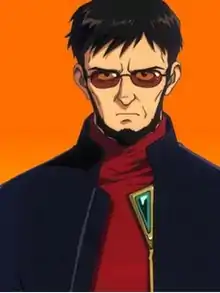
Gendo Ikari (碇 ゲンドウ, Ikari Gendō)[lower-alpha 1] is a fictional character from the Neon Genesis Evangelion franchise created by Gainax. In the original series with the same name, he is the supreme commander of the special agency Nerv, dedicated to the study and annihilation of a series of mysterious enemies of mankind known as Angels. The man, scarred and grief-stricken by the sudden death of his wife Yui, abandons his only son Shinji Ikari to devote himself full-time to a plan named Human Instrumentality Project, only to call him back after years of separation to pilot a giant mecha named Evangelion. His pragmatic, cold, and calculating attitude leads him to use any means to achieve his personal goals.
| Gendo Ikari | |
|---|---|
| Neon Genesis Evangelion character | |
 | |
| Created by | Hideaki Anno Yoshiyuki Sadamoto |
| Voiced by |
|
| In-universe information | |
| Full name | Gendo Ikari (born Gendo Rokubungi) |
| Species | Human |
| Gender | Male |
| Relatives | Yui Ikari (wife) Shinji Ikari (son) Rei Ayanami (ward) |
The character, originally conceived as a modern version of Victor Frankenstein, is inspired by the personal experiences of the series' staff members, reflecting the absent and emotionally detached Japanese father figure. Neon Genesis Evangelion director Hideaki Anno's father and his abusive behavior were also an influence on Gendo; the director also took inspiration from psychoanalytic concepts for its development, especially the Freudian Oedipus complex.
Critics have negatively received Gendo, described as one of the meanest characters and one of the nastiest parents in Japanese animation history. Reviewers criticized his unscrupulous and abusive ways, while others were more appreciative of his role in spin-offs or the manga version of the series, written and illustrated by Yoshiyuki Sadamoto. His role in the Rebuild of Evangelion theatrical saga, and particularly in the last film Evangelion: 3.0+1.0 Thrice Upon a Time, received appreciation from reviewers, who commented positively on his character development. The character's typical pose with hands clasped at mouth level, known as "Gendo pose", has become popular, being homaged in other anime and manga or used for merchandise items.
Conception
Hideaki Anno, director and main screenwriter of the series, took Gendo's name from a character featured in a failed Gainax studio project, an anime planned before Evangelion but never produced. For his bachelor name, he chose the word rokubungi (六文儀, lit. "sextant"); for his married name, he chose Ikari (碇, lit. "anchor"), to connect to the names of other characters in Neon Genesis Evangelion, inspired by terms from nautical jargon or ships of the Imperial Japanese Navy.[1] Its design was entrusted to Yoshiyuki Sadamoto, mangaka of the comic version of the series. Sadamoto, according to his statement, was influenced by the UFO television series and modeled his relationship with Kozo Fuyutsuki after that between Commander Ed Straker and Colonel Alec Freeman from the classic series.[2]

The staff chose interpersonal communication as a central theme of the series, and more specifically communication between different generations,[4] to reflect on the incommunicability and relational difficulties of the modern world, judged almost to the breaking point.[5] For the psychology of the character, father of the protagonist who is unable to emotionally communicate with his son, the director took inspiration from his personality,[6] just like all the other characters in the series.[7][8] The special agency Nerv was conceived as a metaphor for the Gainax studio, while Commander Ikari was described by Anno himself as a representation of his shadow, the dark and unconscious side of an individual's psyche. The director stated that he did not conceive of Gendo as a concrete father with a blood tie to his son, but as a representation of society, adding, "I don't think I projected that much [into him]".[9] Gendo's figure was influenced by the personal experiences of staff members, including that of Hideaki Anno himself.[10] His father, Takuyo Anno, injured his left leg in a youthful accident with a power saw and was forced to wear a prosthesis for the rest of his life. The man became emotionally unstable as a result of the accident. The young Anno grew up in a tense family environment, marked by physical and emotional punishment from his parent, who went so far as to tell him a sentence such as, "I wish you were not here".[11] According to Kazuya Tsurumaki, assistant director of the series:
A lot of families in Japan a generation ago - and perhaps even now - had fathers that were workaholics and never home. They were out of their children's' lives. My own father was like that, and I hardly ever got to associate with him until quite recently. I'm the same sort of person as Hideaki Anno. That probably influences the type of anime I create.
— Kazuya Tsurumaki[12]
In the early design stages of Neon Genesis Evangelion, Gainax decided to portray Gendo as a "mysterious person in behavior and words", a staunch defender of the Instrumentality Project, expressive, tumultuous, akin to a twenty-first-century Dr. Victor Frankenstein.[13][14] Over time he would become obsessed with research, justifying any means to achieve his goal, to the point of transforming his own body and becoming a digitized human being. His goal, however, would have been benevolent, in the belief that he could realize a utopian dream capable of bringing true equality among people.[15] In the first episode of the series, he would have called Shinji to fight against an Angel named Raziel, and in the fourth episode, titled "Fourteen years, the first day" (14歳、 始まりの日, 14-sai, hajimari no hi), he would have ignored his son on his birthday, ideas that were later shelved during the production of the series.[16] In the original intentions of the writers, he would also not have participated in a survey expedition to Antarctica, like in the final scenario; the original draft had him involved in a mysterious accident as a result of which the entire Dead Sea would evaporate, revealed in the twentieth episode of the animated series.[17] In the finale, his true goals and the true purpose of the Instrumentality Project would finally be revealed, during which ruins of a place called Arqa (アルカ, Aruka),[18] never mentioned in the final version, would be revealed. Furthermore, in the conclusion originally planned by the staff, there would have been a scene in which Gendo, separating from his son Shinji, would have said "Live!" (生きろ, Ikiro), similarly to the ending of the previous Gainax studio work, Nadia: The Secret of Blue Water, in which Captain Nemo, father of the protagonist Nadia, utters the same phrase before sacrificing himself.[19]
Voice

Fumihiko Tachiki voiced Gendo in all his appearances in the original series, as well as the later films, spin-offs, video games[20][21] and the new Rebuild of Evangelion. Tachiki found it difficult to empathize with or understand Evangelion and the character assigned to him, so he wondered, in his own words, "whether I hated or loved Gendo".[22] Failing to frame Gendo's laconic phrases and intentions, he remained confused, being forced to ask how to recite his lines and interpret a particular phrase. He stated, "Honestly, when I first started the television series, I’d only just been exposed to the story. It turned out to be tough; I really agonized about how to make the character come across. I can't say it was a pleasant experience".[23] During the sessions for the original series and the 1997 feature films, however, he received continued support from the staff, being coached and directed by Hideaki Anno and the sound director.[24]
Tachiki encountered similar difficulties for the Rebuild of Evangelion saga, and in particular for the movie Evangelion: 3.0 You Can (Not) Redo (2012), set fourteen years after the second film and dubbed almost twenty years after the original series. Tachiki, while disconcerted by the futuristic setting and plot changes, was helped by his accumulated experience and greater maturity, thanks to which he acted more frankly and serenely than in the classic series.[23] For the last installment of the saga, Evangelion: 3.0+1.0 Thrice Upon a Time (2021), Tachiki remained surprised by the script, having to go over his lines several times while looking at the still incomplete drawings of the film. The first sessions of the voice actor focused on his dialogues with Fututsuki, with a colleague older than him, relaxing more during the recording phase. Despite the changes of characterization to the character, the staff did not ask Tachiki to dub him emotionally, but with naturalness, without passion or particular tension. Even in the case of Thrice Upon a Tume, he had difficulties, given the change of direction. Particularly complicated was a scene in which he shouts Yui's name, in which he had to raise his voice; the production asked him to convey all the emotions and feelings at that moment, and, in the end, his throat hurt.[25]
In the North American A.D. Vision version of the series and the final 1997 films, he is voiced by Tristan MacAvery,[26][27] except for the parts added in the director's cut and the Rebuild, in which he is played by John Swasey.[28] MacAvery claimed to have had difficulties when dubbing the last two episodes, entirely set in Shinji's inner world: "I had no idea what was going on [in the last two episodes]. I had to figure how I should read the part, flat or philosophical". Moreover, MacAvery and the other actors said there was nothing wrong with the English translation, since the Japanese original was "incomprehensible".[29] Ray Chase voiced him in the Netflix dub,[30] while Swasey reprised his role for the Amazon Prime Video Rebuild dub.[31]
Appearances
Neon Genesis Evangelion
Gendo Ikari, originally named Gendo Rokubungi, was born on April 29, 1967.[32] His parents are never named in the series, and no details are given about his childhood or youth. The first known fact is in 1999, when he is about thirty-two years old. In that year the man is arrested and taken to the Kyoto police department for violent conduct while he was drunk. Once locked up, for unknown reasons he designates Professor Kozo Fuyutsuki, a lecturer who teaches at the local university, as his guarantor. In their first meeting, Fuyutsuki has an unpleasant feeling about him. Rokubungi, after being exonerated at the hands of the professor, becomes romantically involved with Yui Ikari, a brilliant researcher and student of Fuyutsuki himself. Even then, the professor does not see eye to eye with Gendo's actions, suspecting ulterior motives on his part.[33][34] Yui is linked to a secret organization named Seele, and rumors assert that Rokubungi's only interest is to get close to the said organization and exploit the woman's talent. To secretly carry out Seele's plans, the man participates in a research group known as the Katsuragi expedition, which left for Antarctica to conduct experiments regarding a mechanism known as the S² element. On September 12, 2000, Rokubungi leaves the Antarctic continent with other members of the group,[35] including a man named Lorenz Keel, head of Seele.[36] The next day, for an apparent coincidence, in the Antarctic continent occurs a giant natural disaster known as the Second Impact, and all other members of the expedition perish in the incident, except Misato Katsuragi, daughter of Dr. Katsuragi. On June 6 of the following year, his only son, Shinji Ikari, is born. After marrying Yui he changes his surname in Ikari[37][38] and participates in an expedition of investigation on the Second Impact organized by the United Nations, along with other members of Seele and Professor Fuyutsuki.[39][40] A little later the Seele assigns him the role of director of a structure located in the city of Hakone named Laboratory for Artificial Evolution, with the task of directing a secret plan known as Project E.[41]
In 2003, Professor Fuyutsuki collects information about the Second Impact and shows up in the Artificial Evolution Laboratory, threatening the director to make public the truth. Gendo, without getting upset by the professor's threats, takes him to an underground cavity below the Laboratory, the headquarters of an organization known as Gehirn of which he is a member. At the site, Ikari shows him a gigantic being named Evangelion, and invites him to collaborate with him "to build the new history of mankind".[42] After careful consideration, Fuyutsuki accepted the offer, joining him in the Gehirn.[43][44] The following year, Gendo assists with Shinji in an experiment to activate an Eva, namely Unit 01; due to an accident, Yui disappears. The director, changed by the accident, decides to leave his son Shinji to a guardian. A week after his wife's disappearance, the man announces to Fuyutsuki the elaboration of a new project, a plan known as the Human Instrumentality Project,[45][46] which he describes as "the path to godhood that none have ever succeeded in before".[47] In 2010, the Gehirn was disbanded; in its place was established the special agency Nerv, of which Ikari became the supreme commander.[48]
In 2015, after years of silence, Gendo summons Shinji to the city of Tokyo-3 to let him pilot the Eva-01 and face mysterious beings called Angels.[49] He keeps a cold attitude towards his son, telling him that he called him for utility.[50] Following the battle against the sixth Angel, Gaghiel, a man named Ryoji Kaji gives the commander a small embryo-like object, identified as the first Angel Adam.[51][52] At an unspecified time, Gendo has the embryo implanted in the palm of his right hand.[53] With time, discrepancies arise between the commander and the Seele, both intent on starting the Human Instrumentality Project, but with two different scenarios. Gendo, unlike the Seele, decides to cause a "forbidden union" between Adam, implanted in his body, and the second Angel Lilith, whose soul is kept inside a girl named Rei Ayanami.[54] After the defeat of the last Angel, Ikari attempts to enact his version of Instrumentality to reunite with Yui, betraying Seele.[55] To implement the plan, he enters the deepest section of the headquarters, Terminal Dogma, with Rei and inserts his right hand into the girl's body so that she can absorb Adam's embryo.[56][57] Rei, however, betrays his expectations and joins the second Angel against his will, causing his plans to fail, and during Instrumentality meets the spirit of his wife Yui and is devoured by a projection of the Eva-01.[58][59]
Rebuild of Evangelion
Gendo returns as a primary character in Rebuild of Evangelion and appears in the first installment of the saga, Evangelion: 1.0 You Are (Not) Alone (2007). His character remains virtually identical to the anime, summoning Shinji to pilot Evangelion Unit-01.[60] In the movie Evangelion: 2.0 You Can (Not) Advance (2009), the second installment of the Rebuild tetralogy, his relationship with his son appears better than in the original anime and manga.[61] In the opening sequences of the film, he and Shinji visit Yui's grave, despite communication difficulties. From then on, father and son begin to communicate their feelings more sincerely and spend more time together,[62][63] building a more affectionate relationship than their animated counterparts.[64] Shinji, in particular, begins to connect with his parent through the nudging and encouragement of Misato Katsuragi and, to an even greater extent, Rei Ayanami,[65] who tries to bring the two closer together by cooking them dinner.[66][67] Anno originally thought of using a similar idea for the fourth episode of the television series (Hedgehog's Dilemma), but the proposal was shelved during production.[68] In the following installment, Evangelion: 3.0 You Can (Not) Redo (2012), set fourteen years after the previous one, Gendo continues to pursue his Instrumentality as the commander of the Nerv, apparently reduced to Vice Commander Fuyutsuki and a boy named Kaworu Nagisa.[69] The man also presents a more aged appearance than in the classic series.[70] In the course of the film, Gendo comes into conflict with Wille, a company headed by Misato Katsuragi created to destroy the Nerv, and orders Shinji to pilot the Eva 13, maintaining the same aloof attitude as fourteen years earlier.[71][72]
In the concluding movie, Evangelion: 3.0+1.0 Thrice Upon a Time (2021), Gendo, having injected an object called the Key of Nebuchadnezzar into his body, manages to transcend humanity and enters Eva-13 to initiate the Human Instrumentality, accomplish deicide and Additional Impact. During the process, he fights with Eva-01 and Shinji inside it. Unit 01 and Unit 13, defined by Gendo as units of hope and despair respectively, are however tuned and synchronized with each other; Shinji, unable to prevail in the fight, therefore decides to argue with his parent instead of using force and violence. Ikari speaks to his son revealing his youth as a lonely boy, fond of piano and not very sociable until he met his future wife. It is revealed that for a long time he had a connection with Mari, and, at the end of the trial, he resolves his suffering[73] by embracing Shinji and asking him forgiveness for the mistakes he made. Eva-01 and Eva-13 inflict themselves with spears, and Gendo and Yui sacrifice themselves to allow their son to continue living, reuniting for one last time.[74]
In the last two chapters of Rebuild, Gendo wears different glasses, which completely cover his eye sockets. The idea came from Mahiro Maeda, who wanted to give the impression that the commander was falling into darkness. Maeda, considering the eyes as the mirror of an individual's soul, wanted the character to have no human perspective. He also projected Anno onto Gendo during production, wondering what the director's childhood had been like.[75] Megumi Hayashibara, Rei Ayanami's voice actress, also stated something similar, finding the director sometimes in Gendo's character and sometimes in Shinji's.[76] The director himself said in the making that he no longer felt as close to Shinji as he once did, identifying more with Commander Ikari.[77] Furthermore, at the beginning of production, assistant director Kazuya Tsurumaki instructed mecha designer Ikuto Yamashita to create a scenario in which father and son would clash for eternity, even after losing their bodies.[78]
In other media
In a scene from the last episode of the animated series, a parallel universe is presented with a different story than the previous episodes; in the alternate reality, Gendo appears as a normal man busy reading the newspaper in the kitchen and cohabits with both Shinji and his wife Yui, who is still alive.[79] It is known from the headlines of his newspaper that in the parallel world of the last episode Antarctica still exists, thus no accident occurred at the South Pole.[80] A similar version of events can be traced in the manga Shinji Ikari Raising Project[81] and in Neon Genesis Evangelion: Girlfriend of Steel 2nd.[82] In The Shinji Ikari Raising Project, in particular, Gendo still has a troubled personality, but less severe and abrupt than his animated counterpart, keeping some characteristics of the original in a semi-comic role.[83] In the original net anime Petit Eva: Evangelion@School, a parody of the original series, Gendo plays the role of principal at a school named Tokyo-3 Municipal academy "Nerv", attended by Shinji, Asuka, Rei, and the other Evangelion characters.[84] In Petit Eva he is portrayed as a less negative character and as a calm and strict father; he tends to act as if he has a crush on Ritsuko but still loves his wife, with whom he has a good relationship and towards whom he behaves honestly and innocently.[85]
Further differences in characterization and development are introduced in the manga version, written and illustrated by Yoshiyuki Sadamoto, character designer of the animated series. The artist tried to portray him in a more balanced way compared to Hideaki Anno's Gendo; although putting him in a negative light, Sadamoto tried to better explain the reasons for Yui's attraction towards him, emphasizing his stubbornness and representing Fuyutsuki as a rebel guy.[86] In the manga, he leaves his son in the hands of his aunt and uncle, whereas in the series the identity of the guardian to whom he entrusts Shinji is not revealed.[87] If in the series he has Adam's embryo implanted in the palm of his right hand, in Sadamoto's version he swallows it entirely,[88] thus developing the ability to extend an AT Field, a directional force field characteristic of Angels and Evangelion.[89][90] Unlike the original series, moreover, the confrontation with the Angel Bardiel, in which Gendo orders to attack Toji Suzuhara's Unit 03, has as its resolution the death of the boy.[91] Even after Toji's death, the man feels no remorse; his attitude arouses the ire of his son, who tries to punch him.[92] During an attack by the Japanese Self-Defense Forces, he manages to save Shinji,[93] telling him that he has felt great jealousy towards him since birth because he was suddenly the center of his wife's attention and affection.[94] As in the film The End of Evangelion, he shoots Dr. Akagi, telling her the words "I loved you"[95] and in turn being murdered by the doctor with a gunshot to the throat.[96]
Characterization
.jpg.webp)
Gendo Ikari is a mysterious,[98] emotionally closed,[99][100] austere, determined,[101][102] calculating,[103] ruthless, and unscrupulous man.[104][105] His innate pragmatism and his phlegmatic and selfish character lead him to use any means to achieve his goals,[106][107] even if it means hurting and trampling on other people's feelings.[108] The only people who seem to be able to understand his thoughts are the vice-commander of the Nerv, Kozo Fuyutsuki,[109][110] and Dr. Ritsuko Akagi, who shares his philosophy.[111] Throughout the series, he also uses his subordinate Ryoji Kaji to his advantage, while being aware of his espionage activities, making the most of his presence.[112] Except for Rei Ayanami, pilot of Unit 00, Gendo flaunts a detached attitude with all his subordinates, keeping calm and cool-headed in all circumstances and constantly sticking to his plans. He is confident in his war strategies and to implement them he often takes the place of the United Nations as if he considered it his right,[113] not hesitating to use his son Shinji, pilot of Unit 01, and Ayanami herself.[114] Moreover, his Japanese voice actor Fumihiko Tachiki stated that: "[Gendo] is not just cold or immoral. I don’t know how to articulate it, but I feel that he shows a strength that’s unique to humans".[23]
To carry out his plans, Gendo embarks on a secret affair with Dr. Naoko Akagi, a scientist, and researcher dedicated to the development of three supercomputers named Magi,[115][116] taking advantage of her scientific talents.[117] Even when the two lovers kiss, however, the man keeps his eyes open looking up, expressionless;[118] to him, Dr. Akagi is just a tool for Instrumentality and being able to meet Yui, whom he cannot forget. According to the official film books of the series, moreover, the beginning of their relationship may predate his wife's death.[119] Naoko, realizing that she was being exploited by her lover, committed suicide in 2010. After her death, Gendo also enters into a sexual relationship with her daughter, Ritsuko.[120] Even Ritsuko, however, realizes that she is being used by the commander, performing actions against him that lead her to be imprisoned in solitary confinement. Gendo, maintaining a cold and detached attitude, in one scene claims to have been "disappointed" in the young scientist's conduct, words to which she replies, "Disappointed? You never hoped or expected anything from me".[121] In the film The End of Evangelion, Ritsuko attempts to destroy the entire Nerv headquarters in revenge, but the man precedes her and fires a gun at her, killing her.[122]
Gendo is indifferent to his son's life,[123] while he seems to show particular attachment to Rei,[102][124] to whom he is closer and more intimate.[125] The man adopts these attitudes and constantly devotes himself to the Instrumentality Project following the sudden death of his wife, trying at all costs to meet his beloved again.[116] In the fifteenth episode of the series, he visits her symbolic tomb with his son, claiming that "Yui made me know that something irreplaceable to me".[126] On other occasions he shows an unusually human face; during the battle against the Angel Matarael, for example, he helps his men to manually operate the Evangelion units,[127] while, shortly after the defeat of the Angel Sahaquiel, he expresses words of praise for Shinji.[128] Gendo ends up disappointing all of his son's expectations during the battle against the Angel Bardiel, in which he has the Evangelion 03 unit annihilated without remorse, wounding and mutilating its pilot, Toji Suzuhara, Shinji's friend classmate.[129][130] According to an encyclopedia named Evangelion Chronicle, his particular behavior could be interpreted as a "reverse manifestation of affection": not wanting to hurt his son, he turns away from him and avoids him completely.[114] His path has its climax right during Instrumentality, in which he meets Yui again and utters, just before dying, the words, "Forgive me, Shinji".[131] An official pamphlet for the film The End of Evangelion likened their relationship to the porcupine's dilemma, a concept formulated by German philosopher Arthur Schopenhauer.[132] At the end of the movie, Gendo is devoured by Eva-01; according to Yūichirō Oguro, editor of extra materials from the home video editions of the series, the Eva-01 visible in the sequence may be an illusion, and the scene may symbolize Gendo's success in becoming one with his wife.[133]
Cultural references and themes
According to cultural critic Hiroki Azuma, the character's uniform constitutes an homage to Leiji Matsumoto's Space Battleship Yamato series,[134] while his pose with joined hands has been compared to that of Gargoyle, the antagonist of Nadia: The Secret of Blue Water, the previous work by Gainax studio.[135] Writer Andrea Fontana, on the other hand, compared the series' theme of Oedipal conflict between fathers and sons to other works in the mecha genre, such as those by director Yoshiyuki Tomino.[136] Even Gendo's motto, "The hands of the clock cannot turn back," is similar to a phrase from an earlier Gainax work, namely "If the overflowed water could be poured out again" from GunBuster.[137] Furthermore, Japanese critic Akio Nagatomi compared him to Kōichirō Ōta, aka "Coach", and his son Shinji to Noriko from Gunbuster.[138] The character of Gendo has also been interpreted as a reflection of Shinji[139] and as a representation of the concept of paternalism.[23][140] The Nerv has been consequently interpreted by critics as a patriarchal society,[141][142] commanded by an austere and dictatorial man who gives unquestionable orders, far from his son.[143][144] It is left to the viewer's sensibilities to decide whether the series supports the macho model or instead makes a critique of it, attempting to refute the intrinsic value of the patriarchal view.[145][146] His egocentric attitude has been associated by Japanese psychiatrist Kōji Mizobe with a narcissistic personality disorder.[147] Moreover, Fifthy Wall Renaissance's Alexander Greco associated Shinji with the Individual or Ego, Rei with the psychological concept of Soul, and Gendo with Society, Authority, and Super-ego.[148] U.S. writer Susan J. Napier, noting how Angels are "explicitly associated" with Gendo throughout the series, has interpreted the enemies as father figures.[142] Hideaki Anno himself described Gendo as a metaphor for the "system" and the limits imposed by society; the director intentionally depicted Commander Ikari and the Angels as "amorphous" entities, because for him society and the concept of enemies are undefined.[9] Writer Mark MacWilliams described the series as a portrait of childhood loneliness in a broken society where the father is constantly working, comparing this depiction to the Japanese family context and children growing up in the 1990s before the collapse of the speculative bubble.[149] Moreover, Anime News Network's Jonny Lobo compared the conflict between Shinji and Gendo to the world presented by the OVA Megazone 23, where parental figures are almost completely absent; according to him, however, in Megazone the protagonist Shogo Yahagi rebels against the government, the de facto enforcer of patriarchy, rather than a single individual like Gendo.[150]

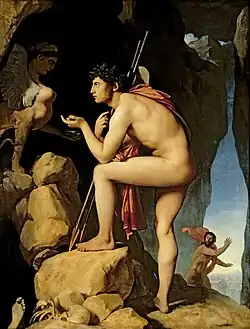

In a draft of the twenty-fourth episode of the series, written by screenwriter Akio Satsukawa and later shelved during production, Kaworu Nagisa's character would compare Commander Ikari to Paul, the protagonist of Erich Wolfgang Korngold's opera Die tote Stadt. Paul in Korngold's original opera locks himself in his home after the loss of his wife Marie, building a "Temple of the Past" with her belongings; the man meets a young woman similar to his late wife, a dancer named Marietta, and falls in love with her. The Nerv base therefore would be compared to a "Temple of the Past" built by Commander Ikari.[151] In the director's cut version of the episode, moreover, Seele links Gendo's Instrumentality scenario to the myth of Pandora's box. At the bottom of the eponymous box, as in the ancient Greek myth, which Commander Ikari opens in a metaphorical key causing an uncontrollable catastrophe and releasing all the evils of the world, it remains just hope.[152]
The series also features dialogues about religion and the value of science, themes already present in other works by Hideaki Anno, in which Gendo is a protagonist.[153][154] In the twelfth episode of the series, for example, he argues in Antarctica with vice commander Fuyutsuki about the philosophical implications of the Second Impact, claiming that "science is the strength of man" and that Antarctica, completely melted and devoid of life, is "a world cleansed of original sin".[155][156] Writer Gerald Alva Miller described his Instrumentality as an attempt to "return to Edenic bliss".[157] According to the book Neon Genesis Evangelion: The Unofficial Guide, written by Kazuhisa Fujie and Martin Foster, a different spelling of the word Gendo (言動) can be translated as "conduct", "words and behavior". This detail, together with the name of his son Shinji, phonetically similar to the word shinjin (神人), "God-man", a Japanese epithet of Jesus Christ, and that of Rei Ayanami, which in kanji can be rendered as "spirit", "soul" (零, rei), could be linked to the Christian trinity and to the philosophical concept of "Logos", which in Evangelion seems to become an attribute of God the Father. In such a perspective, Rei would represent the Holy Spirit, Shinji the God the Son and Gendo the God Father, referring to the first verses of the Gospel of John: "In the beginning was the Word, and the Word was with God, and the Word was God" (John 1:1).[158] Scholar Mariana Ortega compared Yui to a Madonna nursing Shinji and protecting him from Gendo, whom she associated with the Gnostic figure of the demiurge.[159] Furthermore, for the Japanese critic Kotani Mari Gendo seems to assume the connotations of the Supreme Being of Gnosticism, also named Monad.[141] He has also been compared to Satan, Go Nagai's Devilman's antagonist; unlike Seele, who follows a plan based on faith in the Dead Sea Scrolls, Gendo wants to become a God himself, like a fallen angel who rebels against God.[160]
Throughout the series, Gendo becomes the object of sexual desire for Dr. Naoko Akagi and, at the same time, her daughter Ritsuko, in a modern retelling of the Electra complex.[161] In the film The End of Evangelion he shoots his former lover, Ritsuko Akagi, telling her, "Dr. Akagi, actually...". The last part of the line was rendered silent, leaving it to the viewer's sensibility to imagine the missing words; according to the interpretation of some fans, Ikari says "I need you" or "I needed you", in reference to "I need you", the title of the second half of the movie.[162] Further reference to psychoanalysis is detectable in his relationship with Rei Ayanami, since the man is emotionally close to the girl, a clone of his deceased wife, and lives a tense relationship with his son.[163] Neon Genesis Evangelion can therefore be interpreted as a reinterpretation of the Oedipus legend and as a story focused on the Oedipus complex postulated by Sigmund Freud.[164] Anno thus compared Evangelion to Ryu Murakami's novel Ai to gensō no fascism. The novel's protagonist, Toji Suzuhara, attempts to kill the Japanese prime minister, whom he finds similar to his father, and according to the director he also violates his mother, who in Ai to gensō no fascism is Japan itself.[165] The director also described Neon Genesis Evangelion as a story in which the Oedipal rivalry between Gendo and his son is resolved in the last episode;[166] the Eva represents a mother figure, while Gendo and the first Angel Adam represent the fathers of a "multi-layered Oedipus complex," in which Shinji "kills his father" and takes his mother away from him.[165]
Cultural impact
Popularity
After the conclusion of the series, Gendo ranked sixteenth among the most popular male characters of the time in the 1996 Anime Grand Prix, a large survey conducted annually by the Japanese magazine Animage . The following year in the same poll he rose to fourteenth place, becoming the fourth most popular male character in Neon Genesis Evangelion.[167][168] In February 1998, the magazine ranked him sixty-fifth among the one hundred most popular anime characters.[169] Moreover, Gendo ranked in several surveys about the most attractive anime characters[170][171][172] in different categories,[173][174][175][176][177] as well as in a Goo Ranking survey in which he was the third most hated father in Japanese animation. The character also appeared in rankings on Evangelion's most beloved characters, usually in the top ten.[178][179]
Critical reception
Gendo's character has elicited negative opinions from critics and animation fans, who have described him as a selfish and ruthless man.[180][181] The website Otaku Vines ranked him sixth among the most hated characters in Japanese animation, going so far as to describe him as "the worst father in anime history" and comparing him to Shou Tucker from Fullmetal Alchemist.[182] The magazine Wired named him among the "worst relatives in television series", calling him "the most monstrous father ever".[183] Tim Jones of the website T.H.E.M. Anime Reviews described him as "creepy", frightening, plagued by a "God complex", and unpleasant man.[184] Screen Rant[185][186] and writers at Comic Book Resources[187][188] listed him among the least likable characters in the series, criticizing his abusive ways. Zac Bertschy, a reviewer for Anime News Network, has criticized the character's manipulative and self-centered attitude, calling him a "giant douchebag"[189] and consequently defending his son Shinji, whom he says has been unfairly criticized by fans of being cowardly or wimpy.[190] Bertschy himself praised the realism of the characterization, naming him among the most memorable antagonists in the history of Japanese animation: "Gendo Ikari is the worst dad ever imagined, and so it logically follows that he is also the most memorable villain. It's just science. I don't make the rules".[191] Comic Book Resources' Jacob Buchalter ranked him as the second-worst character in shōnen anime.[192] His colleague Michael Iacono, on the other hand, named him, for his "diabolical brilliance, all-or-nothing attitude, and deeply flawed character traits", among the best antagonists in anime history.[193]
Gendo is not exactly popular in Japan. Many think that he is too stern with Shinji and that he generally exudes the aura of a hard, traditional, strict father. Gendo was meant to be a strong father who should have a positive influence on Shinji so that he could grow to be more confident and adult-like. Many modern fathers in Japan are "mollycoddled" which was another reason to make Ikari Gendo into a strong father.
–Neon Genesis Evangelion assistant director Kazuya Tsurumaki[194]
Anime News Network's Lynzee Loveridge described his betrayal and actions in the film The End of Evangelion as "shocking", listing them among eight betrayals that have shocked the audience of anime fans. Sci Fi Weekly Tasha Robinson was partially disappointed with the series finale, saying it was guilty of not fully exploring Gendo's motivations or abilities.[195] Anime News Network's Kenneth Lee also expressed a similar opinion. Lee noted how Shinji, willing to die during the fight against the Eva-04, has a similar determination to his father Gendo, saying that "it is rather frightening and interesting to see so many possible parallels between the characters", which, however, "remain inconclusive", criticizing the series for leaving "a group of suppositions that will never be answered".[196] Kotaku's Richard Eisenbeis appreciated the developments and insights into Gendo's past introduced in Sadamoto's manga version, which he said were clearer and more interesting than the original series.[197] It is echoed by Carlos Santos from Anime News Network, who praised the changes present in the spin-off comic The Shinji Ikari Raising Project. The manga, according to Santos, with its comic moments and less dark and twisted backgrounds than the animated series, would manage to offer a more serene and enjoyable image of Gendo as a "hapless, comedic father which is good for a few chuckles".[198]
His role in Rebuild of Evangelion also drew criticism and praise from reviewers. The online magazine Visual Nippon, for example, appreciated the development of his relationship with Shinji in Evangelion 2.0, describing it as more sincere and genuine than the rigid animated counterpart, and Commander Ikari's efforts to get closer to his son.[61] Justin Sevakis, on the other hand, praised the film's opening scene, in which he visits Yui's grave along with Shinji, saying, "There's a warmness here, a feeling of great affection that wasn't so prevalent in the original [series]".[64] Comic Book Resources's Angelo Delos Trinos, for his part, criticized his role in the Rebuild, deeming the character overly powerful.[199] The website The Vault made negative comments about the abrupt changes in the following installment, Evangelion 3.0, writing that: "Commander Ikari is still a total prick, and unlike the original series, three movies in we have yet to get insight into why he’s a total prick. They just gave him some Cyclops headgear and called it a day".[200] Anime Reign magazine negatively described the character's new role as underdeveloped and shadowy.[201] A diametrically opposite opinion was expressed by Nicoletta Christina Browne of Them Anime Reviews; Browne, in particular, stated that she greatly appreciated the dynamism of the fight between Gendo's "egoistical genius" and his former Wille subordinates, since it "suits this franchise perfectly".[202]
Other reviewers have expressed words of praise for his role in the last installment of the saga, Evangelion: 3.0+1.0 Thrice Upon a Time, in which at the end of the feature film the man's motivations and psychology are analyzed,[203][204][205] as well as his relationship with Shinji.[206] UK Film Review, for example, praised its "brilliant character reveal",[207] while Vulture.com wrote that: "To longtime Eva fans, Gendo explaining himself feels monumental".[208] Anime News Network's Richard Eisenbeis wrote that "Thrice Upon a Time makes great strides in expanding and developing his character"; Eisenbeis also described its focus on Gendo as "the most important element of the film": "Even if you still hate Gendo by the end of this exploration, it's hard not to empathize with him".[209] Reviewers have commented positively on the fact that the film gives the character more depth and the conflict with Shinji has a central part to the development of the plot.[210][211] Geek Ireland praised how Thrice Upon a Time gives a sense of conclusion to Gendo and the other characters from the franchise,[212] while IndieWire lauded the fact that the father-son dynamic with Shinji is a central part of the story this time, culminating in "some of the most emotionally raw moments Evangelion has ever put on screen".[213] Fiction Horizon's Robert Milakovic similarly noted how their connection results in "very emotionally raw moments Evangelion has ever placed on the film".[214] Thrillist's Kambole Campbell described the emotional openness of Gendo and the other characters as "moving",[215] while The Future of the Force's Thomas Storai wrote that: "For me, that's what makes the conclusion so powerful and meaningful. Violence is not the answer".[216]
Merchandise and legacy
The character of Gendo has been used to produce a wide range of merchandising items, such as sunglasses and eyeglasses,[217] action figures,[218] collectible models,[219] T-shirts,[220] culinary products,[221] and reproductions of his clothing for cosplay.[222] Gendo, in addition to the video games and spin-offs based on the original animated series, has appeared in medias not belonging to the Neon Genesis Evangelion franchise, such as in the Million Arthur saga video games,[223] Monster Strike,[224] and Puzzle & Dragons.[225] The character was also used for campaigns of the Japan Racing Association[226] and for advertisements of the Schick razor company, a collaboration that managed to attract attention among animation fans and was renewed even years after the first advertising video.[227] In 2011 he inspired attractions set up in the Japanese amusement park Fuji-Q Highland.[228] In 2015 he was used, along with other characters from the series, for features on the 500 Type Eva, a high-speed train dedicated to Evangelion.[229] Well-known people have paid homage to him by cosplaying him, such as Minoru Takashita, president of the AnimeJapan company,[230] Takashi Kawamura, mayor of Nagoya,[231] and economist Takkaki Mitsuhashi, who founded a Cosplay Party for the 2010 Japanese House of Councillors election.[232] Gendo's character also inspired the pose of a character that appears in the opening sequence of the video game Evil Factory, developed by Neople.[233]
According to Vice's Ricardo Contreras, his image and austere face have achieved such notoriety that they have reached even audiences of non-animation fans, becoming "one of the most easily recognizable images of anime on the internet".[234] On the web, he is often associated with the ironic phrase "Get in the fucking robot, Shinji", which has also gone viral. The phrase has become an internet meme and has been used for merchandise items dedicated to the series.[235][236] Screen Rant's Adam Beach, on the other hand, noted how Ragyō Kiryūin's office in Kill la Kill is similar to Gendo's.[237] Holland Novak from Eureka Seven has also been compared with the character.[238] Over the years, his characteristic pose with his hands joined at face height, renamed "Gendo pose" by fans themselves, has achieved popularity, being quoted, homaged, and parodied in following animated series, such as by Taizo Haisegawa in Gintama, which is also voiced by Fumihiko Tachiki,[239] Immortal Grand Prix,[240] Himouto! Umaru-chan,[241] Haruka Nogizaka's Secret,[242] Baka and Test,[243] Hayate the Combat Butler,[244] Robotics;Notes,[245] Voltron: Legendary Defender,[246] by Stella's character from Rose Guns Days,[247] by Nifuji Hirotaka from Wotakoi: Love Is Hard for Otaku[248][249] and by Hayato in an official cross-over episode between Evangelion and Shinkansen Henkei Robo Shinkalion.[250]
Notes
References
- Anno, Hideaki (November 2, 2000). "Essay" (in Japanese). Gainax. Archived from the original on February 20, 2007. Retrieved June 12, 2017.
- Interview with Yoshiyuki Sadamoto in Der Mond: The Art of Yoshiyuki Sadamoto - Deluxe Edition. Kadokawa Shoten. 1999. ISBN 4-04-853031-3.
- "Intervista a Yoshiyuki Sadamoto" (in Italian). 11 July 2013. Archived from the original on 28 October 2018. Retrieved 28 October 2018.
- Neon Genesis Evangelion Film Book (in Japanese). 1. Kadokawa Shoten. p. 34.
- Evangelion Chronicle (in Japanese). 24. Sony Magazines. pp. 25–26.
- Japan Edge: The Insider's Guide to Japanese Pop Subculture (PDF). Viz Media. 1999. ISBN 156931-345-8. Archived (PDF) from the original on 21 November 2019. Retrieved 12 March 2021.
[Anno] speaks with a different aspect of his persona through every character - from his cowardly, desolate "son", Shinji, who motivated him to create Eva in the first place to the cryptic, dictatorial "father", Gendo, who the driven director was said to resemble as the series neared the wracking end of its production.
- 鶴巻 和哉 interview. ヱヴァンゲリヲン新劇場版:破 全記録全集 (in Japanese). Ground Works. 2010. pp. 323–351. ISBN 978-4-905033-00-4.
- EVA SPECIAL TALK with 庵野秀明+上野俊哉. Newtype (in Japanese). Kadokawa Shoten. November 1997.
- Sanenari 1997, pp. 79–80.
- "Animerica Spotlight: Neon Genesis Evangelion". Animerica. 10 (7). July 2002.
Eva does seem to contain a host of personal symbols. It is said that the troubled relationship between Shinji and his distant manipulative father is based on Anno’s own childhood.
- "Resurfaced Interview Sees Evangelion Creator Reveal His Father's Abusive Ways". 17 September 2019. Archived from the original on 29 September 2019. Retrieved 29 September 2019.
- Carl Gustav Horn. "FLCL is the formula". Pulp-mag.com. PULP. Archived from the original on May 9, 2006. Retrieved April 18, 2020.
- "Ikari Gendoh". 新世紀エヴァンゲリオンPHOTO FILE Eve (in Japanese). Kadokawa Shoten. 1996. p. 64. ISBN 4-04-852661-8.
- Evangelion Chronicle (in Japanese). 16. Sony Magazines. p. 28.
- Gainax (February 1998). Neon Genesis Evangelion Newtype 100% Collection (in Japanese). Kadokawa Shoten. p. 87. ISBN 4-04-852700-2.
- Evangelion Chronicle (in Japanese). 18. Sony Magazines. pp. 25–26.
- Evangelion Chronicle (in Japanese). 19. Sony Magazines. pp. 25–26.
- Evangelion Chronicle (in Japanese). 20. Sony Magazines. pp. 25–26.
- Kentaro 1997, p. 140.
- "Neon Genesis Evangelion Iron Maiden 2nd" (in Japanese). Archived from the original on 3 February 2014. Retrieved 12 September 2020.
- "惣流・アスカ・ラングレー役の声優 宮村優子さんへのアフレコインタビュー!". Broccoli.co.jp (in Japanese). BROCCOLI. Archived from the original on April 22, 2016. Retrieved March 31, 2017.
- Gainax, ed. (1997). "出演者コメント". Death & Rebirth Program Book (in Japanese).
- ヱヴァンゲリヲン新劇場版:Q 記録集 (in Japanese). November 17, 2012. pp. 62–63.
- "声ノ出演". The End of Evangelion Theatrical Pamphlet (in Japanese). Gainax. 1997.
- "Fumihiko Tachiki as Gendo Ikari". Evangelion 3.0+1.0 Theatrical Pamphlet (in Japanese). Japan. 2021. pp. 52–53. ASIN B08Y85RJ9Q.
- Charles Solomon. "Anime Series Draws on a World of Alienation". Los Angeles Times. Archived from the original on 5 March 2016. Retrieved 28 October 2018.
- "Tristan MacAvery". Archived from the original on 6 April 2016. Retrieved 28 October 2018.
- "From Golden Boy to Made in Abyss, Introducing John Swasey!". Archived from the original on 28 February 2020. Retrieved 28 October 2018.
- "Otakon Highlights - Evangelion Voice Actors". 7 August 1998. Archived from the original on 17 June 2008. Retrieved 25 April 2020.
- "Neon Genesis Evangelion Ultimate Edition Blu-ray Details Revealed, Pre-orders Open, Available 6th December". Animeuknews.net. Anime UK News. 19 August 2021. Archived from the original on 4 December 2021. Retrieved 5 December 2021.
- Lauren Massuda (7 August 2021). "'Rebuild of Evangelion' Movies Get New English Dub Cast Ahead of Prime Video Release". Collider. Archived from the original on 12 August 2021. Retrieved 21 November 2021.
- Evangelion Chronicle (in Japanese). 27. Sony Magazines. p. 6.
- Poggio 2008, p. 76.
- Cavallaro 2009, p. 62.
- Porori 2009, p. 40.
- Evangelion Chronicle (in Japanese). 1. Sony Magazines. p. 14.
- Neon Genesis Evangelion Film Book (in Japanese). 1. Kadokawa Shoten. p. 45.
- Gainax, ed. (1997). "用語集". Death & Rebirth Program Book (Special Edition) (in Japanese).
- Porori 2010, p. 66.
- Evangelion Chronicle (in Japanese). 28. Sony Magazines. pp. 9–10.
- Neon Genesis Evangelion Film Book (in Japanese). 8. Kadokawa Shoten. p. 27.
- Evangelion Chronicle (in Japanese). 1. Sony Magazines. pp. 15–16.
- Gainax, ed. (1997). "作品内年表". Death & Rebirth Program Book (in Japanese).
- Cavallaro 2009, p. 64.
- Porori 2010, pp. 64–65.
- Evangelion Chronicle (in Japanese). 2. Sony Magazines. pp. 13–14.
- Porori 2010, pp. 68–69.
- Evangelion Chronicle (in Japanese). 2. Sony Magazines. p. 16.
- Porori 2010, pp. 44–45.
- Evangelion Chronicle (in Japanese). 6. Sony Magazines. p. 6.
- Porori 2009, p. 83.
- Evangelion Chronicle (in Japanese). 10. Sony Magazines. p. 16.
- Porori 2010, p. 81.
- Porori 2010, p. 100.
- Porori 2010, p. 90.
- Evangelion Chronicle (in Japanese). 27. Sony Magazines. p. 8.
- Cavallaro 2009, p. 102.
- Porori 2010, pp. 10–11.
- Hideaki Anno, Kazuya Tsurumaki, Masayuki (directors) (1997). Neon Genesis Evangelion: The End of Evangelion (Film). Studio Gainax.
- Hideaki Anno, Kazuya Tsurumaki, Masayuki (directors) (2007). Evangelion: 1.0 You Are (Not) Alone (Film). Studio Khara.
- "Evangelion: 2.0 You Can (Not) Advance [ヱヴァンゲリヲン新劇場版:破] - Anime Movie Review". Archived from the original on 28 August 2017. Retrieved 29 October 2018.
- Theron, Martin (March 31, 2011). "Evangelion 2.22: You Can (Not) Advance". Anime News Network. Archived from the original on June 15, 2018. Retrieved January 23, 2021.
- Jitendar Canth (June 11, 2011). "Review for Evangelion: 2.22 You Can (Not) Advance". Myreviewer.com. Archived from the original on August 2, 2018. Retrieved April 18, 2020.
- Sevakis, Justin (24 November 2009). "Evangelion: 2.0 You Can Not Advance". Anime News Network. Archived from the original on 25 October 2018. Retrieved 2 December 2009.
- Nicoletta Christina Browne. "Evangelion 2.0: You Can (Not) Advance". Archived from the original on 2 August 2018. Retrieved 29 October 2018.
- Chris Beveridge (9 August 2010). "Neon Genesis Evangelion Movie 2.22 You Can [Not] Advance". Mania.com. Archived from the original on 3 December 2011.
- Hideaki Anno, Kazuya Tsurumaki, Masayuki (directors) (2009). Evangelion: 2.0 You Can (Not) Advance (Film). Studio Khara.
- "庵野 秀明". ヱヴァンゲリヲン新劇場版:破 全記録全集 (in Japanese). Ground Works. 2010. pp. 352–385. ISBN 978-4-905033-00-4.
- "Evangelion 3.0: You Can (Not) Comprehend". 19 November 2012. Archived from the original on 31 October 2018. Retrieved 30 October 2018.
- From the official You Can (Not) Advance film book, page 21.
- Bertschy, Zac (February 2, 2016). "Evangelion 3.33: You Can (Not) Redo". Anime News Network. Archived from the original on September 29, 2019. Retrieved January 30, 2021.
- Hideaki Anno, Kazuya Tsurumaki, Masayuki (directors) (2013). Evangelion: 3.0 You Can (Not) Redo (Film). Studio Khara.
- Evangelion 3.0+1.0 Theatrical Pamphlet. Japan. 2021. pp. 28–30. ASIN B08Y85RJ9Q.
- Hideaki Anno, Kazuya Tsurumaki, Katsuichi Nakayama, Mahiro Maeda (directors) (2021). Evangelion: 3.0+1.0 Thrice Upon a Time (Film). Studio Khara.
- Evangelion 3.0+1.0 Theatrical Pamphlet. Japan. 2021. pp. 66–69. ASIN B08Y85RJ9Q.
- Evangelion 3.0+1.0 Theatrical Pamphlet. Japan. 2021. pp. 22–24. ASIN B08Y85RJ9Q.
- "「庵野さん、卒業おめでとう」緒方恵美が振り返る、庵野秀明と碇シンジとの25年". Movie Walker Press (in Japanese). March 23, 2021. Archived from the original on 2021-10-19. Retrieved 2021-04-16.
- Ikuto Yamashita. "山下いくと@エヴァンゲリオンANIMA全5巻". Twitter (in Japanese). Archived from the original on 27 August 2021. Retrieved 22 October 2021.
- Napier, Susan J. (November 2002). "When the Machines Stop: Fantasy, Reality, and Terminal Identity in Neon Genesis Evangelion and Serial Experiments Lain". Science Fiction Studies. 29 (88): 426–427. ISSN 0091-7729. Archived from the original on June 26, 2019. Retrieved May 4, 2007.
- Neon Genesis Evangelion Platinum Edition Booklets. 8. A.D. Vision. 2005.
- "新世紀エヴァンゲリオン 碇シンジ育成計画 (1)" (in Japanese). Archived from the original on 11 August 2016. Retrieved 14 October 2015.
- "Neon Genesis Evangelion: Girlfriend of Steel 2nd (PC)" (in Spanish). Archived from the original on 29 October 2018. Retrieved 29 October 2018.
- "Different but not better". 31 January 2010. Archived from the original on 3 February 2010. Retrieved 29 October 2018.
- "Petit Eva Super-Deformed Series to Be Made into Video". 6 August 2007. Archived from the original on 25 May 2019. Retrieved 29 October 2018.
- Evangelion Chronicle (in Japanese). 36. Sony Magazines. p. 22.
- From the interview with Sadamoto and Tsurumaki annexed to the last chapter.
- Carl Gustav Horn. "Gendo Ikari". Neon Genesis Evangelion. 10. Viz Media.
- Carl Gustav Horn. "Gendo Ikari". Neon Genesis Evangelion. 12. Viz Media.
- Evangelion Chronicle (in Japanese). 40. Sony Magazines. p. 21.
- Yoshiyuki Sadamoto (March 31, 2011). 新世紀エヴァンゲリオン 公式ガイドブック (in Japanese). Kadokawa Shoten. p. 71. ISBN 978-4-04-715671-5.
- Enrico Fornaroli (2015). "Chronicles". Neon Genesis Evangelion. 7. Panini Comis.
- Yoshiyuki Sadamoto (March 31, 2011). 新世紀エヴァンゲリオン 公式ガイドブック (in Japanese). Kadokawa Shoten. p. 85. ISBN 978-4-04-715671-5.
- Yoshiyuki Sadamoto (March 31, 2011). 新世紀エヴァンゲリオン 公式ガイドブック (in Japanese). Kadokawa Shoten. p. 87. ISBN 978-4-04-715671-5.
- Yoshiyuki Sadamoto (March 31, 2011). 新世紀エヴァンゲリオン 公式ガイドブック (in Japanese). Kadokawa Shoten. p. 45. ISBN 978-4-04-715671-5.
- "Stage 85: Betrayal". Neon Genesis Evangelion. 13. Viz Media. November 2, 2012. ISBN 978-1-4215-5291-0.
- "Stage 88: Black Moon". Neon Genesis Evangelion. 13. Viz Media. November 2, 2012. ISBN 978-1-4215-5291-0.
- Miyako Graham, ed. (1996). "Anecdotes from Mr. Hideaki Anno". Protoculture Addicts. No. 43. pp. 40–41.
- Neon Genesis Evangelion Film Book (in Japanese). 6. Kadokawa Shoten. p. 4.
- Neon Genesis Evangelion Film Book (in Japanese). 1. Kadokawa Shoten. p. 6.
- "Evangelion Characters" (in Japanese). Gainax. Archived from the original on 18 September 2015. Retrieved 20 April 2020.
- Fujie & Foster 2004, p. 82.
- "Cast". Evangelion New Collection (in Italian). 1. Panini Comis. 2015.
- "Spotlight: Evangelion". Protoculture Additcs. Protoculture Inc. (39): 20. March 1996.
- "Characters". Gainax. Archived from the original on November 27, 1999. Retrieved April 18, 2020.
- Fujie & Foster 2004, p. 172.
- Neon Genesis Evangelion Film Book (in Japanese). 7. Kadokawa Shoten. p. 4.
- Porori 2010, p. 25.
- Neon Genesis Evangelion Film Book (in Japanese). 9. Kadokawa Shoten. p. 4.
- Porori 2009, p. 25.
- Neon Genesis Evangelion Film Book (in Japanese). 7. Kadokawa Shoten. p. 70.
- Porori 2010, p. 27.
- Porori 2009, p. 29.
- Porori 2009, p. 48.
- Porori 2009, pp. 22–23.
- Porori 2009, p. 27.
- Evangelion Chronicle (in Japanese). 6. Sony Magazines. pp. 7–8.
- Porori 2010, p. 31.
- Neon Genesis Evangelion Film Book (in Japanese). 8. Kadokawa Shoten. p. 36.
- Neon Genesis Evangelion Film Book (in Japanese). 8. Kadokawa Shoten. p. 33.
- Neon Genesis Evangelion Film Book (in Japanese). 9. Kadokawa Shoten. p. 42.
- Evangelion Chronicle (in Japanese). 27. Sony Magazines. p. 15.
- Porori 2010, p. 29.
- Neon Genesis Evangelion Film Book (in Japanese). 1. Kadokawa Shoten. p. 74.
- Porori 2009, p. 9.
- Porori 2009, p. 13.
- Evangelion Chronicle (in Japanese). 16. Sony Magazines. p. 16.
- Poggio 2008, p. 34.
- Oguro, Yūichirō. "第45回 エヴァ雑記「第拾弐話 奇跡の価値は」" (in Japanese). Archived from the original on March 1, 2021. Retrieved July 23, 2020.
- Poggio 2008, p. 62.
- Fujie & Foster 2004, p. 22.
- Porori 2010, p. 96.
- "Note". The End of Evangelion Theatrical Pamphlet (in Japanese). Gainax. 1997.
- 第62回 エヴァ雑記「第26話 まごころを、君に」 (in Japanese). Archived from the original on January 2, 2021. Retrieved January 27, 2021.
- Krystian Woznicki (September 1991). "Towards a cartography of Japanese anime – Anno Hideaki's Evangelion Interview with Azuma Hiroki". Blimp Filmmagazine. Tokuma Shoten.
- "7 cose che forse non sapevate su Nadia – Il mistero della pietra azzurra". 5 February 2020. Archived from the original on 20 April 2020. Retrieved 27 April 2020.
- Fontana, Andrea; Tarò, Davide (2007). Anime. Storia dell'animazione giapponese 1984–2007 (in Italian). Il Foglio Letterario. p. 101. ISBN 978-88-7606-160-8.
- Neon Genesis Evangelion Film Book (in Japanese). 8. Kadokawa Shoten. p. 54.
- Nagatomi, Akio. "Shinseiki Evangelion Review Pages – Episode 8: Asuka Strikes!". Abcb.com. The Animé Café. Archived from the original on 2 August 2018. Retrieved 31 May 2021.
- Brittanie Maldonado (28 September 2021). "Evangelion: 10 Things You Didn't Know About Shinji And Gendo's Relationship". Comic Book Resources. Archived from the original on 11 October 2021. Retrieved 21 October 2021.
- Oguro, Yūichirō (May 23, 2006). "第37回 エヴァ雑記「第四話 雨、逃げ出した後」". Style.fm (in Japanese). Archived from the original on October 10, 2018. Retrieved April 17, 2020.
- Mari, Kotani (1997). "Evangelion as the Immaculate Virgin". 聖母エヴァンゲリオン―A new millennialist perspective on the daughters of Eve. Magazine House. ISBN 483870917X.
- Napier, Susan J. (2005). Anime – From Akira to Howl's Moving Castle. p. 99. ISBN 1-4039-7052-1.
- Haslem, Wendy; Ndalianis, Angela; Mackie, Christopher J. (2007). Super/heroes : from Hercules to Superman. Washington, DC: New Academia Pub. p. 121. ISBN 978-0977790845. OCLC 123026083.
- Traphagan, John W.; Hashimoto, Akiko (2009). Imagined Families, Lived Families Culture and Kinship in Contemporary Japan. State University of New York Press. p. 42. ISBN 978-0-7914-7577-5.
- Poggio 2008, p. 9.
- Platinum Booklet. 1. ADV.
- Mizobe, Koji (2011). "新世紀エヴァンゲリオンにみる思春期課題と精神障害" (PDF). 地域支援心理研究センター紀要 (in Japanese). 追手門学院大学 (8). Archived (PDF) from the original on 17 August 2018. Retrieved 24 February 2021.
- Greco, Alexander (20 June 2020). "Analysis of Neon Genesis Evangelion, Episodes 1 & 2". Fifth Wall Renaissance. Archived from the original on 29 March 2021. Retrieved 31 March 2021.
- Macwilliams, Mark Wheeler (2008). Japanese Visual Culture: Explorations in the World of Manga and Anime. M.E. Sharpe. p. 10. ISBN 978-0-7656-1601-2.
- Lobo, Jonny (3 May 2021). "Anno, Itano, and the Apocalypse: Intergenerational Struggle in Megazone 23 and Neon Genesis Evangelion". Archived from the original on 11 May 2021. Retrieved 10 May 2021.
- 別冊JUNE (in Japanese). Magazine Magazine. September 1996.
- Poggio 2008, p. 72.
- Poggio 2008, p. 35.
- Gualtiero Cannarsi. Evangelion Encyclopedia (in Italian). 6. Dynamic Italia. p. 16.
- Gualtiero Cannarsi. Evangelion Encyclopedia (in Italian). 6. Dynamic Italia. pp. 28–29.
- Neon Genesis Evangelion Film Book (in Japanese). 4. Kadokawa Shoten. p. 54.
- Miller 2012, p. 86.
- Fujie & Foster 2004, p. 121.
- Ortega, Mariana (2010). "My Father, He Killed Me; My Mother, She Ate Me: Self, Desire, Engendering, and the Mother in Neon Genesis Evangelion". Mechademia. 2: 225. doi:10.1353/mec.0.0010. ISBN 978-0-8166-5266-2. S2CID 120554645.
- Brignola, Cristiano; Tedeschi, Francesco (2020). Evangelion for Dummy (Plugs) (in Italian). Dynit Manga. p. 146. ISBN 978-8833551111.
- Poggio 2008, p. 47.
- Allan, Laura (14 June 2019). "Insane Fan Theories About The End of Evangelion". Archived from the original on 11 July 2020. Retrieved 11 July 2020.
- Justin Wu (11 July 2013). "Neon Genesis Evangelion: The Legacy of Rei Ayanami". The Artifice. Archived from the original on 18 March 2016. Retrieved 17 April 2020.
- Poggio 2008, p. 93.
- Sanenari 1997, pp. 86–87.
- Oguro, Yūichirō (June 22, 2006). "第59回 エヴァ雑記「最終話 世界の中心でアイを叫んだけもの」". Style.fm (in Japanese). Archived from the original on April 2, 2016. Retrieved April 17, 2020.
- "第18回アニメグランプリ[1996年5月号]". Tokuma Shoten. Archived from the original on 19 October 2010.
- "第19回アニメグランプリ[1997年6月号]". Tokuma Shoten. Archived from the original on 19 October 2010.
- "明けましてパクト100". Animage (in Japanese). Tokuma Shoten. February 1998.
- "Male Otaku Names The Anime Heroes They Would Like to Have as a Boyfriend". 31 August 2013. Archived from the original on 31 October 2018. Retrieved 30 October 2018.
- "7 Anime for Grown-Up Romantics". 22 August 2015. Archived from the original on 31 October 2018. Retrieved 30 October 2018.
- "奥さんが羨ましい!最強の愛妻家キャラランキング 21位から27位" (in Japanese). 25 September 2017. Archived from the original on 31 October 2018. Retrieved 30 October 2018.
- "Fans Weigh In On "Most Attractive Anime Characters With Facial Hair"". 14 August 2015. Archived from the original on 31 October 2018. Retrieved 30 October 2018.
- "アニメ史上最も渋くてカッコいい「おじさん」キャラランキング 11位から20位" (in Japanese). 1 October 2016. Archived from the original on 31 October 2018. Retrieved 30 October 2018.
- "知ってた?実は高学歴だった意外なアニメキャラランキング 1位から10位" (in Japanese). 27 May 2017. Archived from the original on 31 October 2018. Retrieved 30 October 2018.
- "冷たい視線が最高!イケメン無表情キャラランキング 21位から30位" (in Japanese). 29 October 2017. Archived from the original on 31 October 2018. Retrieved 30 October 2018.
- "最高にかっこいい!父キャラランキング 11位から18位" (in Japanese). 21 August 2018. Archived from the original on 31 October 2018. Retrieved 30 October 2018.
- "女子が好きな『新世紀エヴァンゲリオン』キャラクターTOP3/ 1位はなんとあの脇役!" (in Japanese). July 24, 2019. Archived from the original on 30 September 2019. Retrieved 30 September 2019.
- "Ranking" (in Japanese). Archived from the original on 4 August 2020. Retrieved 13 September 2020.
- Ajay Aravind (8 March 2021). "Neon Genesis Evangelion: 10 Times The Anime Went Too Far". Comic Book Resources. Archived from the original on 9 March 2021. Retrieved 25 March 2021.
- "Top 10 Worst Parents in Anime". WatchMojo. Archived from the original on 25 March 2021. Retrieved 25 March 2021.
- "Top 10 hated Anime by anime fans all over the world!". 16 October 2016. Archived from the original on 22 October 2016. Retrieved 7 July 2017.
- Samantha Bosco (2 January 2018). "I peggiori parenti delle serie tv". Archived from the original on 3 April 2021. Retrieved 3 January 2019.
- "Neon Genesis Evangelion". Archived from the original on 25 April 2017. Retrieved 24 April 2017.
- Shaddock, Chris (19 January 2021). "Neon Genesis Evangelion: Best & Worst Characters, Ranked". Screen Rant. Archived from the original on 1 February 2021. Retrieved 28 January 2021.
- Mitra, Ritwik (16 January 2021). "Neon Genesis Evangelion: The Main Characters, Ranked From Worst To Best By Character Arc". Screen Rant. Archived from the original on 7 February 2021. Retrieved 28 January 2021.
- Ajay Aravind (2 December 2020). "Neon Genesis Evangelion: Every Main Character, Ranked By Likability". Comic Book Resources. Archived from the original on 21 January 2021. Retrieved 28 January 2021.
- Kristty Ambrose (10 January 2021). "10 Anime Villains From The '90s That Would Not Work Today". Archived from the original on 13 February 2021. Retrieved 5 February 2021.
- "Evangelion: 1.0 You Are [Not] Alone". Archived from the original on 20 May 2019. Retrieved 7 October 2021.
- Zac Bertschy (21 June 2019). ""Get In The Robot, Shinji"". Archived from the original on 13 July 2019. Retrieved 12 September 2019.
- "Your Most Memorable Anime Villain". Anime News Network. 3 February 2016. Archived from the original on 4 July 2017. Retrieved 24 April 2017.
- Jacob Buchalter (15 April 2020). "The Top 10 Worst Shonen Characters Of All Time, Ranked". Archived from the original on 24 April 2020. Retrieved 27 April 2020.
- "5 Of The Greatest Anime Villains Of All Time (& 5 Of The Lamest)". 13 February 2020. Archived from the original on 2 March 2020. Retrieved 27 April 2020.
- "Interview mit Tsurumaki Kazuya (Studio GAINAX)" (in German). Anime No Tomodachi. Archived from the original on September 3, 2017. Retrieved September 8, 2013.
- Robinson, Tasha (21 September 1998). "Neon Genesis Evangelion 0:11-0:13". Sci-Fy Weely. Archived from the original on 4 March 2009. Retrieved 14 April 2021.
- Kenneth, Lee (9 September 1998). "The Thin Veneer Known as "Evangelion"". Anime News Network. Archived from the original on 24 July 2017. Retrieved 2021-02-27.
- Eisenbeis, Richard. "The Evangelion Manga Is Finally Over, and What a Ride It Was". Kotaku.com. Kotaku. Archived from the original on July 14, 2019. Retrieved 26 May 2021.
- Carlos Santos (20 July 2010). "Ultimo's Sweet Home". Archived from the original on 3 April 2021. Retrieved 30 October 2018.
- Angelo Delos Trinos (23 March 2021). "10 Ways The Rebuild Movies Made Evangelion Worse". Archived from the original on 3 April 2021. Retrieved 7 October 2021.
- "Review thus far: Rebuild of Evangelion". 4 June 2014. Archived from the original on 31 October 2018. Retrieved 30 October 2018.
- "Neon Genesis Evangelion 3.0". Anime Reign Magazine. World Anime Club. 1 (2): 32. 2013.
- Browne, Nicoletta Christina (March 2016). "THEM Anime Reviews 4.0 - Evangelion 3.0: You Can (Not) Redo". www.themanime.org. Archived from the original on 7 March 2019. Retrieved 9 February 2021.
- Brendan Frye (16 August 2021). "Evangelion: 3.0+1.0 Thrice Upon a Time Review". CGM Online. Archived from the original on 23 November 2021. Retrieved 6 December 2021.
- Jess Kroll (23 August 2021). "REVIEW: 'Evangelion 3.0 + 1.0 Thrice Upon a Time' is a glorious end". Pop Mythology. Archived from the original on 24 August 2021. Retrieved 6 December 2021.
- Paul Carlson. "'Evangelion: 3.0+1.0 Thrice Upon a Time' film review: The true end of Evangelion". Escape Into Film. Archived from the original on 12 August 2021. Retrieved 6 December 2021.
- "The True End of 'Neon Genesis Evangelion'". It's the Pictures. 17 August 2021. Archived from the original on 29 November 2021. Retrieved 6 December 2021.
- Robert Stayte (17 August 2021). "Evangelion 3.0+1.0: Thrice Upon a Time Review". UK Film Review. Archived from the original on 6 December 2021. Retrieved 6 December 2021.
- Eric Vilas-Boas (24 August 2021). "Evangelion 3.0+1.0 Annihilates Its Own Animation to Reveal Itself". Vulture.com. Vulture. Archived from the original on 20 November 2021. Retrieved 6 December 2021.
- Richard Eisenbeis (9 March 2021). "Evangelion: 3.0+1.0: Thrice Upon A Time". Animenewsnetwork.com. Anime News Network. Archived from the original on 10 March 2021. Retrieved 6 December 2021.
- Adlakha, Siddhant (31 July 2021). "The final Evangelion movie brings the series to a powerful close". Polygon.com. Polygon. Archived from the original on 5 October 2021. Retrieved 27 November 2021.
- Reuben Baron (15 August 2021). "Evangelion: 3.0 + 1.01 Thrice Upon A Time Justifies the Rebuild Movies' Existence". Cbr.com. Comic Book Resources. Archived from the original on 28 August 2021. Retrieved 6 December 2021.
- Nugent, Baz (19 August 2021). "REVIEW: Evangelion 3.0 + 1.0: Thrice Upon a Time". Geekireland.com. Geek Ireland. Archived from the original on 20 August 2021. Retrieved 27 November 2021.
- Motamayor, Rafael (16 August 2021). "'Evangelion: 3.0+1.0 Thrice Upon a Time' Review: Hideaki Anno's Iconic Anime Finally Gets a Proper Ending". Indiewire.com. Indie Wire. Archived from the original on 21 November 2021. Retrieved 27 November 2021.
- Robert Milakovic (2 September 2021). "'Evangelion: 3.0+1.01' Review: Thrice Upon a Time Strikingly Gorgeous Animation". Fiction Horizon. Archived from the original on 6 December 2021. Retrieved 6 December 2021.
- Kambole Campbell (14 August 2021). "'Evangelion 3.0+1.0: Thrice Upon a Time' Ends the Legendary Anime Once and for All". Thrillist. Archived from the original on 16 August 2021. Retrieved 6 December 2021.
- Thomas Storai (13 August 2021). "Review: Evangelion 3.0+1.0 Thrice Upon A Time". The Future of the Force. Archived from the original on 10 November 2021. Retrieved 6 December 2021.
- "Own Gendo's Visor and Misato's Sunglasses from Evangelion". 30 December 2013. Archived from the original on 17 June 2018. Retrieved 18 July 2017.
- "『ヱヴァンゲリヲン新劇場版』の「碇ゲンドウ」フィギュアがセガプライズに帰ってきた!" (in Japanese). Dengeki Hobby Web. 14 January 2021. Archived from the original on 2 February 2021. Retrieved 13 April 2021.
- Porori 2009, p. 117.
- "EVANGELION with TOKYO STREET 36×XLARGE 碇ゲンドウ" (in Japanese). Archived from the original on 18 July 2017. Retrieved 18 July 2017.
- Casey Baseel (15 November 2018). "Evangelion Bar opening in Tokyo". Archived from the original on 4 January 2019. Retrieved 3 January 2019.
- "ACOS ヱヴァンゲリヲン新劇場版:Q 碇ゲンドウのジャケット男性用Lサイズ" (in Japanese). Archived from the original on 18 July 2017. Retrieved 18 July 2017.
- "Gendo Finally Steps Up as Support Character in Kai-Ri-Sei Million Arthur Mobile Game". 15 June 2016. Archived from the original on 31 October 2018. Retrieved 30 October 2018.
- "【パズドラ】確定碇ゲンドウガチャは絶対買おう! 壊れスキルで何体いても損はしない!" (in Japanese). AppBank. 9 July 2020. Archived from the original on 13 April 2021. Retrieved 13 April 2021.
- "碇ゲンドウ&冬月コウゾウの評価・適正、モンスト攻略班の独自評価は?わくわくの実も解説!【エヴァンゲリオン】" (in Japanese). AppBank. 4 May 2020. Archived from the original on 13 April 2021. Retrieved 13 April 2021.
- Scott Green (14 June 2012). "Evangelion Promotes Japanese Racing Association". Archived from the original on 24 September 2018. Retrieved 24 August 2018.
- "7 Strangest Pieces of Evangelion Merchandise". 24 December 2016. Archived from the original on 2 January 2021. Retrieved 30 October 2018.
- "A Look at Fuji-Q Highland's Evangelion World". 26 November 2011. Archived from the original on 31 October 2018. Retrieved 30 October 2018.
- Brittany Vincent (6 February 2018). "The Evangelion Bullet Train Will Pull Into The Station One Final Time This May". Archived from the original on 25 September 2018. Retrieved 24 August 2018.
- Michelle Ngueyen (31 October 2016). "Japan's Politicians Dress in Cosplay, are Cooler Than Ours". Archived from the original on 1 November 2016. Retrieved 6 August 2017.
- "エヴァファン必見!名古屋市・河村たかし市長が「碇ゲンドウ」のコスプレで登場!!" (in Japanese). 2 August 2017. Archived from the original on 6 August 2017. Retrieved 6 August 2017.
- Brian Ashcraft (7 June 2010). "Who Say Politics and Cosplay Don't Mix?". Archived from the original on 6 August 2017. Retrieved 6 August 2017.
- "ダサいゲームは作らない!レトロゲームファンが認める『エビルファクトリー』開発の戦略は"差別化"と"かっこよさ"!?【NDC17】" (in Japanese). 28 April 2017. Archived from the original on 28 April 2017. Retrieved 30 October 2018.
- "'Evangelion' Presents: Gendo Ikari, Anime's Worst Dad". 12 July 2019. Archived from the original on 9 September 2019. Retrieved 12 September 2019.
- "What Is 'Neon Genesis Evangelion,' and Why Is It Such a Big Deal That It's on Netflix?". 19 June 2019. Archived from the original on 7 August 2019. Retrieved 12 September 2019.
- "10 Evangelion Logic Memes That Are Too Hilarious For Words". 7 November 2019. Archived from the original on 17 December 2019. Retrieved 17 December 2019.
- Adam Beach (4 August 2021). "Evangelion: 5 Anime The Series Influenced (5 It Was Influenced By)". Screen Rant. Archived from the original on 7 August 2021. Retrieved 21 October 2021.
- Andrea Peduzzi. "Eureka Seven è il meglio che puoi fare senza un genio per casa". Archived from the original on 19 July 2020. Retrieved 19 July 2020.
- "10 References & Parodies You Missed In Gintama". 7 December 2019. Archived from the original on 17 December 2019. Retrieved 17 December 2019.
- "Immortal Grand Prix (TV 2)". Archived from the original on 31 October 2018. Retrieved 30 October 2018.
- "Himouto! Umaru-chan (TV)". Archived from the original on 31 October 2018. Retrieved 30 October 2018.
- "Haruka Nogizaka's Secret: Purezza (TV)". Archived from the original on 31 October 2018. Retrieved 30 October 2018.
- "Baka and Test - Summon the Beasts (TV)". Archived from the original on 31 October 2018. Retrieved 30 October 2018.
- "Hayate the Combat Butler (TV)". Archived from the original on 24 October 2019. Retrieved 30 October 2018.
- "Robotics;Notes (TV)". Archived from the original on 31 October 2018. Retrieved 30 October 2018.
- "Voltron: What To Watch Next?". 14 December 2018. Archived from the original on 4 January 2019. Retrieved 3 January 2019.
- Ryukishi07 (2016). Rose Guns Days Season 1. 4. Hachette UK. ISBN 978-0-316-39155-9. Archived from the original on 31 October 2018. Retrieved 30 October 2018.
- "Wotakoi: Love is Hard for Otaku". 21 April 2018. Archived from the original on 31 October 2018. Retrieved 30 October 2018.
- Angelo Delos Trinos (16 September 2021). "10 Anime That Referenced Neon Genesis Evangelion". Comic Book Resources. Archived from the original on 25 September 2021. Retrieved 20 October 2021.
- "Kids' Anime Shinkalion Episode 17 Parodies Evangelion". 3 May 2018. Archived from the original on 29 October 2018. Retrieved 30 October 2018.
Bibliography
- Sanenari, Oizumi (1997). Anno Hideaki Sukidzo Evangerion (in Japanese). Ōta Shuppan. ISBN 4-87233-315-2.
- Kentaro, Takekuma (1997). Anno Hideaki Parano Evangerion (in Japanese). Ōta Shuppan. ISBN 4-87233-316-0.
- Fujie, Kazuhisa; Foster, Martin (2004). Neon Genesis Evangelion: The Unofficial Guide. United States: DH Publishing, Inc. ISBN 0-9745961-4-0.
- Poggio, Alessandra (2008). Neon Genesis Evangelion Encyclopedia (in Italian). Dynit.
- Cavallaro, Dani (2009). The art of Studio Gainax: experimentation, style and innovation at the leading edge of anime. McFarland & Co. ISBN 978-0-7864-3376-6.
- Porori, Syunsou (2009). The Essential Evangelion Chronicle: Side A (in French). Glénat Editions. ISBN 978-2-7234-7120-6.
- Porori, Syunsou (2010). The Essential Evangelion Chronicle: Side B (in French). Glénat Editions. ISBN 978-2-7234-7121-3.
- Yamashita, Ikuto (2010). Neon Genesis Evangelion Anima Visual Book (in Japanese). ASCII Media Works. ISBN 978-4048685269.
- Miller, Gerald Alva Jr. (2012). Exploring the Limits of the Human Through Science Fiction. Palgrave Macmillan. ISBN 978-1-137-26285-1.