List of North American dinosaurs
This is a list of dinosaurs whose remains have been recovered from North America. North America has a rich dinosaur fossil record with great diversity of dinosaurs.
History
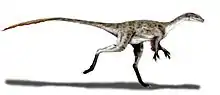
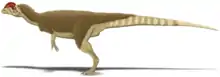
The earliest record of dinosaurs in North America comes from rare, unidentified (possibly theropod) footprints and teeth in the Middle-Late Triassic Pekin Formation of North Carolina.[1] Later in the Triassic period, dinosaurs left more recognizable remains, and could thus be identified as specific genera. Examples of later Triassic North American dinosaur genera include Coelophysis, Chindesaurus, Gojirasaurus, and Tawa. Fossils of Tawa-like dinosaurs have also been found in South America, which has important indications about paleogeography. During the Early Jurassic Period, dinosaurs such as Dilophosaurus, Anchisaurus, Coelophysis (formerly known as Megapnosaurus), and the early thyreophoran Scutellosaurus lived in North America. The latter is believed to have been the ancestor of all stegosaurs and ankylosaurs. The Middle Jurassic is the only poorly represented time period in North America, although several Middle Jurassic localities are known from Mexico. Footprints, eggshells, teeth, and fragments of bone representing theropods, sauropods, and ornithopods have been found, but none of them are diagnostic to the genus level.
The Late Jurassic of North America, however, is the exact opposite of the Middle Jurassic. The Late Jurassic Morrison Formation is found in several U.S. states, including Colorado, Utah, Wyoming, Montana, New Mexico, Oklahoma, South Dakota, and Texas. It is notable as being the most fertile single source of dinosaur fossils in the world. The roster of dinosaurs from the Morrison is impressive. Among the theropods, Allosaurus, Saurophaganax, Torvosaurus, Ceratosaurus, Coelurus, Ornitholestes, Tanycolagreus, Stokesosaurus, and Marshosaurus are found in the Morrison. An abundance of sauropods has been found there, including Apatosaurus, Diplodocus, Barosaurus, Brachiosaurus, Camarasaurus, Brontosaurus and Amphicoelias. Three genera of stegosaurs, Alcovasaurus, Stegosaurus and Hesperosaurus, have been found there. Finally, ornithopods found in the Morrison include Dryosaurus, Camptosaurus, Drinker, Othnielia, and Othnielosaurus.
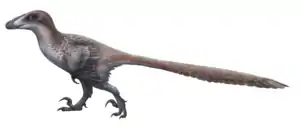
During the Early Cretaceous, new dinosaurs evolved to replace the old ones. Sauropods were still present, but they were not as diverse as they were in the Jurassic Period. Theropods from the Early Cretaceous of North America include dromaeosaurids such as Deinonychus and Utahraptor, Acrocanthosaurus, and Microvenator. Sauropods included Astrodon, Brontomerus, and Sauroposeidon. Ornithischians were more diverse than they were in the Jurassic Period. Tenontosaurus, Dakotadon, Protohadros, and Eolambia are some of the ornithopods that lived during this time period. Ankylosaurs replaced their stegosaur cousins in the Cretaceous. Ankylosaurs from the Early Cretaceous of North America include Sauropelta and Gastonia. Therizinosaurs such as Falcarius are also known from the Early Cretaceous of North America.
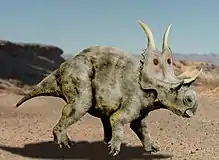
Finally, during the Late Cretaceous Period, the greatest abundance and diversity of dinosaurs of all time lived in North America. During the early part of the Late Cretaceous, the therizinosaur Nothronychus and the ceratopsian Zuniceratops lived. During the Campanian stage of the Late Cretaceous, an enormous diversity of dinosaurs is known. Theropods included the tyrannosaurs Albertosaurus, Gorgosaurus, Daspletosaurus, Teratophoneus, Bistahieversor, and Appalachiosaurus, and the dromaeosaurids Dromaeosaurus, Saurornitholestes, Atrociraptor, and Bambiraptor. Ceratopsians, such as Pachyrhinosaurus, Styracosaurus, Centrosaurus, Monoclonius, Brachyceratops and Pentaceratops also existed. Among hadrosaurs, Hypacrosaurus, Gryposaurus, Kritosaurus, Parasaurolophus, Corythosaurus, Lambeosaurus and Prosaurolophus existed. During the latest Cretaceous, the Maastrichtian age, the diversity of dinosaurs saw a decline from the preceding Campanian stage. North American herbivorous dinosaurs from this time period include the titanosaur sauropod Alamosaurus, the ceratopsians Bravoceratops, Regaliceratops, Triceratops, Leptoceratops, Torosaurus, Nedoceratops, Tatankaceratops (the latter two possible species of Triceratops), and Ojoceratops, the pachycephalosaurs Pachycephalosaurus, Stygimoloch, Dracorex, and Sphaerotholus, the hadrosaurs Augustynolophus, Saurolophus and Edmontosaurus, the ornithopod Thescelosaurus the ankylosaur Ankylosaurus and the nodosaurs Denversaurus, Glyptodontopelta and Edmontonia. Predatory dinosaurs from this time period included the tyrannosaurids Tyrannosaurus, Nanotyrannus (which may just be a juvenile of the former) and Dryptosaurus, the ornithomimids Ornithomimus, Dromiceiomimus, Struthiomimus, the oviraptorids Anzu, Leptorhynchos and Ojoraptorsaurus, the troodontids Pectinodon, Paronychodon and Troodon, the coelurosaur Richardoestesia and the dromaeosaurs Acheroraptor and Dakotaraptor.
The only dinosaur fossil from Central America currently is a femur of an ornithopod.,[2][3] discovered in the central part of Honduras in the year 1971 near San Luis, Comayagua Department, by Bruce Simonson and Gregory Horne. It was found in the highest part of the Valle de Angeles Redbeds. The fossil bone is in the US National Museum of Natural History in Washington (catalog number USNM PAL 181339). It was identified as ornithopod bone by John Ostrom,[3] and by Nicholas Hotton as the right femur of a small hadrosaur.[4]
There is also an older report of dinosaur fossil from Honduras documented only in US newspapers at 1933, but not scientifically documented . This report comments the discovery of a dinosaur ankle bone near the town of Olanchito, Yoro Department, Honduras; by the explorer Gregory Mason. This information is described on page 9 of The Washington Post of August 23, 1933, on page 8 of the newspaper The Norwalk Hour August 24, 1933[5] and on page 6 of Nebraska newspaper The Plattsmouth Journal of August 21 of 1933[6]
Criteria for inclusion
Inclusion criteria:
- The creature must appear on the List of dinosaur genera.
- Fossils of the creature must have been found in North America.
- This list is a complement to Category:Dinosaurs of North America.
List
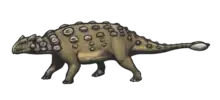
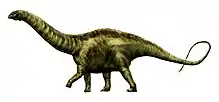
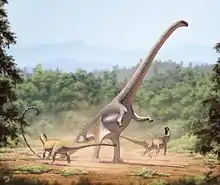
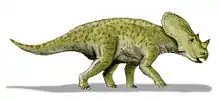
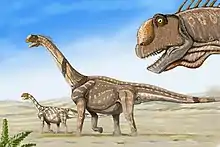
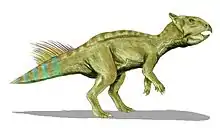
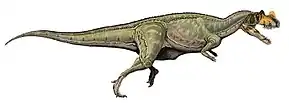
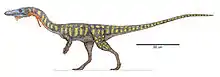
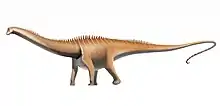
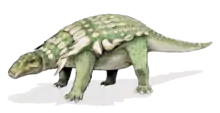
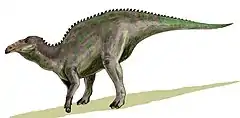
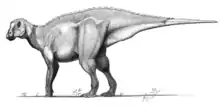
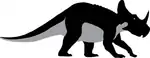
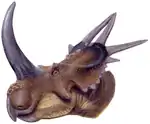
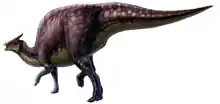
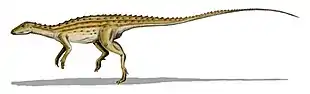
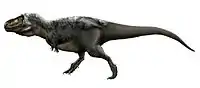
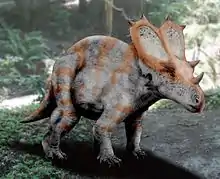
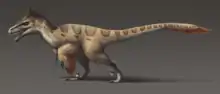
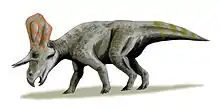
| Nomen dubium |
| Invalid |
| Nomen nudum |
| Name | Period | Diet[7] | State/Province (Country) | Notes |
|---|---|---|---|---|
| Abydosaurus | Cretaceous | herbivore | Utah, United States | Last known sauropod in North America until appearance of Alamosaurus |
| Acantholipan | Cretaceous | herbivore | Coahuila, Mexico | An ankylosaur with spikes above its hips. |
| Achelousaurus | Cretaceous | herbivore | Montana, United States | A "transitional form" between two other species of ceratopsians. |
| Acheroraptor | Cretaceous | carnivore | Montana, United States | One of the last dromaeosaurs. |
| Acristavus | Cretaceous | herbivore | Montana and Utah, United States | An early hadrosaur with no crest on its snout. |
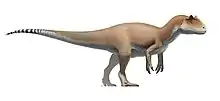
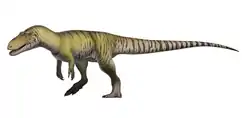
| Acrocanthosaurus | Cretaceous | carnivore | Oklahoma, Texas, Wyoming and Maryland, United States | A large predator with a hump or sail on its back. |
| Acrotholus | Cretaceous | herbivore | Alberta, Canada | North America's oldest pachycephalosaur. |
| Adelolophus | Cretaceous | herbivore | Utah, United States | Possibly an early member of Parasaurolophini. |
| Agathaumas | Cretaceous | herbivore | Wyoming, United States | Dubious, see article |
| Agujaceratops | Cretaceous | herbivore | Texas, United States | Formerly a species of Chasmosaurus. |
| Ahshislepelta | Cretaceous | herbivore | New Mexico, United States | An ankylosaur. |
| Akainacephalus | Cretaceous | herbivore | Utah, United States | A recently described well-preserved ankylosaur. |
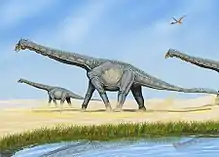
| Alamosaurus | Cretaceous | herbivore | Texas, United States | The last known sauropod from North America. |
| Alaskacephale | Cretaceous | herbivore | Alaska, United States | A pachycephalosaur. |
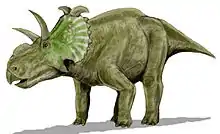
| Albertaceratops | Cretaceous | herbivore | Alberta, Canada | A basal centrosaurine ceratopsian. Montanan specimen reclassified as Medusaceratops |
| Albertadromeus | Cretaceous | herbivore | Alberta, Canada | A small ornithischian. |
| Albertavenator | Cretaceous | carnivore | Alberta, Canada | A small troodontid. |
| Albertonykus | Cretaceous | carnivore | Alberta, Canada | One of North America's smallest adult non-avian dinosaurs. |
| Albertosaurus | Cretaceous | carnivore | Alberta, Canada | Fossil evidence suggests it may have hunted in packs. |
| Alcovasaurus | Jurassic | herbivore | Wyoming, United States | Formerly a species of Stegosaurus; later assigned to the genus "Natronasaurus", but it was improperly named, so it received its current name. |
| Aletopelta | Cretaceous | herbivore | California, United States | Its remains were found in California, thought it may have lived closer to Mexico in life. |
| Allosaurus | Jurassic | carnivore | New Mexico, Colorado, Utah and Wyoming, United States (another species is known from the Lisbon District in Portugal) | As one of the first well-known theropod dinosaurs, it has long attracted attention outside of paleontological circles. One species was found in Portugal. |
| Amphicoelias | Jurassic | herbivore | Colorado, Utah United States | A sauropod. |
| Anasazisaurus | Cretaceous | herbivore | New Mexico, United States | Intertwined with Gryposaurus and Kritosaurus throughout its history. |
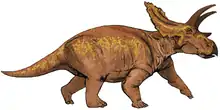
| Anchiceratops | Cretaceous | herbivore | Alberta, Canada | A ceratopsian. |
| Anchisaurus | Jurassic | herbivore | Connecticut and Massachusetts, United States | A small basal sauropodomorph. |
| Angulomastacator | Cretaceous | herbivore | Texas, United States | A hadrosaur with an unusually-shaped jaw. |
| Animantarx | Cretaceous | herbivore | Utah, United States | Discovered during a radiological survey of the fossil site. |
| Ankylosaurus | Cretaceous | herbivore | Montana, United States | Known for its heavily armored back. |
| Anodontosaurus | Cretaceous | herbivore | Alberta, Canada | Formerly congeneric with Euoplocephalus. |
| Antrodemus | Jurassic | carnivore | Colorado, United States | Probably synonymous with Allosaurus, see article |
| Anzu | Cretaceous | omnivore | North Dakota and South Dakota United States | A large oviraptorosaur. |
| Apatodon | Jurassic | carnivore | Colorado, United States | Highly dubious, see article |
| Apatoraptor | Cretaceous | omnivore | Alberta, Canada | An oviraptorosaur known to have feathers. |
| Apatosaurus | Jurassic | herbivore | Colorado, Oklahoma, Utah and Wyoming, United States | Formerly congeneric with Brontosaurus |
| Appalachiosaurus | Cretaceous | carnivore | Alabama, United States | One of the few non-avian dinosaurs from the eastern side of North America. |
| Aquilarhinus | Cretaceous | herbivore | Texas, United States | A hadrosaur from Big Bend National Park in Texas, described in 2019. |
| Aquilops | Cretaceous | herbivore | Montana, United States | A basal ceratopsian with a horn on its beak. |
| Arkansaurus | Cretaceous | omnivore | Arkansas, United States | A nomen nudum for 41 years before being officially described in 2018. |
| Arrhinoceratops | Cretaceous | herbivore | Alberta, Canada | A ceratopsian. |
| Astrodon | Cretaceous | herbivore | Maryland, United States | State dinosaur of Maryland. |
| Astrophocaudia | Cretaceous | herbivore | Texas, United States | A sauropod. |
| Atlantosaurus | Jurassic | herbivore | Colorado, United States | Probably the same as Apatosaurus. |
| Atrociraptor | Cretaceous | carnivore | Alberta, Canada | A close relative of Saurornitholestes. |
| Aublysodon | Cretaceous | carnivore | Montana, United States | Dubious, see article. |
| Augustynolophus | Cretaceous | herbivore | California, United States | State dinosaur of California. |
| Avaceratops | Cretaceous | herbivore | Montana, United States | A small ceratopsian. |
| Bambiraptor | Cretaceous | carnivore | Montana, United States | Named after the familiar character due to its small size. |
| Barosaurus | Jurassic | herbivore | South Dakota and Utah, United States | Probably one of the largest dinosaurs. |
| Beelemodon | Jurassic | carnivore | Wyoming, United States | Possibly a coelurosaur. |
| Bistahieversor | Cretaceous | carnivore | New Mexico, United States | A tyrannosaur. |
| Borealopelta | Cretaceous | herbivore | Alberta, Canada | A well-preserved ankylosaur that revealed the arrangement of its osteoderms, its color, and its last meal. |
| Boreonykus | Cretaceous | carnivore | Alberta, Canada | A dromaeosaurid. |
| Brachiosaurus | Jurassic | herbivore | Colorado, United States | A familiar sauropod. |
| Brachyceratops | Cretaceous | herbivore | Montana, United States | Only juvenile fossils found so far |
| Brachylophosaurus | Cretaceous | herbivore | Montana, United States and Alberta, Canada | A hadrosaur known from several well-preserved "mummies" |
| Bravoceratops | Cretaceous | herbivore | Texas, United States | A large ceratopsian. |
| Brontomerus | Cretaceous | herbivore | Utah, United States | Possibly dubious. |
| Brontosaurus | Jurassic | herbivore | Utah and Wyoming, United States | Formerly congeneric with Apatosaurus. |
| Caenagnathus | Cretaceous | omnivore | Alberta, Canada | Formerly congeneric with Chirostenotes |
| Camarasaurus | Jurassic | herbivore | Colorado and Utah, United States | Probably the most common sauropod of Late Jurassic times. |
| Camposaurus | Triassic | carnivore | Arizona, United States | A coelophysoid theropod. |
| Camptosaurus | Jurassic | herbivore | Wyoming, United States | A large, stocky ornithopod. |
| Capitalsaurus | Cretaceous | carnivore | District of Columbia, United States | Official dinosaur of the District of Columbia. The intersection near where it was found is now nicknamed "Capitalsaurus Court". |
| Caseosaurus | Triassic | carnivore | Texas, United States | Possibly the same as Chindesaurus. |
| Cathetosaurus | Jurassic | herbivore | Colorado, United States | Formerly congeneric with Camarasaurus, split due to its unusual proportions. |
| Cedarosaurus | Cretaceous | herbivore | Utah, United States | A large Early Cretaceous sauropod. |
| Cedarpelta | Cretaceous | herbivore | Utah, United States | Shows a strange mix of primitive and advanced features. |
| Cedrorestes | Cretaceous | herbivore | Utah, United States | The specific name, C. crichtoni, honors the author of Jurassic Park. |
| Centrosaurus | Cretaceous | herbivore | Alberta, Canada | Not to be confused with Kentrosaurus |
| Cerasinops | Cretaceous | herbivore | Montana, United States | A small basal ceratopsian. |
| Ceratops | Cretaceous | herbivore | Montana, United States | Type genus of the Ceratopsia and the Ceratopsidae. Currently considered dubious. |
| Ceratosaurus | Jurassic | carnivore | Colorado and Utah, United States | A large predator with armor scutes along its back. |
| Chasmosaurus | Cretaceous | herbivore | Alberta, Canada | A ceratopsian known from multiple remains. |
| Chindesaurus | Triassic | carnivore | Arizona and Texas, United States | Either a herrerasaur or a relative of Tawa. |
| Chirostenotes | Cretaceous | omnivore | Alberta, Canada | An oviraptorosaur originally known from assorted body parts. |
| Cionodon | Cretaceous | herbivore | Colorado, United States | A hadrosaur. |
| Citipes | Cretaceous | omnivore | Alberta, Canada | Intertwined with ornithomimosaurs and oviraptorosaurs throughout its history. |
| Claorhynchus | Cretaceous | herbivore | Colorado, United States | Dubious, see article |
| Claosaurus | Cretaceous | herbivore | Kansas and South Dakota, United States | A small basal hadrosauroid. |
| Coahuilaceratops | Cretaceous | herbivore | Coahuila, Mexico | Has the longest brow horns of any ceratopsian. |
| Coelophysis | Triassic/Jurassic | carnivore | New Mexico, United States (another species is known from Zimbabwe) | A populous, long-lived genus. The African remains may belong to their own genus, Megapnosaurus. |
| Coelosaurus | Cretaceous | omnivore | New Jersey, United States | This name is preoccupied, but by what is unknown. |
| Coelurus | Jurassic | carnivore | Utah and Wyoming, United States | The genus the Coelurosauria was named after. |
| Colepiocephale | Cretaceous | herbivore | Alberta, Canada | The name means "kuncklehead". |
| Comanchesaurus | Triassic | carnivore | New Mexico, United States | Possibly an indeterminate saurischian. |
| Convolosaurus | Cretaceous | herbivore | Texas, United States | Formerly known as the "Proctor Lake hypsilophodont" |
| Coronosaurus | Cretaceous | herbivore | Alberta, Canada | Once a species of Centrosaurus. |
| Corythosaurus | Cretaceous | herbivore | Alberta, Canada Montana, Wyoming, Utah, New Mexico, and Colorado USA | A hadrosaur with a crest that resembles half a dinner plate. |
| Crittendenceratops | Cretaceous | herbivore | New Mexico, United States | A close relative of Nasutoceratops. |
| Daemonosaurus | Triassic | carnivore | New Mexico, United States | An early theropod with a short snout and "buck teeth". |
| Dakotadon | Cretaceous | herbivore | South Dakota, United States | Once an American species of Iguanodon. |
| Dakotaraptor | Cretaceous | carnivore | South Dakota, United States | Latest known dromaeosaurid |
| Daspletosaurus | Cretaceous | carnivore | Montana, United States and Alberta, Canada | A very close relative of T. rex |
| Deinodon | Cretaceous | carnivore | Montana, United States | Dubious, see article |
| Deinonychus | Cretaceous | carnivore | Montana, United States | Its discovery suggests non-avian dinosaurs were warm-blooded creatures, and influenced the design of Velociraptor in Jurassic Park. |
| Denversaurus | Cretaceous | herbivore | Colorado, United States | Possibly the same as Edmontonia. |
| Diabloceratops | Cretaceous | herbivore | Utah, United States | One of the oldest centrosaurine ceratopsid. |
| Diclonius | Cretaceous | herbivore | Montana, United States | Shares its name with an alien race in the manga series Elfen Lied. |
| Dilophosaurus | Jurassic | carnivore | Arizona, United States | Despite its appearance in the film Jurassic Park, it didn't have frills and probably couldn't spit poison. |
| Dineobellator | Cretaceous | carnivore | New Mexico, United States | A latest Cretaceous dromaeosaurid with evidence of feathers. |
| Diplodocus | Jurassic | herbivore | Colorado, Montana, Utah and Wyoming, United States | A long, low sauropod. |
| Diplotomodon | Cretaceous | carnivore | New Jersey, United States | Confused with various other vertebrates throughout its history. |
| Dracorex | Cretaceous | herbivore | Montana, United States | Possibly a juvenile Pachycephalosaurus. |
| Drinker | Jurassic | herbivore | Wyoming, United States | Junior synonym of Nanosaurus agilis |
| Dromaeosaurus | Cretaceous | carnivore | Alberta, Canada | Type genus of the Dromaeosauridae (the "raptors") |
| Dromiceiomimus | Cretaceous | omnivore | Alberta, Canada | One of the fastest non-avian dinosaurs. |
| Dryosaurus | Jurassic | herbivore | Colorado and Utah, United States | A large, fast ornithopod. |
| Dryptosaurus | Cretaceous | carnivore | New Jersey, United States | Best known from a painting by Charles Knight. |
| Dynamoterror | Cretaceous | carnivore | New Mexico, United States | A recently described tyrannosaur from New Mexico. |
| Dyoplosaurus | Cretaceous | herbivore | Alberta, Canada | Has a convoluted taxonomic history. |
| Dysganus | Cretaceous | herbivore | Montana, United States | A ceratopsid. |
| Dyslocosaurus | Jurassic | herbivore | Wyoming, United States | It may have had four toes on its hindlegs (unlike other sauropods which only have three) |
| Dystrophaeus | Jurassic | herbivore | Utah, United States | Recently found to be a dicraeosaurid. |
| Edmontonia | Cretaceous | herbivore | Alberta, Canada | Known for its double-pointed shoulder spikes. |
| Edmontosaurus | Cretaceous | herbivore | Alberta and Saskwatchewan, Canada and South Dakota and Wyoming, United States | Includes "Anatotitan" |
| Einiosaurus | Cretaceous | herbivore | Montana, United States | A ceratopsian with a forward-curving horn on its nose. |
| Eolambia | Cretaceous | herbivore | Utah, United States | A hadrosauroid. |
| Eotrachodon | Cretaceous | herbivore | Alabama, United States | One of the few non-avian dinosaurs from Appalachia. |
| Eotriceratops | Cretaceous | herbivore | Alberta, Canada | Possibly the largest species of ceratopsian. |
| Epanterias | Jurassic | carnivore | Colorado, United States | May be the same as Allosaurus. |
| Epichirostenotes | Cretaceous | carnivore | Alberta, Canada | An oviraptorosaur. |
| Euoplocephalus | Cretaceous | herbivore | Alberta, Canada | Known from several good specimens. |
| Falcarius | Cretaceous | herbivore/omnivore | Utah, United States | A transitional form between carnivorous theropods and herbivorous therizinosaurs. |
| Ferrisaurus | Cretaceous | herbivore | British Columbia, Canada | A leptoceratopsid; the first non-avian dinosaur described from British Columbia, Canada. |
| Foraminacephale | Cretaceous | herbivore | Alberta, Canada | Formerly known as Stegoceras brevis |
| Fosterovenator | Jurassic | carnivore | Wyoming, United States | An indeterminate theropod. |
| Fruitadens | Jurassic | omnivore | Colorado, United States | One of the smallest non-avian dinosaurs. |
| Galeamopus | Jurassic | herbivore | Utah and Wyoming, United States | Formerly assigned to Diplodocus. |
| Gargoyleosaurus | Jurassic | herbivore | Wyoming, United States | A Jurassic ankylosaur. |
| Gastonia | Cretaceous | herbivore | Utah, United States | An ankylosaur with multiple shoulder spikes. |
| Geminiraptor | Cretaceous | carnivore | Utah, United States | A troodontid. |
| Glishades | Cretaceous | herbivore | Montana, United States | Possibly a juvenile of an already known species. |
| Glyptodontopelta | Cretaceous | herbivore | New Mexico, United States | One of the last nodosaurids. |
| Gojirasaurus | Triassic | carnivore | New Mexico, United States | A predator named after Godzilla because of its size. |
| Gorgosaurus | Cretaceous | carnivore | Alberta, Canada | A tyrannosaur. |
| Gravitholus | Cretaceous | herbivore | Alberta, Canada | A relatively obscure pachycephalosaur. |
| Gryphoceratops | Cretaceous | herbivore | Alberta, Canada | A leptoceratopsid ceratopsian. |
| Gryposaurus | Cretaceous | herbivore | Alberta, Canada and Montana and Utah, United States | A hadrosaur with a tall crest on its nose. |
| Hadrosaurus | Cretaceous | herbivore | New Jersey, United States | The first non-avian dinosaur found in North America. |
| Hagryphus | Cretaceous | carnivore | Utah, United States | A relatively large oviraptorosaur. |
| Hanssuesia | Cretaceous | herbivore | Alberta, Canada | Formerly a species of Stegoceras. |
| Haplocanthosaurus | Jurassic | herbivore | Colorado, United States | Likely a primitive diplodocoid. |
| Hesperonychus | Cretaceous | carnivore | Alberta, Canada | A small dromaeosaur. |
| Hesperornithoides | Jurassic | carnivore | Wyoming, United States | The oldest troodontid known from bones, formerly nicknamed "Lori". |
| Hesperosaurus | Jurassic | herbivore | Wyoming, United States | A stegosaur that may have possessed sexual dimorphism. |
| Hierosaurus | Cretaceous | herbivore | Kansas, United States | An ankylosaur. |
| Hippodraco | Cretaceous | herbivore | Utah, United States | An ornithopod. |
| Hoplitosaurus | Cretaceous | herbivore | South Dakota, United States | A poorly-known ankylosaur. |
| Huehuecanauhtlus | Cretaceous | herbivore | Michoacan, Mexico | One of the few known ornithopods from Mexico. |
| Hypacrosaurus | Cretaceous | herbivore | Alberta, Canada and Montana, United States | A hadrosaur that may have cared for its young. |
| Hypsibema | Cretaceous | herbivore | North Carolina and Missouri, United States | State dinosaur of Missouri. |
| Hypsirhophus | Jurassic | herbivore | Colorado, United States | May be the same as Stegosaurus. |
| Iguanacolossus | Cretaceous | herbivore | Utah, United States | An ornithopod. |
| Invictarx | Cretaceous | herbivore | New Mexico, United States | A nodosaur. |
| Issi | Triassic | herbivore | Greenland | A Plateosauridae. |
| Jeyawati | Cretaceous | herbivore | New Mexico, United States | Named after the Zuni for "grinding mouth". |
| Judiceratops | Cretaceous | herbivore | Montana, United States | The oldest chasmosaurine ceratopsian. |
| Kaatedocus | Jurassic | herbivore | Wyoming, United States | A sauropod known for its "toothy smile". |
| Kayentavenator | Jurassic | carnivore | Arizona, United States | A large theropod of the Early Jurassic. |
| Koparion | Jurassic | carnivore | Utah, United States | Possibly an early troodontid. |
| Kosmoceratops | Cretaceous | herbivore | Utah, United States | Has the most horns of any ceratopsian. |
| Kritosaurus | Cretaceous | herbivore | New Mexico, United States | A hadrosaur with a large crest on its nose. |
| Labocania | Cretaceous | carnivore | Baja California, Mexico | An indeterminate theropod, possibly a tyrannosaur or a carcharodontosaurid. |
| Lambeosaurus | Cretaceous | herbivore | Alberta, Canada | A hadrosaur with a hollow, hatchet-shaped crest. |
| Laosaurus | Jurassic/Cretaceous | herbivore | Wyoming, United States | Possibly the same as another of the Morrison neornithischians. |
| Latenivenatrix | Cretaceous | carnivore | Alberta, Canada | Formerly assigned to Troodon. |
| Latirhinus | Cretaceous | herbivore | Coahuila, Mexico | Not to be confused with Altirhinus. |
| Lepidus | Triassic | carnivore | Texas, United States | A coelophysoid. |
| Leptoceratops | Cretaceous | herbivore | Alberta, Canada and Wyoming, United States | A basal ceratopsian that lived towards the end of the Mesozoic. |
| Leptorhynchos | Cretaceous | omnivore | Texas, United States | An oviraptorosaur. |
| Lophorhothon | Cretaceous | herbivore | Alabama, United States | The first non-avian dinosaur found in Alabama. |
| Lythronax | Cretaceous | carnivore | Utah, United States | A tyrannosaur with one tooth larger than the rest of its teeth. |
| Machairoceratops | Cretaceous | herbivore | Utah, United States | A centrosaurine with forward-pointing horns on the top of its skull. |
| Magnapaulia | Cretaceous | herbivore | Baja California, Mexico | A very large hadrosaur. |
| Magulodon | Cretaceous | herbivore | Maryland, United States | Not to be confused with megalodon. |
| Maiasaura | Cretaceous | herbivore | Montana, United States | Its fossils show hadrosaurs cared for their young. |
| Maraapunisaurus | Jurassic | herbivore | Colorado, United States | Once known as "Amphicoelias" fragillimus, this now-lost rebbachisaurid vertebra may have come from one of the largest known land animals. |
| Marshosaurus | Jurassic | carnivore | Utah, United States | A carnivore related to the South American Piatnitzkysaurus. |
| Martharaptor | Cretaceous | carnivore | Utah, United States | A therizinosaur. |
| Medusaceratops | Cretaceous | herbivore | Montana, United States | Named after the snake-haired woman of Greek myth, which its horns are said to resemble. |
| Mercuriceratops | Cretaceous | herbivore | Montana, United States and Alberta, Canada | Named after the winged messenger of the gods in Roman mythology. |
| Microcephale | Cretaceous | herbivore | Possibly a very tiny pachycephalosaur. | |
| Microvenator | Cretaceous | carnivore | Montana, United States | An oviraptorosaur. |
| Mierasaurus | Cretaceous | herbivore | Utah, United States | A late-surviving turiasaur from the same time and place as its relative, Moabosaurus. |
| Moabosaurus | Cretaceous | herbivore | Utah, United States | First appeared as a nomen nudum in 2006 and only formally described in 2017. |
| Mojoceratops | Cretaceous | herbivore | Alberta, Canada | Probably the same as Chasmosaurus. |
| Monoclonius | Cretaceous | herbivore | Montana, United States and Alberta, Canada | Probably the same as Centrosaurus. |
| Montanoceratops | Cretaceous | herbivore | Montana, United States | A basal ceratopsian originally thought to have a horn on its snout. |
| Moros | Cretaceous | carnivore | Utah, United States | A small-bodied basal tyrannosauroid. |
| Mymoorapelta | Jurassic | herbivore | Colorado, United States | A Jurassic ankylosaur. |
| Naashoibitosaurus | Cretaceous | herbivore | New Mexico, United States | A hadrosaur. |
| Nanosaurus | Jurassic | herbivore | Colorado, Utah and Wyoming, United States | May include Drinker, Othnielia and Othnielosaurus. |
| Nanuqsaurus | Cretaceous | carnivore | Alaska, United States | A small tyrannosaur from polar latitudes. |
| Nanotyrannus | Cretaceous | carnivore | Montana, United States | Possibly a T. rex juvenile |
| Nasutoceratops | Cretaceous | herbivore | Utah, United States | A ceratopsian known for its large nose and cow-like horns. |
| Navajoceratops | Cretaceous | herbivore | New Mexico, United States | An early member of the lineage that led to Triceratops. |
| Nedcolbertia | Cretaceous | carnivore | Utah, United States | An ornithomimosaur. |
| Nedoceratops | Cretaceous | herbivore | Wyoming, United States | Includes "Diceratops". May be a Triceratops individual. |
| Niobrarasaurus | Cretaceous | herbivore | Kansas, United States | A nodosaur. |
| Nodocephalosaurus | Cretaceous | herbivore | New Mexico, United States | An ankylosaur. |
| Nodosaurus | Cretaceous | herbivore | Wyoming, United States | Type genus of the Nodosauridae. |
| Nothronychus | Cretaceous | herbivore | Utah and New Mexico, United States | North America's most complete known therizinosaur. |
| Ojoceratops | Cretaceous | herbivore | New Mexico, United States | May belong to either Triceratops or Eotriceratops. |
| Ojoraptorsaurus | Cretaceous | omnivore | New Mexico, United States | An oviraptorosaur. |
| Oohkotokia | Cretaceous | herbivore | Montana, United States | An ankylosaur of uncertain relationships. |
| Orcomimus | Cretaceous | omnivore | South Dakota, United States | Reportedly an ornithomimosaur. |
| Ornitholestes | Jurassic | carnivore | Wyoming, United States | A basal coelurosaur. |
| Ornithomimus | Cretaceous | omnivore | Colorado, United States and Alberta, Canada | Type genus of the Ornithomimosauria. |
| Orodromeus | Cretaceous | herbivore | Montana, United States | A neornithischian. |
| Oryctodromeus | Cretaceous | herbivore | Montana and Idaho, United States | Possibly a burrower. |
| Osmakasaurus | Cretaceous | herbivore | South Dakota, United States | An iguanodont. |
| Othnielia | Jurassic | herbivore | Colorado, United States | Named after scientist Othniel Charles Marsh. Junior synonym of Nanosaurus |
| Othnielosaurus | Jurassic | herbivore | Utah and Wyoming, United States | Most Othnielia remains have been transferred to this animal. Junior synonym of Nanosaurus |
| Pachycephalosaurus | Cretaceous | herbivore | Montana and Wyoming, United States | Has a dome on the top of its head. |
| Pachyrhinosaurus | Cretaceous | herbivore | Alberta, Canada and Alaska, United States | Three species are known that have different head shapes. |
| Palaeopteryx | Jurassic | insectivore | Colorado, United States | Dubious, see article |
| Palaeoscincus | Cretaceous | herbivore | Montana, United States | Dubious, see article |
| Panoplosaurus | Cretaceous | herbivore | Alberta, Canada | A nodosaur. |
| Parasaurolophus | Cretaceous | herbivore | Alberta, Canada and Utah and New Mexico, United States | A hadrosaur known for its large, long, tube-like crest. |
| Paraxenisaurus | Cretaceous | omnivore | Coahuila, Mexico | Reportedly a deinocheirid. |
| Parksosaurus | Cretaceous | herbivore | Alberta, Canada | A neornithischian. |
| Paronychodon | Cretaceous | carnivore | Montana, North Dakota, South Dakota and Wyoming (possible remains known from Cuenca, Spain) | A tooth taxon. |
| Pawpawsaurus | Cretaceous | herbivore | Texas, United States | A nodosaur. |
| Pectinodon | Cretaceous | carnivore | Wyoming, United States (possible species known from Navoiy, Uzbekistan) | A possibly dubious tooth taxon. |
| Peloroplites | Cretaceous | herbivore | Utah, United States | A large nodosaur. |
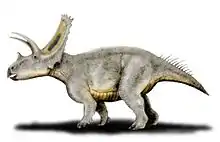
| Pentaceratops | Cretaceous | herbivore | New Mexico, United States and Alberta, Canada | Despite its name, it only has three horns. |
| Planicoxa | Cretaceous | herbivore | Utah, United States | An iguanodont. |
| Platypelta | Cretaceous | herbivore | Alberta, Canada | A relative of Euoplocephalus. |
| Podokesaurus | Jurassic | carnivore | Massachusetts, United States | Highly dubious; may be the same as Coelophysis. |
| Polyodontosaurus | Cretaceous | carnivore | Alberta, Canada | May be similar to Latenivenatrix. |
| Polyonax | Cretaceous | herbivore | Colorado, United States | Possibly a ceratopsian. |
| Prenoceratops | Cretaceous | herbivore | Montana, United States | A basal ceratopsian. |
| Priconodon | Cretaceous | herbivore | Maryland, United States | A nodosaur. |
| Probrachylophosaurus | Cretaceous | herbivore | Montana, United States | A saurolophine hadrosaur. |
| Propanoplosaurus | Cretaceous | herbivore | Maryland, United States | Known from the imprints of a skeleton, not actual fossilized bones. |
| Prosaurolophus | Cretaceous | herbivore | Alberta, Canada and Montana, United States | A large saurolophine hadrosaur. |
| Protoavis | Triassic | carnivore | Texas, United States | Dubious, see article |
| Protohadros | Cretaceous | herbivore | Texas, United States | Actually a non-hadrosaur iguanodont. |
| Pteropelyx | Cretaceous | herbivore | Montana, United States | A dubious hadrosaur. |
| Rativates | Cretaceous | omnivore | Alberta, Canada | Its name refers to how its appearance seemingly predicted ratite birds. |
| Regaliceratops | Cretaceous | herbivore | Alberta, Canada | A ceratopsian with pentagonal plates around its frill that resembled a crown. |
| Rhinorex | Cretaceous | herbivore | Utah, United States | May be a species of Gryposaurus. |
| Richardoestesia | Cretaceous | carnivore | Montana, United States | Similar-looking teeth have been found all around the world, but they probably don't belong to this genus. |
| Rubeosaurus | Cretaceous | herbivore | Montana, United States | May be the same as Styracosaurus, and Brachyceratops may represent its juveniles. |
| Rugocaudia | Cretaceous | herbivore | Montana, United States | A dubious sauropod. |
| Sarahsaurus | Jurassic | herbivore | Arizona, United States | Once thought to represent American specimens of Massospondylus. |
| Saurolophus | Cretaceous | herbivore | Alberta, Canada (another species is known from Omnogovi, Mongolia) | One of the few dinosaurs generally accepted to have lived on two continents. |
| Sauropelta | Cretaceous | herbivore | Montana, Utah and Wyoming, United States | A nodosaur with a long tail. |
| Saurophaganax | Jurassic | carnivore | Oklahoma, United States | Possibly the top land predator of the Late Jurassic |
| Sauroposeidon | Cretaceous | herbivore | Oklahoma, United States | Possibly the tallest known dinosaur. |
| Saurornitholestes | Cretaceous | carnivore | Alberta, Canada and Montana, North Carolina, South Carolina, New Mexico and Alabama, United States | A dromaeosaur. |
| Scolosaurus | Cretaceous | herbivore | Alberta, Canada | An ankylosaur with a convoluted taxonomic history. |
| Scutellosaurus | Jurassic | herbivore | Arizona, United States | A basal, bipedal thyreophoran. |
| Segisaurus | Jurassic | carnivore | Arizona, United States | A coelophysoid. |
| Seitaad | Jurassic | herbivore | Utah, United States | A sauropodomorph whose holotype specimen may have died during the collapse of a sand dune. |
| Siats | Cretaceous | carnivore | Utah, United States | The largest carnivorous dinosaur in North America before the appearance of T. rex. |
| Silvisaurus | Cretaceous | herbivore | Kansas, United States | A relatively obscure nodosaur. |
| Smitanosaurus | Jurassic | carnivore | Colorado, United States | A dicraeosaurid with a convoluted taxonomic history. |
| Sonorasaurus | Cretaceous | herbivore | Arizona, United States | State dinosaur of Arizona. |
| Sphaerotholus | Cretaceous | herbivore | New Mexico and Montana, United States and Alberta and Saskatchewan, Canada | A pachycephalosaur. |
| Spiclypeus | Cretaceous | herbivore | Montana, United States | Possibly the same as Ceratops. |
| Spinops | Cretaceous | herbivore | Alberta, Canada | Its holotype specimen was once said as being "nothing but rubbish". |
| Stegoceras | Cretaceous | herbivore | Alberta, Canada and New Mexico, United States | Not to be confused with Stegosaurus. |
| Stegopelta | Cretaceous | herbivore | Wyoming, United States | An ankylosaur. |
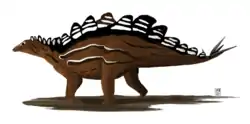
| Stegosaurus | Jurassic | herbivore | Colorado and Wyoming, United States | Well known for the plates and spikes on its back. |
| Stellasaurus | Cretaceous | herbivore | Montana, United States | Named from a specimen originally assigned to Rubeosaurus. |
| Stenonychosaurus | Cretaceous | carnivore | Alberta, Canada | Most Troodon remains were transferred to this genus. |
| Stephanosaurus | Cretaceous | herbivore | Alberta, Canada | May be the same as Lambeosaurus. |
| Stokesosaurus | Jurassic | carnivore | Utah, United States | A tyrannosauroid. |
| Struthiomimus | Cretaceous | omnivore | Alberta, Canada | An ornithomimosaur. |
| Stygimoloch | Cretaceous | herbivore | Montana, United States | May be a subadult Pachycephalosaurus. |
| Styracosaurus | Cretaceous | herbivore | Alberta, Canada | Known for the spikes that surrounded its frill. |
| Supersaurus | Jurassic | herbivore | Utah and Wyoming, United States | A very large dinosaur. |
| Suskityrannus | Cretaceous | carnivore | New Mexico, United States | Formerly nicknamed "Zunityrannus". |
| Suuwassea | Jurassic | herbivore | Montana, United States | The first known North American dicraeosaurid. |
| Talos | Cretaceous | carnivore | Utah, United States | Named for a bronze automaton in Greek mythology. |
| Tanycolagreus | Jurassic | carnivore | Wyoming, United States | Possibly a tyrannosauroid. |
| Tatankacephalus | Cretaceous | herbivore | Montana, United States | An ankylosaur. |
| Tatankaceratops | Cretaceous | herbivore | South Dakota, United States | Possibly a juvenile Triceratops. |
| Tawa | Triassic | carnivore | New Mexico, United States | A very primitive dinosaur. |
| Tenontosaurus | Cretaceous | herbivore | Montana, Oklahoma, Utah, Wyoming, Texas, Idaho and Maryland, United States | An iguanodont with a very long tail. |
| Teratophoneus | Cretaceous | carnivore | Utah, United States | A tyrannosaur. |
| Terminocavus | Cretaceous | herbivore | New Mexico, United States | Closely related to Anchiceratops, Arrhinoceratops and triceratopsins. |
| Texacephale | Cretaceous | herbivore | Texas, United States | Unusual structures on its head have been compared to gears. |
| Texasetes | Cretaceous | herbivore | Texas, United States | A nodosaur. |
| Thanatotheristes | Cretaceous | carnivore | Alberta, Canada | May be a species of Daspletosaurus. |
| Theiophytalia | Cretaceous | herbivore | Colorado, United States | A skull of Camptosaurus has been referred to this genus. |
| Thescelosaurus | Cretaceous | herbivore | Wyoming, Montana and South Dakota, United States and Alberta and Saskatchewan, Canada | One specimen was once thought to have preserved its heart. |
| Thespesius | Cretaceous | herbivore | South Dakota, United States | A hadrosaur. |
| Tichosteus | Jurassic | herbivore | Colorado, United States | Probably an ornithopod. |
| Titanoceratops | Cretaceous | herbivore | New Mexico, United States | It has one of the largest skulls of any known animal. |
| Torosaurus | Cretaceous | herbivore | Wyoming, Montana, South Dakota, North Dakota, Utah, Colorado and Texas, United States and Saskatchewan, Canada | Once thought to have been an adult Triceratops. |
| Torvosaurus | Jurassic | carnivore | Wyoming and Colorado, United States (other species known from Lisbon District, Portugal and North Rhine-Westphalia, Germany) | A large theropod. |
| Tototlmimus | Cretaceous | omnivore | Sonora, Mexico | The most southerly-known North American ornithomimosaur. |
| Trachodon | Cretaceous | herbivore | Montana, United States | Dubious, see article |
| Triceratops | Cretaceous | herbivore | Wyoming, Colorado and Montana, United States and Alberta and Saskatchewan, Canada | Known for the three horns and the frill on its head. |
| Trierarchuncus | Cretaceous | carnivore | Montana, United States | Named "captain hook" after its hook-like claws. |
| Troodon | Cretaceous | carnivore | Montana, United States | Formerly included Stenonychosaurus and Polyodontosaurus. |
| Tyrannosaurus | Cretaceous | carnivore | Alberta, Canada & Colorado and Montana, United States | The most well-known non-avian dinosaur. |
| Unescoceratops | Cretaceous | herbivore | Alberta, Canada | A leptoceratopsid. |
| Utahceratops | Cretaceous | herbivore | Utah, United States | A ceratopsid. |
| Utahraptor | Cretaceous | carnivore | Utah, United States | The largest known dromaeosaur. |
| Uteodon | Jurassic | herbivore | Utah, United States | Formerly assigned to Camptosaurus. |
| Vagaceratops | Cretaceous | herbivore | Alberta, Canada | A chasmosaurine ceratopsian. |
| Velafrons | Cretaceous | herbivore | Coahuila, Mexico | A hadrosaur from Mexico. |
| Venenosaurus | Cretaceous | herbivore | Utah, United States | A sauropod. |
| Wendiceratops | Cretaceous | herbivore | Alberta, Canada | A centrosaurine named after its discoverer, Wendy Sloboda. |
| Xenoceratops | Cretaceous | herbivore | Alberta, Canada | A centrosaurine ceratopsid. |
| Yehuecauhceratops | Cretaceous | herbivore | Coahuila, Mexico | A small centrosaurine. |
| Yurgovuchia | Cretaceous | carnivore | Utah, United States | A dromaeosaur. |
| Zapsalis | Cretaceous | carnivore | Montana, United States and Alberta, Canada | A tooth taxon that may represent a dromaeosaur, possibly Saurornitholestes. |
| Zephyrosaurus | Cretaceous | herbivore | Montana, United States | A neornithischian. |
| Ziapelta | Cretaceous | herbivore | New Mexico, United States | Named after the Zia sun symbol on the flag of New Mexico. |
| Zuniceratops | Cretaceous | herbivore | New Mexico, United States | One of the oldest ceratopsians with horns. |
| Zuul | Cretaceous | herbivore | Montana, United States | Named after Zuul from the film Ghostbusters. |
Timeline
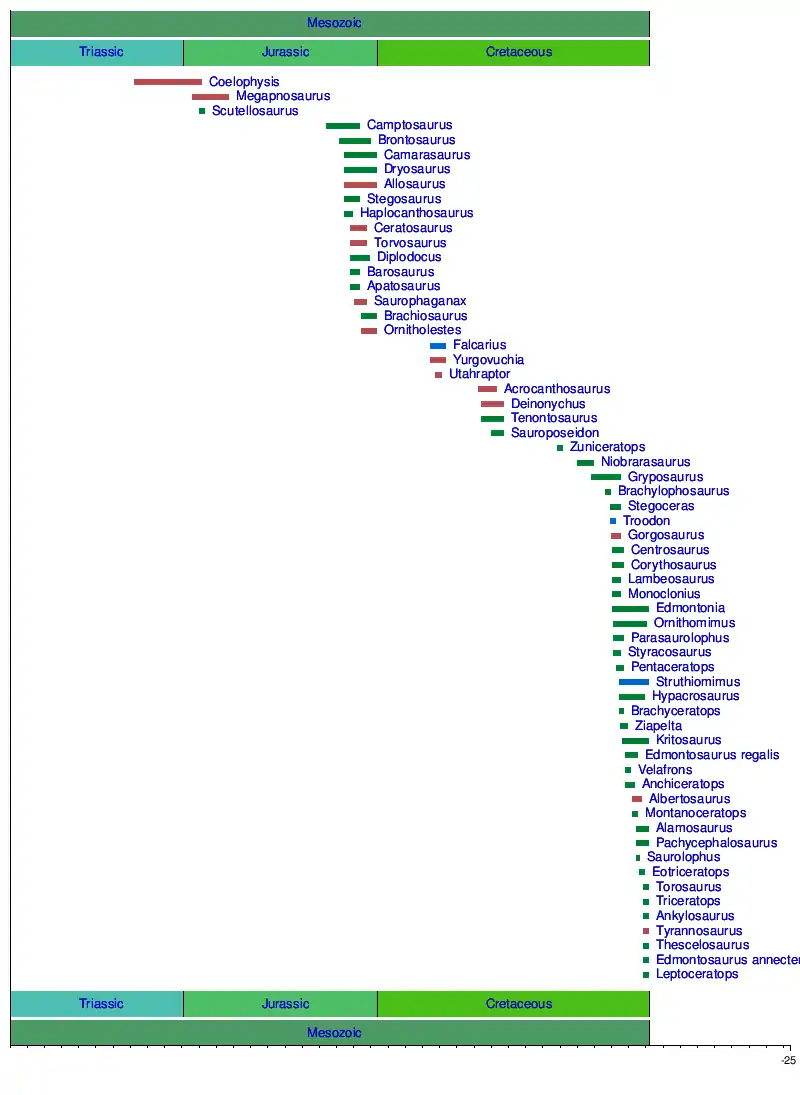
This is a timeline of selected dinosaurs from the list above. Time is measured in Ma, megaannum, along the x-axis.
See also
References
- "CGS Interactive Field Trips". www.ncgeology.com. Retrieved 2016-04-13.
- LUCAS, S. G., 2014: Vertebrate paleontology in Central America: 30 years of progress.- Rev. Geol. Amér. Central, Número
- Horne, Gregory S., M. G. Atwood, and Allen P. King. 1974. "Stratigraphy, Sedimentology, and Paleoenvironment of Esquias Formation of Honduras." AAPG Bulletin 58 (2): 176–88.
- Horne, Gregory S. 1994. "A Mid-Cretaceous Ornithopod from Central Honduras." Journal of Vertebrate Paleontology 14 (1): 147–50
- "The Norwalk Hour - Búsqueda en el archivo de Google Noticias".
- "Archived copy". Archived from the original on 2016-03-10. Retrieved 2016-03-09.CS1 maint: archived copy as title (link)
- Diet is sometimes hard to determine for dinosaurs and should be considered a "best guess"
Lists of dinosaurs by continent | ||
|---|---|---|
| Non-avian dinosaurs |
|  |
| Birds | ||