Squatting in Namibia
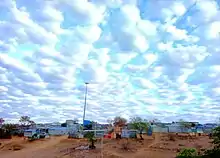
Squatting in Namibia is the occupation of unused land or derelict buildings without the permission of the owner. Indigenous Namibians squatted during World War I, then were forcibly resettled under apartheid when South Africa ruled what was then known as South West Africa. After Namibian independence in 1990, squatting increased as people migrated to cities such as Windhoek, Otjiwarongo and Oshakati. By 2020, 401,748 people were living in 113 informal settlements across the country.
History
In 1915, South Africa occupied what was then the colony of German South West Africa and ruled it until 1990 as South West Africa. During the chaos of World War I, Khoisan and Bantu peoples squatted vacant land and farms. Afterwards, South Africa imposed the apartheid system which gave land to white farmers and dispossessed black Namibians of ancestral lands. By 1926, 7.5 million hectares had been allotted to 1,106 white farmers. The 1962 Commission of Enquiry into South West Africa Affairs continued to enforce apartheid.[1]
Post-independence
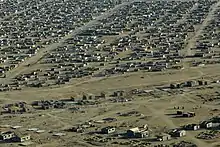

In the decades before Namibian independence in 1990, squatting was not tolerated. Afterwards the settlements began to grow.[2] Squatting in Namibia most often occurs when poor migrant from the rural north move to the capital Windhoek and live in informal settlements.[3] Squatters in the Vergenoeg shanty town on the edge of Okahandja were told in 2019 they had to move so as to allow construction of a new highway between Okahandja and Windhoek. Five thousand people were affected.[4]
Government plans to upgrade settlements have been criticised by squatters who either have been moved to a temporary site then not resettled or have not received promised improvements.[5][6] In Havana in Windhoek, there were many cases of Hepatitis E in 2018.[7] During the COVID-19 pandemic, squatters in Outjo voiced concern about finding food and firewood during lockdown.[8]
In 2020, the Harambee Prosperity Plan 2 was released. It declared that 401,748 people were living in 113 informal settlements across the country. Almost 100,000 of these people lived in Windhoek, 76,068 in Rundu, 52,870 in Otjiwarongo, 35,452 in Oshakati, over 24,000 in Swakopmund and Walvis Bay, over 13,000 in Rehoboth, 11,400 in Tsumeb, 8,670 in Nkurenkuru and 8,090 at Gobabis.[9]
Legal
Squatting continues to be regulated by the Squatters Proclamation, AG 21 of 1985.[10] Certain sections were struck out as unconstitutional following Shaanika and Others v Windhoek City Police and Others in 2013.[11][12] In 2020, a land activist launched a challenge to the proclamation, claiming it was entirely unconstitutional.[10]
References
- Werner, Wolfgang (March 1993). "A brief history of land disposession in Namibia". Journal of Southern African Studies. 19 (1): 135–146. doi:10.1080/03057079308708351.
- Rogerson, C. M. (March 1990). "Aspects of urban management in Windhoek, Namibia". Urban Forum. 1 (1): 29–47. doi:10.1007/BF03036525. S2CID 153889189.
- Frayne, Bruce (July 2004). "Migration and urban survival strategies in Windhoek, Namibia". Geoforum. 35 (4): 489–505. doi:10.1016/j.geoforum.2004.01.003.
- Ngutjinazo, Okeri (7 August 2019). "Okahandja squatters could stall highway". The Namibian. Archived from the original on 12 March 2021. Retrieved 12 March 2021.
- Hartman, Adam (29 May 2018). "Walvis squatters petition minister for land". The Namibian. Archived from the original on 12 March 2021. Retrieved 12 March 2021.
- Nambadja, Charlotte (5 January 2021). "Squatters bemoan empty election promises". The Namibian. Archived from the original on 12 March 2021. Retrieved 12 March 2021.
- Kangootui, Nomhle (16 November 2018). "Hepatitis hits Havana hard". The Namibian. Archived from the original on 12 March 2021. Retrieved 12 March 2021.
- Miyanicwe, Clemans (4 April 2020). "Outjo squatters not prepared for lockdown". The Namibian. Archived from the original on 12 March 2021. Retrieved 12 March 2021.
- Erastus, Nghinomenwa (12 August 2020). "Namibia's ghetto life: Half million live in shacks countrywide". The Namibian. Archived from the original on 12 March 2021. Retrieved 12 March 2021.
- Amakali, Maria (17 September 2020). "Land activist challenges squatters law". New Era. Retrieved 13 March 2021.
- "Squatters Proclamation, AG 21 of 1985" (PDF). Annotated Statutes. Republic of Namibia. Retrieved 13 March 2021.
- "Shaanika and Others v Windhoek City Police and Others (A 249/2009) [2010] NAHC 171 (28 October 2010)". Namibialii. Retrieved 13 March 2021.
| History |  | ||
|---|---|---|---|
| Geography | |||
| Politics | |||
| Economy | |||
| Society |
| ||


