Textual variants in the Gospel of Mark
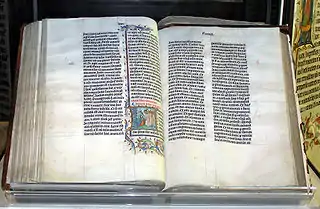
Textual variants in the Gospel of Mark are the subject of the study called textual criticism of the New Testament. Textual variants in manuscripts arise when a copyist makes deliberate or inadvertent alterations to a text that is being reproduced.[1]: 251–271 An abbreviated list of textual variants in this particular book is given in this article below.
Origen, writing in the 3rd century, was one of the first who made remarks about differences between manuscripts of texts that were eventually collected as the New Testament.[1]: 200 He declared his preferences among variant readings. For example, in Matthew 27:16–17, he favored "Barabbas" against "Jesus Barabbas" (In Matt. Comm. ser. 121).[1]: 201 In John 1:28, he preferred "Bethabara" over "Bethany" as the location where John was baptizing (Commentary on John VI.40 (24)).[1]: 201 "Gergeza" was preferred over "Geraza" or "Gadara" (Commentary on John VI.40 (24) – see Matthew 8:28).[1]: 201
Most of the variations are not significant and some common alterations include the deletion, rearrangement, repetition, or replacement of one or more words when the copyist's eye returns to a similar word in the wrong location of the original text.[1]: 253 If their eye skips to an earlier word, they may create a repetition (error of dittography).[1]: 254 If their eye skips to a later word, they may create an omission.[1]: 253–254 They may resort to performing a rearranging of words to retain the overall meaning without compromising the context.[1]: 257 In other instances, the copyist may add text from memory from a similar or parallel text in another location.[1]: 257 Otherwise, they may also replace some text of the original with an alternative reading.[1]: 257 Spellings occasionally change. Synonyms may be substituted. A pronoun may be changed into a proper noun (such as "he said" becoming "Jesus said").[1]: 254–257 John Mill's 1707 Greek New Testament was estimated to contain some 30,000 variants in its accompanying textual apparatus[2] which was based on "nearly 100 [Greek] manuscripts."[3] Peter J. Gurry puts the number of non-spelling variants among New Testament manuscripts around 500,000, though he acknowledges his estimate is higher than all previous ones.[4]
Legend
A guide to the symbols used in the body of this article.
- # beginning with 0: uncial
- # not beginning with 0: minuscule
- arab: Arabic versions
- arm: Armenian versions
- 𝔐/Byz: Byzantine text-type
- cop: Coptic versions
- eth: Ethiopic versions
- ƒ: Greek manuscripts family
- geo: Georgian versions
- goth: Gothic versions
- it: Italic/Vetus Latina
- lat: most Italic and Vulgate
- latt: all Italic and Vulgate
- ms: individual manuscript
- mss: multiple manuscripts
- : papyrus
- 𝑙: individually numbered lectionary
- Lect: most or all numbered lectionaries
- parenthesized (): approximate reading
- rell: all other extant manuscripts
- slav: Slavic versions
- syr/sys/h/p: Syriac versions
- vg: Latin Vulgate
- vid: apparent but uncertain reading

Notable manuscripts
- 45: Papyrus 45 (P45)
- א: Codex Sinaiticus (01)
- A: Codex Alexandrinus (02)
- B: Codex Vaticanus (03)
- C: Codex Ephraemi Rescriptus (04)
- Dea: Codex Bezae (05)
- Dp: Codex Claromontanus (06)
- Ke: Codex Cyprius (017)
- Kap: Codex Mosquensis I (018)
- Le: Codex Regius (New Testament) (019)
- Lap: Codex Angelicus (020)
- Papr: Codex Porphyrianus (025)
- S: Codex Vaticanus 354 (028)
- V: Codex Mosquensis II (031)
- W: Codex Washingtonianus (032)
- Z: Codex Dublinensis (035)
- Γ: Codex Tischendorfianus IV (036)
- Δ: Codex Sangallensis 48 (037)
- Θ: Codex Koridethi (038)
- Ξ: Codex Zacynthius (040)
- Π: Codex Petropolitanus (New Testament) (041)
- Φ: Codex Beratinus (043)
- Ψ: Codex Athous Lavrensis (044)
- Ω: Codex Athous Dionysiou (045)
- ff1: Codex Corbeiensis I
- ff2: Codex Corbeiensis II
- g1: Codex Sangermanensis I
- k: Codex Bobiensis
[1]: 54, 62–86, 102–103
Textual variants
For a list of many variants not noted here, see the ECM of Mark.
%252C_Mk_1.JPG.webp)
- ἐν τοῖς προφήταις (in prophets) – A W ƒ13 Byz
- ἐν τῷ Ἠσαἲᾳ τῷ προφήτῃ (in Isaiah the prophet) – א B L D
- ἐν Ἠσαἲᾳ τῷ προφήτῃ (in Isaiah prophet) – D Θ ƒ1
Mark 1:8
- ἐν πνεύματι ἁγίῳ (with the Holy Spirit) – א A D K W Δ Θ Π ƒ1 ƒ13
- πνεύματι ἁγίῳ – B L
- ἐν πνεύματι ἁγίῳ καὶ πυρί (with the Holy Spirit and fire) – P 1195. 1241 ℓ 44 syh
Mark 1:13
- καὶ ἦν ἐν τῇ ερημω (he was in the wilderness) – א A B D L Θ 33. 579. 892. 1342.
- καὶ ἦν ἐκει ἐν τῇ ερημω (he was there in the wilderness) – W Δ 157. 1241. Byz
- καὶ ἦν ἐκει (he was there) – 28. 517. 565. 700. ƒ1 Family Π syrs
- Omit – ƒ13
- Hiatus – C Ψ syrc
Mark 1:14
- εὐαγγέλιον – א B L Θ ƒ1 ƒ13 28. 33. 565. 892
- εὐαγγέλιον τῆς βασιλείας – Α, D Κ, W Δ Π 074 0133 0135 28mg, 700. 1009. 1010. 1071. 1079. 1195. 1216. 1230. 1241. 1242. 1253. 1344. 1365. 1546. 1646. 2148. 2174. Byz, Lect, lat, syrp, copbo
Mark 1:41
- σπλαγχνισθεις (filled with compassion) – All manuscripts except those listed below
- οργισθεις (irritated; angry) – D a ff2 r1
- ἐσθίει (eating) - B D W ita, b, d, e, ff2, r1, u[w]
- ἐσθίει καὶ πίνει (eating and drinking) - 𝔓88 A ƒ1 ƒ13 2. 28. 33. 157. 180. 597. 892. 1006. 1010. 1292. 1505. / Byz E F H Lect itq, vgms, syrp,h, copsams, [w]τ
- ἐσθίεται (=ἐσθίετε?) (eating) - Θ
- ἐσθίει ό διδάσκαλος ύμων (your teacher eating) - (see Mt 9:11) א 1342. itaur, vgms (Origenlat), DHH
- ἐσθίει καὶ πίνει ό διδάσκαλος ύμων (eating and drinking, your teacher) - L Δ ƒ13 1071. 1243. 1346. it(c),f, vg, copbo, Augustine
- ἐσθίετε καὶ πίνετε ([are you] eating and drinking) - (see Lk 5:30) Σ 124. 565. 700. 1241. 1424. ℓ 547ℓ 866 srypal, arm, geo, Diatessaron
- ἐσθίειτε καὶ πίνειτε ([are you] eating and drinking) - G
- ό διδάσκαλος ύμων ἐσθίει καὶ πίνει (your teacher eating and drinking) - C 579 ℓ 890 it1, copsamss, eth
- ἐσθίετε ([are you] eating) - 1424.

Mark 2:26
- ἐπὶ Ἀβιαθαρ ἀρχιερέως (when Abiatar was high priest) – א A B K L 892. 1010. 1195. 1216. 1230. 1242. 1344. 1365. 1646. 2174. Byz, ℓ 69 ℓ 70 ℓ 76 ℓ 80 ℓ 150 ℓ 299 ℓ 1127 ℓ 1634 ℓ 1761 arm
- ἐπὶ Ἀβιαθαρ τοῦ ἀρχιερέως (when Abiatar was high priest) – A C Θ Π 074
- ἐπὶ Ἀβιαθαρ τοῦ ἱερέως (when Abiatar was priest) – Δ itf
- phrase is omitted by manuscripts D W 1009. 1546. ita, b, d, e, ff2, i, r1, t, syrs
- ἀπὸ τῆς Γαλιλαίας ἠκολούθησεν, καὶ ἀπὸ τῆς Ἰουδαίας - B L 565. 728.vid
- ἀπὸ τῆς Γαλιλαίας ἠκολούθησεν αὐτῷ, καὶ ἀπὸ τῆς Ἰουδαίας - 61.c 427. 555.c 732. 892. ℓ 950 Byz
- ἀπὸ τῆς Γαλιλαίας ἠκολούθησαν αὐτῷ, καὶ ἀπὸ τῆς Ἰουδαίας - Φvid 0211 ƒ13:(13. 346. 543. 826.) 4. 23. 154. 179. 273. 349. 351. 372. 382. 513. 517. 544. 695. 716. 733. 752. 766. 780. 792. 803. 873. 954. 979. 1009. 1047. 1084. 1241. 1326. 1337. 1396. 1424. 1506. 1515. 1546. 1645. 1654. 1675. 2538. 2737. 2766. ℓ 211 ℓ 387 ℓ 770 ℓ 773 ℓ 2211 syh
- ἀπὸ τῆς Γαλιλαίας καὶ ἀπὸ τῆς Ἰουδαίας ἠκολούθησαν - א C
- ἀπὸ τῆς Γαλιλαίας καὶ ἀπὸ τῆς Ἰουδαίας ἠκολούθησαν αὐτῷ - Δ 377. 1071. 1342.
- ἀπὸ τῆς Γαλιλαίας ἠκολούθησεν αὐτῷ, καὶ ἀπὸ Ἱεροσολύμων καὶ ἀπὸ τῆς Ἰουδαίας καὶ πέραν τοῦ Ἰορδάνου - ƒ1:(1. 131. 205.) 1253. (ἐκ τῆς Γαλιλαίας) 2193.* 2886.
- καὶ ἀπὸ τῆς Ἰουδαίας καὶ πέραν τοῦ Ἰορδάνου ἀπὸ τῆς Γαλιλαίας ἠκολούθησεν αὐτῷ, καὶ ἀπὸ Ἱεροσολύμων - 118. 209. 1582.
Mark 3:14
- δώδεκα, ἵνα ὦσιν μετʼ αὐτοῦ - Cc2 L ƒ1:(1. 205. 209. 1582.) 33. 382. 427. 544. 565. 579. 732. 740. 792. 892. 1342. 1424. 2193. 2542. 2766. 2886. ℓ 950 Byz
- ἵνα ὦσιν δώδεκα μετʼ αὐτοῦ - D 79.
- δώδεκα, ἵνα ὦσιν περὶ αὐτὸν - 700.
- δώδεκαμαθητας ἵνα ὦσιν μετʼ αὐτοῦ οὓς καὶ ἀποστόλους ὠνόμασεν - W
- δώδεκα οὓς καὶ ἀποστόλους ὠνόμασεν ἵνα ὦσιν μετʼ αὐτοῦ - א B (ὁνόμασεν - Θ ƒ13:(13. 124. 346. 543. 788. 826. 828. 1689.) 69. 238. 377. 807. 983. 1160. syh(ms)
- ἵνα ὦσιν μετʼ αὐτοῦ δώδεκα οὓς καὶ ἀποστόλους ὠνόμασεν - Δ
- δώδεκα, ἵνα ὦσιν μετʼ αὐτοῦ και ἵνα ἀποστέλλει αὐτοὺς οὓς καὶ ἀποστόλους ὠνόμασεν - Φvid
- η αγαπη του πλουτου (the love of wealth) – Δ
- η απατη του πλουτου (the illusion of wealth) – א A B C E Byz
- απαται του πλουτου (the illusions of wealth) – W
- απαται του κοσμου (the illusions of world) – D (Θ 565.)
Mark 4:19
- και αι περι τα λοιπα επιθυμιαι (and the desire for other things) – rest of mss
- omit – D (Θ) W ƒ1 28. (565. 700.) it
Mark 4:24
Mark 5:9
Mark 5:37
- ο αδελφος Ἰακώβου - 565. 700. 892.c (Θ 2542.) lat
- και ἀδελφὸς Ἰακώβου – B C Δ 579. 1241. 1424.
- και ο αδελφος Ἰακώβου - א D L 892.* sams bopt
- ἀδελφὸς δὲ Ἰακώβου – A K N W ƒ1 ƒ13 28. Byz q syh sams
Mark 6:33
- ἐκεῖ καὶ προῆλθον αὐτούς – א B 0187 (omit εκει), 892. ℓ 49 ℓ 69 ℓ 70 ℓ 299 ℓ 303 ℓ 333 ℓ 1579 (ℓ 950 αυτους), itaur, vg, (copsa,bo)
- ἐκει καὶ προσηλθον αὐτοῖς – L 1241 (Δ Θ ℓ 10 αὐτοῖς) ℓ 12 ℓ 80 ℓ 184 ℓ 211 ℓ 1127 arm, geo
- ἐκεῖ καὶ συνῆλθον αὐτῷ – Dgr itb
- ἐκεῖ καὶ συνῆλθον αὐτοῦ – 28. 700.
- ἐκεῖ καὶ ἢλθον αὐτοῦ – 565. it(a),d,ff,i,r, Diatessaron
- καὶ ἢλθον ἐκεῖ – ƒ1
- προηλθον αὐτὸν ἐκεῖ – Peshitta
- πρὸς αὐτούς καὶ συνῆλθον πρὸς αὐτον – 33.
- ἐκεῖ καὶ προῆλθον αὐτοῖς καὶ συνῆλθον πρὸς αὐτον – K Π (ƒ13 συνεισηλθον προς αὐτούς) 1009. 1010. 1071. 1079. 1195. 1216. 1230. 1242. 1365. 1546. 1646. 2148. 2174. Byz
- ἐκεῖ καὶ προῆλθον αὐτοῖς καὶ συνέδραμον πρὸς αὐτον – A
- ἐκει – W ℓ 150 itc
Mark 6:51
- τὰ μέρη Δαλμανουθά – א A Β C K L X Δ Π 0131 33. 700. 892. 1009. 1010. 1195. 1216. 1230. 1242. 1253. 1344. 1365. 1546. 1646. 2148. 2174. Byz, Lect, it, vg, syr, cop
- τὰ ὂρη Δαλμανουθά – 1071
- τὸ ὂρος Δαλμανοῦναι – W
- τὰ ὅρια Δαλμανουθά – 1241
- τὸ ὂρος Μαγεδά – 28
- τὰ ὅρια Μελεγαδά – Dgr
- τὰ μέρη Μαγδαλά – Θ ƒ1 ƒ13 ℓ 80
- τὰ μέρη Μαγεδά – 565.
Mark 9:49
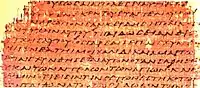
- πας γαρ πυρι αλισθησεται – (א εν πυρι) B L W Δ ƒ1 ƒ13 28 565. 700. ℓ260 syrs sa
- πασα γαρ θυσια αλι αλισθησεται – D it
- πας γαρ πυρι αλισθησεται και πασα θυσια αλι αλισθησεται – A (C εν πυρι) K (X πυρι αλι αλισθησεται) Π (Ψ θυσια αναλωθησεται)
- πας γαρ πυρι αναλωθησεται και πασα θυσια αλι αλισθησεται – Θ
- εἰς τὰ ὅρια τῆς Ἰουδαίας καὶ πέραν τοῦ Ἰορδάνου, (to the region/border of Judea, and/also/even/namely beyond the Jordan,) – Alexandrian text-type: Westcott and Hort 1881, Westcott and Hort / [NA27 and UBS4 variants], Tischendorf 8th Edition 1864–94, Nestle 1904
- εἰς τὰ ὅρια τῆς Ἰουδαίας διὰ τοῦ πέραν τοῦ Ἰορδάνου· (to the region/border of Judea by/through the [land] beyond the Jordan.) – Byz: Stephanus Textus Receptus 1550, Scrivener's Textus Receptus 1894, RP Byzantine Majority Text 2005, Greek Orthodox Church
Mark 10:2
- προσελθόντες Φαρισαῖοι (the Pharisees came) – A B K L Γ Δ Ψ ƒ13 28. 700. 892. 1010. 1079. 1546. 1646. Byz copbo goth
- προσελθόντες οἱ Φαρισαῖοι (word order varies) – א C X
- verse omitted by D a, b, d, k, r1, syrsin (syrcur)
Mark 10:47
- πρὶν ἢ δὶς ἀλέκτορα φωνῆσαι (before that the rooster has crowed twice) – A Byz[7]
- πρὶν ἀλέκτορα φωνῆσαι (before the rooster has crowed) – א[8] C* aeth, arm, Western text-type: D cu2 lat.afr-eur[7]
Mark 14:39
- τὸν αὐτὸν λόγον εἰπών (spoke the same words) – omitted by D a, b, c, d, ff2, k, (syrcur)
Mark 14:68
- καὶ άλέκτωρ ἐφώνησεν (and the rooster crowed) – inserted by Western and Byzantine text-types after προαύλιον; not found in Alexandrian text-type (א B L it, 17 c, me)[7]
Mark 14:72a
- εὐθὺς (immediately) – Alexandrian text-type; omitted by Byz[9]
- ἐκ δευτέρου (for the second time) – omitted by א c, L c, vg.cod[7]
Mark 14:72b
- πριν αλεκτορα φωνηϲαι τριϲ με απαρνηϲη (before the rooster has crowed thrice me you will have denied) – א c;[10] several other mss also omit δίς (twice)[7]
- mss such as A and Byz do include δίς (twice),[7] but in varying word orders:[9]
- Πρὶν ἀλέκτορα δὶς φωνῆσαι τρίς με ἀπαρνήσῃ (before the rooster twice has crowed thrice me you will have denied) – Westcott and Hort 1881, Westcott and Hort / [NA27 and UBS4 variants], Nestle 1904
- Πρὶν ἀλέκτορα φωνῆσαι δίς, ἀπαρνήσῃ με τρίς (before the rooster has crowed twice, you will have denied me thrice) – Stephanus Textus Receptus 1550, Scrivener's Textus Receptus 1894, RP Byzantine Majority Text 2005, Greek Orthodox Church
- πρὶν ἀλέκτορα φωνῆσαι δὶς τρίς με ἀπαρνήσῃ (before the rooster has crowed twice thrice me you will have denied) – Tischendorf 8th Edition 1864–94
Mark 15:34 (see Ps 22:2)
- ἐγκατέλιπές με (forsaken me) – א B Ψ 059 vg, syrs, p, copsa, bo, fay, geo
- ἐγκατέλειπές με – L 0112 565. 892.
- με ἐγκατέλιπες (see Mt 27:46) – C P, X Δ Θ Π2, ƒ1 ƒ13 28. 700. 1010. 1071. 1079. 1195. 1216. 1230. 1241. 1242. 1253. 1344. 1365. 1546. 1646. 2148. 2174. Byz, Lect, it, goth
- με ἐγκατέλειπες – A Π*
- με ἐγκατέλειπας – K 1009. (ℓ 70)
- με ἐγκατέλιπας – 33.
- ὠνείδισάς με (insult me) – D itc, (i), k syh
Mark 15:40[11]
- Μαρία ἡ Ἰακώβου τοῦ μικροῦ καὶ Ἰωσῆτος μήτηρ, (Mary the mother of James the Less and Joses,) – ℵc2 B (ἡ Ἰωσῆτος) Δ Θ 0184 ƒ1 1542.s* ℓ 844
- Μαρία ἡ τοῦ Ἰακώβου τοῦ μικροῦ καὶ Ἰωσῆ μήτηρ, (Mary the mother of James the Less and Joses,) – A Γ 700. 1241. Byz
Mark 15:47[12]
See also
- Alexandrian text-type
- Biblical inerrancy
- Byzantine text-type
- Caesarean text-type
- Categories of New Testament manuscripts
- Comparison of codices Sinaiticus and Vaticanus
- List of New Testament verses not included in modern English translations
- List of major textual variants in the New Testament
- Textual variants in the New Testament
- Western text-type
References
- Metzger, Bruce; Ehrman, Bart (2005). The Text of the New Testament: Its Transmission, Corruption, and Restoration (4th ed.). Oxford: Oxford University Press. ISBN 978-019-516122-9.
- Adam Fox, John Mill and Richard Bentley: A Study of the Textual Criticism of the New Testament 1675–1729 (Oxford: Basil Blackwell, 1954), pp. 105–115; John Mill, Novum Testamentum Graecum, cum lectionibus variantibus MSS (Oxford 1707)
- Metzger and Ehrman (2005), p.154
- Peter J. Gurry, "The Number of Variants in the Greek New Testament: A Proposed Estimate" New Testament Studies 62.1 (2016), p. 113
- "Mark 6:3 Text Analysis". Biblehub.com. Retrieved 1 September 2021.
- "Mark 10:1 Text Analysis". Biblehub.com. Retrieved 5 September 2021.
- Westcott and Hort (1882), Introduction and AppendiX § 323.
- codexsinaiticus.org Mark 14:30
- "Mark 14:72 Text Analysis". Biblehub.com. Retrieved 6 October 2021.
- codexsinaiticus.org Mark 14:72
- "Mark 15:40 Text Analysis". Biblehub.com. Retrieved 1 September 2021.
- "Mark 15:47 Text Analysis". Biblehub.com. Retrieved 1 September 2021.
Further reading
- Novum Testamentum Graece et Latine, ed. E. Nestle, K. Aland, Stuttgart 1981.
- Bruce M. Metzger & Bart D. Ehrman, "The Text of the New Testament: Its Transmission, Corruption, and Restoration", OUP New York, Oxford, 4 edition, 2005
- Bart D. Ehrman, "The Orthodox Corruption of Scripture. The Effect of Early Christological Controversies on the Text of the New Testament", Oxford University Press, New York - Oxford, 1996, pp. 223–227.
- Bruce M. Metzger, "A Textual Commentary on the Greek New Testament: A Companion Volume to the United Bible Societies' Greek New Testament", 1994, United Bible Societies, London & New York.
External links
- The Comparative Critical Greek New Testament
- Variantes textuais (in Portuguese)
- Varianten Textus receptus versus Nestle-Aland
- The Gospel of Mark part of the Holy Bible
| Bible (New Testament) | ||
|---|---|---|
| Events | ||
| Phrases | ||
| People | ||
| Places | ||
| Related | ||
| Sources | ||
| ||