1979 Japanese general election
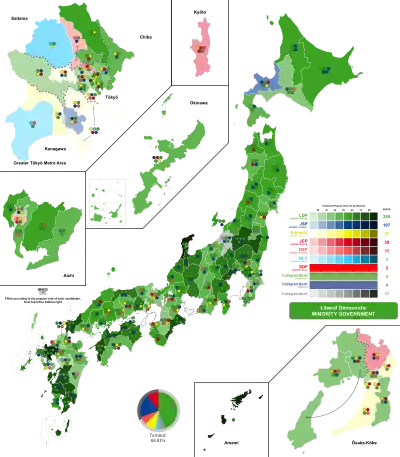
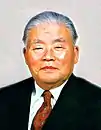
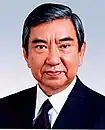
General elections were held in Japan on 7 October 1979 to elect the 511 members of the House of Representatives. Prime Minister Ōhira Masayoshi's announcement that a consumption (sales) tax would be imposed was a hot-button issue in the run-up to the election. Facing widespread public disapproval, the prime minister abandoned the tax proposal.[1] The prime minister's party, the Liberal Democratic Party (LDP), ended up losing one seat, while the Japan Communist Party experienced a surge in voter support, which mostly came at the expense of the Japan Socialist Party and the LDP-breakaway New Liberal Club.
 | |||||||||||||||||||||||||||||||||||||||||||||||||||||||||||||||||||||||||||||||||||||||||||||||||||||||||||||||||||||||
All 511 seats in the House of Representatives of Japan 256 seats needed for a majority | |||||||||||||||||||||||||||||||||||||||||||||||||||||||||||||||||||||||||||||||||||||||||||||||||||||||||||||||||||||||
|---|---|---|---|---|---|---|---|---|---|---|---|---|---|---|---|---|---|---|---|---|---|---|---|---|---|---|---|---|---|---|---|---|---|---|---|---|---|---|---|---|---|---|---|---|---|---|---|---|---|---|---|---|---|---|---|---|---|---|---|---|---|---|---|---|---|---|---|---|---|---|---|---|---|---|---|---|---|---|---|---|---|---|---|---|---|---|---|---|---|---|---|---|---|---|---|---|---|---|---|---|---|---|---|---|---|---|---|---|---|---|---|---|---|---|---|---|---|---|---|
| Turnout | 68.01% ( 5.44%) 5.44%) | ||||||||||||||||||||||||||||||||||||||||||||||||||||||||||||||||||||||||||||||||||||||||||||||||||||||||||||||||||||||
| |||||||||||||||||||||||||||||||||||||||||||||||||||||||||||||||||||||||||||||||||||||||||||||||||||||||||||||||||||||||
 | |||||||||||||||||||||||||||||||||||||||||||||||||||||||||||||||||||||||||||||||||||||||||||||||||||||||||||||||||||||||


.jpg.webp)

 |
|---|
|
Japan portal |

_Flag.svg.png.webp)



This was the first election in the LDP's history in which the party increased its share of the popular vote compared to the previous election.
Results
 | |||||
| Party | Votes | % | Seats | +/– | |
|---|---|---|---|---|---|
| Liberal Democratic Party | 24,084,131 | 44.59 | 248 | –1 | |
| Japan Socialist Party | 10,643,450 | 19.71 | 107 | –16 | |
| Japanese Communist Party | 5,625,528 | 10.42 | 39 | +22 | |
| Kōmeitō | 5,282,683 | 9.78 | 57 | +2 | |
| Democratic Socialist Party | 3,663,692 | 6.78 | 35 | +6 | |
| New Liberal Club | 1,631,812 | 3.02 | 4 | –13 | |
| Socialist Democratic Federation | 368,660 | 0.68 | 2 | New | |
| Other parties | 69,101 | 0.13 | 0 | – | |
| Independents | 2,641,064 | 4.89 | 19 | –2 | |
| Total | 54,010,121 | 100.00 | 511 | 0 | |
| Valid votes | 54,010,121 | 99.06 | |||
| Invalid/blank votes | 511,892 | 0.94 | |||
| Total votes | 54,522,013 | 100.00 | |||
| Registered voters/turnout | 80,169,924 | 68.01 | |||
| Source: Statistics Bureau of Japan, National Diet | |||||
References
- "The Political History of Japan's Consumption Tax". nippon.com. 2019-10-08. Retrieved 2020-03-12.
| General elections | |
|---|---|
| Councillors elections | |
| Unified local elections | |
| Supreme Court retention elections |
|
| |