Alligator hailensis
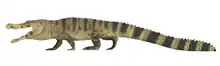
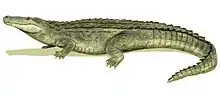
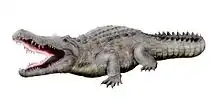
Alligator hailensis, is a large, extinct species of Alligator, known from the early Pleistocene of Florida. It is named after the town of Haile, Florida where it was found by J.B. Stout. Its age and skeletal morphology is intermediate between the geologically older Alligator mefferdi and the modern American Alligator, making it a transitional fossil.[1][2]
| Alligator hailensis Temporal range: Early Pleistocene- | |
|---|---|
Scientific classification  | |
| Kingdom: | Animalia |
| Phylum: | Chordata |
| Class: | Reptilia |
| Order: | Crocodilia |
| Family: | Alligatoridae |
| Genus: | Alligator |
| Species: | †A. hailensis |
| Binomial name | |
| †Alligator hailensis Stout, 2020 | |
References
- Stout, J.B. (2020). "New early Pleistocene Alligator (Eusuchia: Crocodylia) from Florida bridges a Gap in Alligator evolution". Zootaxa. 4868 (1): 41–60. doi:10.11646/zootaxa.4868.1.3.
- PBDB. “Alligator Hailensis Stout 2020 (Alligator).” PBDB, paleobiodb.org/classic/basicTaxonInfo?taxon_no=427868
Extinct crocodilians | |||||||||||||||||||||||||||||||||||||||||
|---|---|---|---|---|---|---|---|---|---|---|---|---|---|---|---|---|---|---|---|---|---|---|---|---|---|---|---|---|---|---|---|---|---|---|---|---|---|---|---|---|---|
| |||||||||||||||||||||||||||||||||||||||||
| |||||||||||||||||||||||||||||||||||||||||
| |||||||||||||||||||||||||||||||||||||||||
| |||||||||||||||||||||||||||||||||||||||||
| |||||||||||||||||||||||||||||||||||||||||
This article is issued from Wikipedia. The text is licensed under Creative Commons - Attribution - Sharealike. Additional terms may apply for the media files.